A Practical Guide to Justworks.com HR Operations
Justworks.com is a cloud-based platform that helps businesses streamline hiring, payroll-adjacent workflows, benefits administration, and compliance coordination. This guide explains what HR teams typically evaluate when comparing modern employer-services platforms, outlining objective selection criteria, operational impacts, and practical implementation considerations. Background context covers common HR workload drivers, role-based access needs, and governance for employee data management.
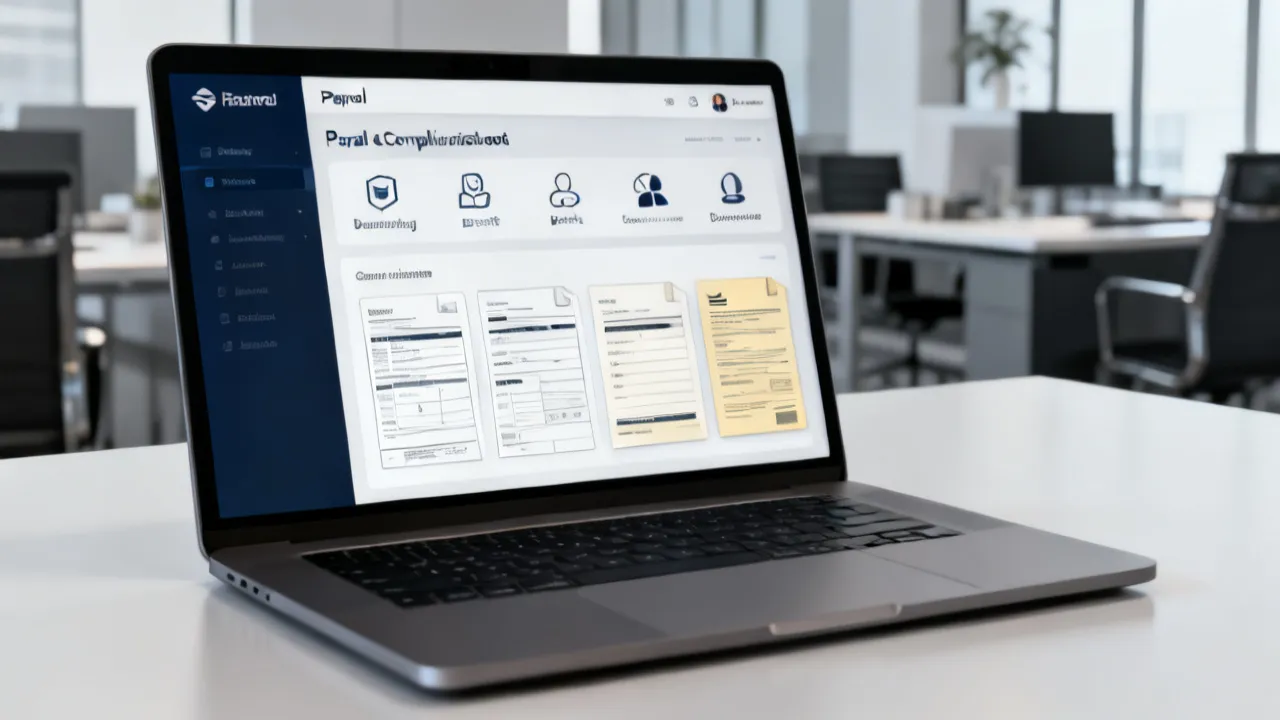
1) Why businesses evaluate Justworks.com for day-to-day HR operations
Justworks.com is frequently considered by growing organizations that want a more integrated approach to core employer administration—especially the operational “glue” between hiring events, employee records, compensation cycles, and ongoing compliance-related tasks. For an HR or operations leader, the key question is not only what a platform includes, but how predictably it supports workflows across onboarding, document handling, role permissions, and internal reporting cadence.
In practical terms, an organization assessing Justworks.com typically looks for the ability to reduce manual coordination, standardize employee data, and create clearer handoffs between HR, finance, and—where applicable—benefits administration. The value tends to show up very strongly when companies have multiple departments involved in onboarding and employee lifecycle events and want fewer exceptions and rework.
As companies scale, HR operations often transition from “event-based” work to “process-based” work. Early in growth, HR might manage onboarding through a mix of checklists, emails, and shared spreadsheets. Over time, however, a higher volume of hires and more frequent changes to roles, compensation details, and policy acknowledgments make it harder to rely on individual diligence. When those changes accumulate, teams need a consistent infrastructure that can carry repeatable work reliably. That is one reason platforms such as Justworks.com attract attention: they can act as an operational backbone, not merely a repository for employee documents.
Additionally, modern organizations often have distributed stakeholders. Managers may be in different departments or locations, finance may require certain approvals in a specific order, and employees need clear communication and timely access to forms and policies. A platform approach helps coordinate these stakeholders within a single workflow rather than relying on separate systems and informal communication. For day-to-day operations, that coordination is frequently the deciding factor: the best systems minimize the friction between “HR initiates,” “manager confirms,” “employee acknowledges,” and “finance executes” without requiring HR staff to act as the constant traffic controller.
Finally, businesses evaluating Justworks.com are often motivated by risk management and audit readiness. Employee-related processes are not just administrative—they are tied to legal obligations, recordkeeping duties, and reputational outcomes. When HR processes are decentralized across tools, record formats vary, and approvals can be difficult to demonstrate later. A structured employer administration workflow can make it easier to show what was done, when it was done, who did it, and which version of a document was used.
2) What an HR decision should focus on (the “inverted pyramid” essentials)
When evaluating an employer-services platform like Justworks.com, decision-makers usually prioritize the following critical factors first:
- Operational integration: How well the platform supports a consistent process from onboarding through ongoing administration.
- Employee data governance: Who can access what, how records are updated, and how auditability is handled.
- Workflow reliability: Whether standard requests move through a predictable path without excessive manual tracking.
- Finance/HR alignment: How the platform supports coordination between HR and compensation-related processes.
- Implementation effort: The time required to configure roles, permissions, onboarding steps, and internal reporting.
These elements matter more than surface-level features because they determine whether the platform becomes operational infrastructure—or remains a tool used only partially.
It can be useful to think of HR platform evaluation as an “inverted pyramid,” where the foundations (governance, integration, and reliability) support everything above them (user experience, dashboards, and optional features). A platform may have strong marketing around employee self-service or document features, but if the underlying workflow does not match the organization’s actual processes, adoption can stall. Conversely, even if some features feel basic, a well-designed operational workflow can deliver outsized value.
Operational integration also includes the practical reality that HR work is not limited to new hires. Ongoing administration includes changes such as:
- role transitions (e.g., promotions or departmental transfers),
- compensation-adjacent changes,
- address or personal information updates,
- benefits status changes,
- policy acknowledgments that may need refreshment or re-confirmation,
- termination workflows and final paycheck-related administration (where applicable).
A platform earns its place in HR operations when it handles these events with consistency and minimal rework. That means reliable routing, correct permissions, and predictable record updates.
Workflow reliability is also tightly linked to “exception handling.” In real HR operations, exceptions are not rare; they are part of the job. Common exceptions include late document submissions, incorrect manager approvals, changes to start dates, discrepancies between offer details and record data, and cases where HR must correct or update information after the fact. A platform that supports exception flows clearly—and in a way that does not collapse the audit trail—tends to perform well long-term.
Finance/HR alignment deserves special emphasis. HR and finance teams often have different incentives and timelines: HR may focus on compliance and employee lifecycle completeness; finance may focus on payroll deadlines and financial accuracy. If the platform boundaries between HR tasks and finance tasks are unclear, the organization may create manual bridging steps. The evaluation process should therefore include questions about how HR-driven changes translate into finance workflows and how those workflows are scheduled and validated.
Finally, implementation effort is not just “how long until go-live.” It includes how much change management is required. For HR operations, the platform must be configured to match internal policy. That configuration might include role-based permissions, onboarding task templates by department, document routing rules, and internal reporting cadences. If implementation is underestimated, teams sometimes adopt the platform but continue to rely on old tools in parallel—leading to duplication, confusion, and incomplete process adoption.
3) Objective background: why HR platforms exist in the first place
Modern HR administration is complex because employee lifecycle work touches multiple functions and often runs on different timelines: hiring approvals, benefits enrollment windows, policy acknowledgments, payroll-adjacent events, and periodic compliance checks. Even when tasks are “simple” individually, the overall workload becomes fragmented when teams manage separate systems for employee records, onboarding documents, compliance workflows, and employee communications.
Platforms such as those commonly represented by Justworks.com address this fragmentation by centralizing workflows and creating consistent operational patterns. The central premise is straightforward: fewer handoffs, standardized data structures, and clearer internal processes usually improve accuracy and reduce rework.
It helps to understand why fragmented systems emerge in the first place. Many companies start with limited resources and use a pragmatic stack:
- an HR contact method (email or ticketing) for onboarding tasks,
- a spreadsheet or shared document folder for checklists,
- a basic storage location for employee documents,
- a payroll workflow managed outside HR systems,
- policy communication delivered via templates or internal announcements.
As volume increases, these solutions can become difficult to manage. For example, a checklist in a spreadsheet might be updated by one HR specialist for their department, while another specialist uses a slightly different checklist. The “spreadsheet truth” then diverges from the “HR policy truth.” Similarly, document storage can become messy: employees might upload different file versions, older templates might linger, or staff might not know which document version is the latest approved one.
HR platforms aim to reduce these inconsistencies by offering workflow definitions. That can include:
- structured onboarding steps with clear owners and deadlines,
- document generation and distribution patterns,
- controlled permissions for HR, managers, finance, and employees,
- record update workflows that reduce manual copy-pasting across tools,
- audit-friendly logs that support internal review and defensibility.
In other words, HR platforms exist to operationalize HR policy and translate it into repeatable workflows. This is especially important for organizations that are not only growing headcount, but also growing complexity: more departments, more locations, more job families, and more nuanced compensation or benefits arrangements.
Another reason HR platforms exist is that employee experience expectations have risen. Employees want clarity and convenience: they want to complete onboarding steps without guessing where to find forms, they want status updates, and they want to know what still remains open. A platform that provides predictable workflows can improve employee trust in HR processes, because employees see a clear path rather than a confusing series of email requests.
Finally, many HR platforms incorporate compliance-related operational patterns. Compliance is not simply a set of documents—it is a set of processes that must be executed correctly and consistently. A platform can help standardize when tasks occur, how acknowledgments are captured, and how records are stored and updated. Even when legal requirements vary by jurisdiction, the operational framework can still be standardized internally.
4) Industry expert view: how to assess “fit” rather than chase buzzwords
From an industry perspective, the very effective platform evaluations are scenario-driven. Instead of asking “What does it do?”, teams should ask “How will it behave in the situations we repeatedly encounter?” For example:
- When a new hire joins, how many steps must HR do manually, and how quickly can managers and HR coordinate?
- When roles change, how is access and administrative responsibility updated?
- When an employee needs document updates, what is the approved path, and how do you ensure the correct version is used?
- During busy seasons, how does the process scale without creating backlogs?
This approach typically reveals whether Justworks.com (or any comparable system) reduces operational friction in your specific environment.
To make scenario-based evaluation effective, it is useful to build scenarios that reflect your actual patterns—not hypothetical “ideal” conditions. Consider the following realism adjustments:
- Include imperfect inputs: e.g., an offer letter start date changes by a week, or employee details arrive in two separate communications.
- Model real roles: managers vary in how quickly they respond; some approvals occur instantly, others lag due to schedules.
- Include exceptions: e.g., the wrong department is initially selected, or a document is signed but later found to contain a typo.
- Include security constraints: ensure that permissions restrict access correctly, even when multiple stakeholders are involved.
Experts often emphasize that “fit” is a composite outcome: it is not only about feature availability, but about process behavior under pressure. A platform might look good in a demo, but evaluation should confirm how the workflow performs when tasks overlap, when multiple departments are onboarding simultaneously, or when HR has limited capacity.
Another aspect of “fit” is governance alignment. In many organizations, HR policy dictates which documents must be signed or acknowledged, what versions must be retained, and how long data should be stored. A platform might technically support document workflows, but if it does not align with how your policy expects documents to be handled, HR will either adjust the policy (often undesirable) or work around the tool.
Experts also recommend evaluating the learning curve. Operational fit is affected by how quickly stakeholders can understand their tasks. If managers can’t easily see what they need to do, or if HR must explain a workaround each time, the platform may create more operational load than it reduces. A good test is to observe how intuitive the workflow is for non-HR stakeholders during the evaluation and pilot phase.
Finally, scenario-based evaluation should incorporate reporting expectations. Leaders do not evaluate platforms in isolation—they evaluate them as parts of an operational management system. HR teams may want to monitor onboarding completion rates, identify bottlenecks, and measure time-to-complete. Operations leaders may want visibility into whether tasks are consistently done per department. A platform that does not provide enough visibility may not be trusted, even if it functions well behind the scenes.
5) Comparing platform capabilities: Justworks.com versus typical HR admin patterns
It can be helpful to compare the platform’s intended operating model to how many organizations handle HR administration when they use fragmented systems. In a fragmented setup, teams often maintain:
- Spreadsheets or email chains for onboarding checklists
- Separate document storage without a controlled workflow
- Disconnected identity/access processes
- Inconsistent record updates across HR and finance
In contrast, a platform approach like Justworks.com aims to standardize these activities. The outcome is usually fewer “missing step” issues and improved visibility into what has and hasn’t been completed for each employee lifecycle stage.
To understand the difference in day-to-day impact, consider how errors occur in fragmented systems. Common error patterns include:
- Task omission: a checklist step is skipped because it was in a different spreadsheet version or buried in email.
- Duplicate effort: two teams request the same data because it wasn’t clear which system was the source of truth.
- Version confusion: an employee completes an older version of a policy acknowledgment because the updated version wasn’t used.
- Approval delays: tasks sit waiting for manager review because the workflow is not explicitly tracked or escalated.
- Record mismatch: HR updates employee data in one place while payroll relies on another dataset, causing inconsistencies.
These error patterns may not always be catastrophic, but they create rework and reduce trust in the process. Trust matters because it affects how quickly teams adopt the workflow. If employees repeatedly experience “we already asked you for that,” they become less responsive and HR spends more time correcting issues.
A platform approach typically reduces these problems by providing a structured lifecycle record. When onboarding tasks are linked to employee records, each step has an owner and a state (e.g., not started, in progress, completed). Controlled document handling ensures that employees receive correct templates and acknowledgments are captured in an auditable manner.
Also, platform-driven access controls reduce risk. In fragmented setups, access might rely on shared folders or ad hoc permissions. That can lead to overexposure of sensitive information or underexposure that blocks HR staff from doing their jobs. A platform like Justworks.com tends to formalize role permissions so that managers and employees can see what they need without having broad access to data that is not relevant to their role.
Another difference is how onboarding is managed across time. Fragmented systems can be heavily dependent on a few HR staff. If staff changes or workload spikes, processes can slow. A platform aims to ensure that workflows are standardized and can be executed consistently regardless of who is performing the work.
Finally, platform approaches usually offer a more centralized view of progress. When HR leadership asks, “Are onboarding tasks for Q4 moving smoothly?” or “Which departments are delayed on document completion?” the organization needs data. Fragmented systems might require manual reporting: HR might compile status manually from emails or spreadsheets. A platform can support structured reporting, making operational management easier.
6) Price information: how to think about cost without speculation
You’ll often see pricing discussions around platforms like Justworks.com, but accurate cost evaluation should rely on the provider’s current published terms or a direct quote tied to your company profile. Because pricing models can change and may depend on factors such as employee count, service scope, and configuration, this guide avoids unverified figures.
Instead, treat cost analysis as a structured exercise:
- Define the HR administrative tasks you want covered.
- Map those tasks to your current process (including time spent and error/rework risk).
- Request the current pricing terms from the provider or authorized sales channels.
- Compare the total operational impact, not only the monthly subscription amount.
This method prevents budget decisions based on outdated pricing screenshots or secondhand estimates.
For HR operations, cost evaluation must include internal labor time. Even if a platform subscription looks affordable, the real question is whether it reduces time spent on onboarding administration, corrections, document chasing, and manual reporting. Many organizations discover that the “hidden cost” of fragmented systems is not only HR time but also manager time. When managers must handle onboarding tasks via email or unclear processes, they may spend more time coordinating than if the platform provides clearer routing and status.
Cost evaluation should also account for risk reduction. Some HR risks—such as incomplete policy acknowledgments—might not result in immediate visible harm but could increase exposure. Even if it’s difficult to quantify risk, the evaluation can still include a qualitative analysis: what compliance-related workflows are improved, what auditability is strengthened, and how quickly errors can be detected.
Another practical cost consideration is implementation and change management. Implementation effort can require internal HR staff time for configuration, stakeholder training, and process alignment. If a platform requires heavy customization to match internal policy, organizations must decide whether that customization is worth the operational benefit.
To keep cost evaluation objective, leaders can create a “total cost of ownership” framework that includes:
- Direct costs: subscription fees and any implementation services.
- Internal time: HR and operational time required for configuration and training.
- Transition costs: time needed to migrate data, validate workflows, and run pilot cycles.
- Ongoing costs: ongoing admin effort (e.g., user provisioning, role changes, periodic audits).
- Opportunity costs: time saved can be redirected to strategic work (e.g., HR programs, employee relations, or workforce planning).
By using this framework, decision-makers can avoid focusing solely on sticker price and instead evaluate whether the platform’s operational benefits justify the investment.
Finally, cost evaluation should incorporate “adoption reality.” A platform that is purchased but not fully adopted may not deliver full value. Leaders can include adoption targets in their evaluation. For example, they might define how quickly onboarding steps should be moved into the platform and what proportion of new hires must complete tasks within a given timeframe. This links cost to operational outcomes and reduces the risk of paying for capabilities that remain unused.
7) Supplier details and vendor governance considerations
Because HR platforms handle sensitive employee data, vendor governance should be part of any evaluation. “Supplier details” in this context means the operational and contractual aspects that influence how safe and manageable the service is over time, including:
- Data handling and access control: role permissions, document access rules, and internal audit readiness.
- Change management: how updates are introduced and how teams are notified.
- Support model: response times, escalation paths, and onboarding assistance.
- Contractual terms: responsibilities, service levels, and compliance-related commitments.
Rather than treating Justworks.com as a black box, HR leaders should request documentation relevant to governance and implementation. For compliance, refer to authoritative sources such as guidance from the U.S. Department of Labor or the U.S. Equal Employment Opportunity Commission where applicable, and consult legal counsel for country-specific obligations.
Supplier governance evaluation often involves both security and operational reliability. Security documentation may include details about encryption, access controls, data retention policies, and audit logs. Operational reliability may include availability metrics, incident response processes, and how the vendor manages support requests.
It is also important to evaluate how the vendor handles changes that affect workflows. For example, if a platform updates document routing behavior, HR may need to adjust internal processes. Strong change management includes advance notice, documentation, and support for migration of workflows. Without it, the platform can create unexpected workflow disruptions.
Additionally, governance includes how the vendor supports your organization’s administrative structure. A mature platform governance model typically supports:
- role-based access for internal admins,
- approval workflows that match internal policy,
- administrative controls for onboarding templates,
- structured reporting outputs for HR leadership,
- auditability that supports internal or external review.
Contractual terms should be reviewed by legal counsel. While HR leaders may not own the legal contract negotiation, they are best positioned to identify which operational responsibilities matter. For example, if the platform includes compliance-adjacent workflows, leaders should understand how responsibilities are shared: what the vendor provides (e.g., workflow and tooling) and what the customer must do (e.g., define policy, ensure correct data inputs, and apply appropriate internal controls).
Support model is frequently underestimated. A platform may technically work, but if support response times are slow when urgent onboarding tasks are blocked, the operational friction can offset the benefits. Leaders should ask about how support is delivered (e.g., case management tools, escalation routes, and availability) and what the expected response time is for common issues.
Finally, governance evaluation should consider data portability and exit planning. Even if the platform is expected to be used long-term, businesses should understand how data is exported and how records remain accessible if the organization changes vendors. Exit planning can reduce long-term risk and ensures that data remains under organizational control.
8) Implementation: what successful rollouts usually look like
Even with strong tooling, implementation determines the outcome. A common mistake is to launch the platform without aligning internal processes. A more reliable rollout follows a structured plan:
- Process mapping first: Document your current onboarding and employee administration steps and identify where errors or delays happen.
- Role and permission design: Define which HR staff, managers, and finance stakeholders can view or edit specific employee data fields.
- Document workflow rules: Decide how employees receive and acknowledge documents, and how HR stores versions.
- Pilot with a controlled group: Run the workflow with a limited set of new hires to validate expectations.
- Train stakeholders: Provide short, role-based training so managers know what they can do and HR knows what to monitor.
For HR operations, the goal is to make the “happy path” effortless and to define what happens when exceptions occur—such as corrections, role changes, or delayed approvals.
Implementation success is often determined by how well HR translates policy into workflow configuration. Many organizations underestimate the specificity required. For example, policy acknowledgments may differ by geography or employee type. Role changes may require different onboarding tasks or different access levels. A successful implementation captures these differences in a structured way rather than leaving them to ad hoc HR judgment.
Process mapping first is critical because it clarifies the “current state” and helps teams avoid accidental mismatches. During mapping, HR and operations can identify where manual steps are happening, which ones cause errors most frequently, and which steps are likely to be improved by automation. That mapping also helps decide which tasks to include in the first rollout and which tasks can wait for later phases.
Role and permission design should not be treated as a purely technical exercise. It is a governance exercise. The organization needs to determine what data managers need to perform their responsibilities (and nothing more), what HR admins can modify, what employees can view, and which finance staff need access. Good permission design reduces risk and also improves efficiency by minimizing approval or data-entry bottlenecks.
Document workflow rules are another major component. Successful rollouts define how documents are:
- generated or selected based on role type and geography,
- delivered to employees,
- acknowledged or signed (and what constitutes completion),
- stored and versioned,
- handled when corrections are required.
During pilot testing, teams should deliberately test the document lifecycle. For example, they should confirm that an employee receives the correct policy version, that HR can retrieve the proof of completion later, and that the system handles corrections cleanly. Without these tests, organizations might discover document issues late in the rollout, increasing operational disruption.
Piloting with a controlled group is especially valuable for busy organizations. It reduces the scope of any issues and helps the team refine training materials. A good pilot includes not only HR and operations staff but also a small number of managers and employees who will experience the workflow firsthand.
Training should be role-based. Managers and HR staff have different goals. Managers typically need to know what they must approve and by when; HR staff need detailed knowledge about how exceptions are handled, how to correct information, and how to interpret workflow states. Employees need clarity about where to find tasks and what steps they must complete. Training that is not role-based can lead to confusion and poor adoption.
Finally, successful rollouts include operational check-ins. Even after go-live, teams should monitor workflow completion rates, identify bottlenecks, and respond quickly to issues. A first-month review cadence can prevent minor problems from becoming entrenched workarounds. Some organizations set up weekly review sessions during the first month to validate the process and adjust configurations.
9) Conditions and requirements to validate before committing
Before adopting Justworks.com or any similar platform, leaders should verify readiness conditions. These typically include:
- Existing HR data quality (employee records are accurate and consistently formatted).
- Clear ownership for updates (someone accountable for maintaining the employee lifecycle data).
- Manager participation model (managers understand their responsibilities in onboarding steps).
- Document policy alignment (what needs signatures, what needs acknowledgment, and retention rules).
- Security review (confirm data access controls and vendor security documentation as part of due diligence).
This readiness review is often the difference between a smooth rollout and a system that HR “works around.”
Data quality is an underappreciated requirement. Many platforms perform best when employee records are consistent. If names, IDs, or department fields are inconsistent, workflow routing and reporting can be unreliable. For example, if onboarding tasks are assigned based on department, but department values are inconsistent, the platform might route tasks incorrectly. A readiness assessment should therefore evaluate the integrity and consistency of existing HR records and data fields.
Clear ownership for updates prevents confusion. Without explicit ownership, multiple stakeholders may attempt to update employee records, or worse, no one updates them because accountability is unclear. Ownership clarity also helps when errors occur: someone must be empowered to correct data, initiate documents, and adjust workflows as needed.
Manager participation is a practical condition. HR platforms often rely on managers to approve or perform certain onboarding steps. If managers are not ready—if they don’t understand timelines or what they need to do—then HR will become the bottleneck. Readiness should include manager communication and training so that managers are prepared to participate.
Document policy alignment ensures that the platform reflects internal legal and operational requirements. Organizations must map their document requirements to workflow steps. If policy requires acknowledgments at specific times, the platform must be configured accordingly. If retention requirements are mandated by internal policy or jurisdiction, organizations must confirm that storage and retention are handled in the right way.
Security review is the final major condition. HR leaders should confirm data access controls and validate vendor security documentation. A security review is not only about whether the vendor has security controls, but also about how those controls function in practice in your environment. For example, are access controls role-based? Can HR admins restrict access easily? How are audit logs generated? Are there mechanisms for periodic access reviews?
Readiness also includes internal governance processes. For example, HR should define how new user accounts are provisioned, how role changes are applied, and how access is removed when someone leaves the organization. These operational processes are often separate from the platform itself, but readiness ensures they will be executed reliably.
Lastly, organizations should validate operational capacity. Some workflows require HR staff attention, such as responding to exception cases or reviewing workflow states. A platform can reduce manual tasks, but it does not eliminate the need for HR to supervise workflows. Readiness should confirm that HR staffing is sufficient to manage the transition period and sustain operations afterward.
10) Comparison table (no links): how Justworks.com-style platforms typically differ
| Evaluation Area | What to Check in a Justworks.com-style Platform | Common Trade-offs vs. Fragmented Tools |
|---|---|---|
| Onboarding workflow | Whether the platform standardizes onboarding steps, document routing, and task ownership. | May require upfront configuration; benefits show once workflows stabilize. |
| Employee data governance | Role-based access, update controls, and audit-friendly record management. | Security needs configuration; poor setup can cause access confusion. |
| Operational visibility | Dashboards or status views for HR admin tasks and onboarding progress. | If internal reporting routines aren’t aligned, teams may not fully adopt the tool. |
| Finance and HR coordination | Clarity on how compensation-adjacent events are coordinated with HR records. | Integration boundaries may require process documentation between teams. |
| Implementation effort | Onboarding support, change management, and training for managers and HR. | Initial rollout time can be underestimated; pilot testing is important. |
11) Step-by-step guide: an objective selection and rollout process
The following guide is designed to be vendor-neutral while staying grounded in the practical realities of adopting a platform like Justworks.com.
- Define your HR “workload truth”: list the top 10 recurring administrative tasks and quantify the time spent and common failure points.
- Set evaluation criteria: prioritize workflow reliability, governance, reporting visibility, and manageable implementation effort.
- Validate supplier documentation: request relevant security and governance documentation and confirm contract terms and responsibilities.
- Run a scenario-based demo: ask the vendor to walk through workflows that mirror your actual onboarding and record-change events.
- Review role and permission design: test whether managers and HR have appropriate access and whether approvals flow correctly.
- Perform a pilot: test with a limited number of new hires and specific departments, then measure workflow friction and data accuracy.
- Document exceptions: create a checklist for corrections, late documents, and role-change edge cases.
- Train stakeholders: use short, role-based training sessions and a quick-reference guide for HR and managers.
- Go-live with checkpoints: establish weekly review during the first month to resolve process gaps quickly.
- Continuously improve: use internal feedback loops to refine onboarding steps and document workflows.
To make this step-by-step guide more operational, it helps to add “how you measure success” at each step. Without measurements, teams can complete evaluation activities but still fail to achieve desired outcomes. For example:
- During workload truth definition, measure baseline cycle time for onboarding tasks and identify which steps routinely take the longest.
- During scenario demos, measure whether the workflow handles exceptions without breaking or creating manual backchannels.
- During pilot testing, measure completion rates by day, error frequency, and the number of HR interventions required to keep workflows on track.
- During go-live checkpoints, measure whether managers are completing approvals within expected time windows and whether employees are successfully completing tasks.
This measurement-oriented approach helps ensure that selection is grounded in outcomes. It also reduces the risk of “feature enthusiasm,” where stakeholders are excited by demos but later disappointed by adoption gaps.
Another practical improvement is to define a “process owner” internally. Even when the platform is selected and configured, someone must own the workflow definitions. The process owner ensures changes in policy are translated into workflow adjustments and that internal stakeholders do not create shadow processes.
When defining your rollout phases, consider whether you need an incremental approach. A common incremental plan might be:
- Phase 1: onboarding for new hires in a limited set of departments.
- Phase 2: onboarding for additional departments and locations.
- Phase 3: ongoing administrative workflows such as role changes and policy acknowledgments refresh cycles.
- Phase 4: deeper reporting and operational metrics optimization.
An incremental plan can also help HR reduce disruption. Instead of migrating everything at once, HR can focus on getting onboarding workflows reliable first, then expand to other lifecycle events once success criteria are met.
12) Conditions and requirements for ongoing operations
After implementation, platforms succeed when operations remain disciplined. Teams should meet these ongoing conditions:
- Single source of truth: ensure employee data is updated in one place with a defined ownership model.
- Consistent document handling: apply the same workflow rules for all departments and locations.
- Access reviews: periodically audit role permissions, especially after organizational changes.
- Training refreshers: provide onboarding for new HR staff and reminders for managers.
- Operational metrics: track whether onboarding completion times and error rates improve over time.
Ongoing operations are where many HR platform implementations either mature or stagnate. The difference often comes down to whether the organization treats the platform as a living operational system rather than a one-time project.
A strong single source of truth is the cornerstone. Organizations sometimes unintentionally reintroduce fragmentation by continuing to use spreadsheets or email threads alongside the platform “until we are fully confident.” That transitional habit can linger. Leaders should set expectations early that the platform becomes the authoritative workflow and record management tool once go-live begins. If exceptions exist, they should be formally documented and time-bounded.
Consistent document handling also requires governance. Policy updates happen periodically—either due to internal changes, legal updates, or organizational strategy. When policy changes occur, HR must ensure that the platform workflow uses the correct templates and that employees receive the right documents. This may require coordination between legal/compliance stakeholders and HR operations.
Access reviews are critical in growing companies. As headcount expands, roles shift: managers change teams, HR staff may move roles, and finance stakeholders may require access for specific tasks. Regular access reviews reduce security risk and ensure that internal users can perform their responsibilities without excessive access. Access review practices might include:
- quarterly role permission audits,
- access removal checks when employees leave,
- approval of new administrative users through a documented process,
- verification that managers only see information necessary for onboarding approvals.
Training refreshers help prevent process drift. Even if managers were trained at implementation time, turnover and changing job responsibilities mean new managers will need training. Also, existing managers may forget steps during quieter periods. Short refreshers can maintain process reliability and reduce HR interventions.
Operational metrics help leadership sustain improvements. Metrics might include:
- onboarding task completion rate by day after hire date,
- document completion time distribution,
- percentage of onboarding tasks completed without HR manual intervention,
- number of exceptions per department,
- error rates in employee record updates (e.g., corrected field edits).
When metrics are tracked consistently, organizations can find patterns. For example, they might discover that tasks in one department consistently lag due to manager approval delays. Then HR can adjust manager training, refine task templates, or set escalation rules.
Escalation rules are an important operational detail. In many organizations, issues do not fail loudly; they fail silently when tasks are delayed. A platform workflow might support reminders or status tracking. Operationally, HR should define what happens when a task is overdue. For example: if manager approval is not completed within two business days, send a reminder; if it is not completed within five business days, escalate to a designated HR admin or department leader.
Finally, ongoing operations should include a feedback loop. HR staff who manage exceptions can identify where workflows are unclear or where employees misunderstand tasks. A continuous improvement loop helps the platform remain aligned with real-world usage. This is how organizations avoid the “works at go-live, degrades over time” pattern.
13) FAQs
What is Justworks.com commonly used for?
Justworks.com is typically evaluated as a platform to support employer administration workflows that HR teams coordinate, particularly around employee lifecycle processes such as onboarding steps, employee record management, and related administrative operations. Exact scope can vary based on your plan and configuration, so confirm features during your evaluation.
In many cases, organizations evaluate platforms like Justworks.com because they need a structured way to coordinate tasks across HR, managers, and employees. The platform is often assessed for how reliably it manages onboarding tasks, document workflows, and ongoing administrative events. Businesses may also consider how the system supports governance and operational visibility for HR leadership.
How should HR compare Justworks.com to other HR tools?
Use scenario-based comparison rather than feature checklists. Map your repeated HR workflows (new hire onboarding, role changes, document acknowledgments, and internal visibility) and test how each system handles approvals, permissions, and exception handling.
Additionally, it’s useful to compare “workflow behavior” under realistic conditions. For example, evaluate how the tool handles delays in manager approvals, how it routes corrections when employee details are updated after initial entry, and whether it provides a clear record of what happened for audit or internal review. Feature checklists often fail to capture these operational behaviors.
Is there reliable pricing information for Justworks.com?
Pricing should be obtained from the provider’s current published terms or a quote tied to your company profile. Pricing models can change and may depend on service scope and employee count. This guide intentionally avoids unverified figures and focuses on how to evaluate total cost of ownership through process impact.
Beyond subscription cost, request information about implementation support, configuration fees (if any), and any costs related to onboarding assistance or training. Consider whether there are extra costs associated with integrations, custom workflows, or additional administrative features.
What “supplier details” should a company request during evaluation?
Request documentation and clarity on vendor responsibilities, data handling, security posture, support model, and contractual commitments. For HR operations, also confirm role permissions, data governance capabilities, and how audit-related needs are supported.
It can also help to ask specific questions about operational uptime, incident response, data retention rules, and how the vendor provides audit logs or reporting. Governance questions reduce uncertainty during implementation and help avoid surprises later.
What are the very common reasons HR platforms aren’t adopted fully?
Common issues include unclear internal ownership, permissions that don’t match reality, workflows not configured to match HR policy, and insufficient training for managers. Adoption improves when HR defines the expected process and trains stakeholders with practical examples.
Sometimes adoption fails because HR continues to rely on old tools for convenience. That can happen when the platform does not provide the reporting or workflow visibility HR staff prefer at first. Setting adoption expectations, measuring workflow outcomes in early months, and refining training are key levers to improve uptake.
What conditions must be met before migrating HR workflows?
Teams should ensure data accuracy, define a single source of truth for employee records, assign accountability for updates, align document retention and acknowledgment rules, and validate that security and access controls meet internal governance requirements.
Migration readiness also includes planning for the transition period. Determine what happens to in-flight onboarding tasks or documents during cutover. Decide whether older tasks remain in legacy storage or whether they are migrated into the new platform for long-term recordkeeping.
How long does implementation typically take?
Implementation timelines vary based on company readiness, configuration complexity, and how many departments participate in onboarding. A structured pilot phase is often the very reliable way to reduce rollout risk and shorten time-to-value by identifying gaps early.
To estimate timelines more accurately, ask the vendor for implementation milestones and dependencies. For example, confirm how long it takes to configure workflows, validate documents, train stakeholders, and complete any required security review steps.
Are there compliance considerations when using HR platforms?
Yes. Compliance obligations depend on your jurisdiction and employment practices. Use authoritative government guidance relevant to your region (for example, labor and equal employment opportunity resources), and consult qualified legal professionals for jurisdiction-specific advice.
Even when a platform provides workflow tools, HR remains responsible for ensuring that policies, acknowledgments, and recordkeeping match legal requirements applicable to your organization. A platform can help standardize the process, but it does not automatically make a process compliant without correct configuration and internal governance.
14) Reliable sources to consult for compliance context
For objective compliance and HR operations context (not platform-specific claims), HR teams typically consult:
- U.S. Department of Labor guidance (employment-related compliance overview): https://www.dol.gov
- U.S. Equal Employment Opportunity Commission (EEO-related employment guidance): https://www.eeoc.gov
- U.S. Small Business Administration resources (HR and operational basics): https://www.sba.gov
Always confirm which guidance applies to your jurisdiction and operational model.
In addition to government sources, many companies consult internal compliance teams or external legal counsel for interpretation of requirements. This is especially important when HR workflows involve document retention, equal employment opportunity considerations, or other jurisdiction-specific obligations. Platforms can support these workflows operationally, but legal interpretation and policy decisions are still required by the organization.
15) Conclusion: making Justworks.com evaluations actionable
Justworks.com is top approached as an operational system, not just a software purchase. The very successful evaluations prioritize workflow reliability, employee data governance, and a rollout plan that aligns HR, managers, and finance expectations. By using scenario-based testing, validating supplier governance details, and implementing with disciplined ownership and role permissions, organizations can determine whether the platform meaningfully reduces friction in real HR operations—rather than simply adding another tool to the stack.
To make the evaluation fully actionable, decision-makers should ensure that they connect each evaluation activity to a measurable operational outcome. If the organization wants fewer onboarding delays, the pilot should measure completion by day and identify bottlenecks. If the organization wants stronger auditability, the evaluation should confirm how record updates and document acknowledgments are stored and retrieved. If the organization wants less HR rework, the pilot should measure how often HR needs to correct workflow states and whether exceptions are handled cleanly.
When these steps are taken, the organization can move from subjective opinions (“the demo looked good”) to evidence-based conclusions (“the workflow reduced manual interventions by X% during pilot”). That transition is what turns evaluation into a real operational decision.
Ultimately, the best platform is the one that fits the company’s operational reality and can be governed reliably over time. By focusing on fit, governance, and implementation discipline, businesses can use an evaluation process to decide with confidence whether Justworks.com will provide sustainable value for day-to-day HR operations.