Peoplesoft Hhc: A Practical Guide for Healthcare Teams
This guide explains how PeopleSoft HHC supports healthcare operations across finance, compliance, and patient-linked workflows. It also provides objective background on what PeopleSoft HHC typically refers to in enterprise environments, why integration matters, and what organizations should evaluate when aligning systems, data governance, and service delivery processes.
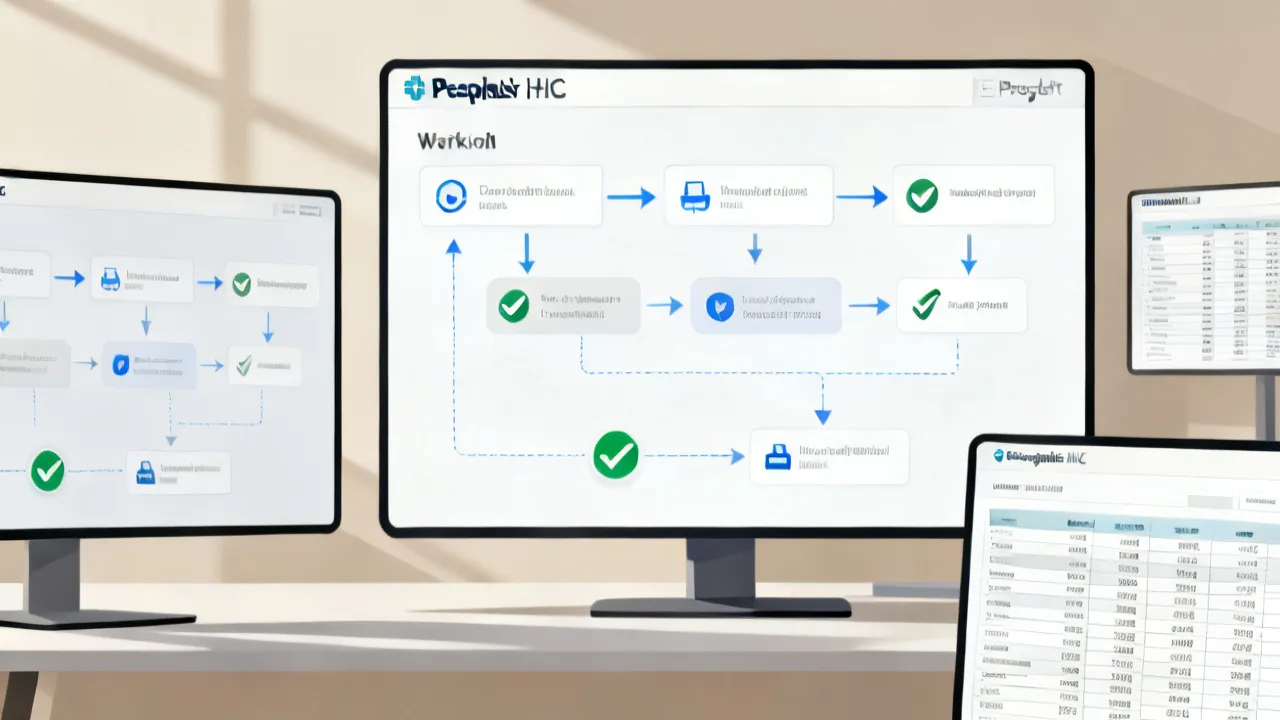
PeopleSoft HHC: why it matters for healthcare operations
PeopleSoft HHC is commonly discussed in healthcare IT because it helps organizations coordinate essential back-office capabilities—such as financial management, reporting, and workflow handling—within a structured enterprise environment. For healthcare teams, the key value is not just “having software,” but ensuring the system’s configuration, data model, and controls align with how care delivery, billing-adjacent processes, and compliance expectations operate day to day.
In healthcare organizations, operational success depends on how reliably transactions move through processes: requests are authorized, purchases are approved, payments are executed, adjustments are documented, and reports reflect reality. PeopleSoft HHC often becomes a central mechanism for those administrative transactions. When configured with governance and integration in mind, it can strengthen visibility across departments and reduce process friction. When implemented without clear ownership of master data, audit trails, and workflow accountability, it can introduce delays, reconciliation headaches, and reporting inconsistencies that are painful during audits, financial close, or operational incident reviews.
From an industry perspective, the critical question is whether PeopleSoft HHC is being used as a unified operational backbone or as a collection of disconnected modules. The difference is largely cultural and architectural: a unified backbone treats the PeopleSoft configuration as a governed system of record for defined domains, while disconnected module usage treats the platform as a toolkit that different teams configure in different ways. In the former case, organizational units, approvals, and reporting definitions remain consistent across time; in the latter, “same-looking fields” may encode different business meanings, leading to mismatched reporting and unclear accountability.
Additionally, healthcare is an environment where operational processes intersect with compliance requirements. Even when PeopleSoft HHC does not directly contain clinical data, it often stores or orchestrates administrative data that auditors expect to be traceable: purchase approvals, vendor records, organizational hierarchies, budget ownership, and system change history. That makes governance and auditability more than theoretical best practices; they are practical requirements for operational continuity and risk reduction.
Background: what “PeopleSoft HHC” usually refers to in practice
In many enterprises, “PeopleSoft” denotes Oracle’s PeopleSoft suite, which is widely used for enterprise resource planning (ERP) and human capital management (HCM). “HHC” in healthcare contexts typically signals a healthcare-specific configuration, implementation scope, or module set that supports healthcare operations such as finance governance, procurement workflows, reporting structures, and administrative processes that intersect with clinical operations. Because healthcare organizations vary—public hospitals, provider groups, community health systems, and academic medical centers—there is rarely a single “universal” PeopleSoft HHC setup. Instead, the term often reflects a tailored deployment.
Objectively, any PeopleSoft HHC engagement generally revolves around three areas:
- Process alignment: ensuring workflows match how the organization actually approves, records, and reconciles transactions.
- Data integrity: standardizing master data (e.g., chart of accounts, organizational hierarchy, vendor/customer structures, cost centers) and maintaining referential accuracy.
- Controls and auditability: enabling role-based access, change management discipline, and traceable processes that support internal controls.
However, “PeopleSoft HHC” can mean different things depending on the organization’s maturity and implementation strategy. Some organizations use it primarily for finance and procurement workflows, while others expand it for broader operational reporting and administrative governance. Some treat PeopleSoft as the system-of-record for certain entities; others treat it as a workflow engine that synchronizes with other systems. The practical meaning becomes clearer when you examine the boundaries: which entities are authoritative in PeopleSoft, which ones are authoritative elsewhere, and how interfaces maintain those boundaries.
In practice, PeopleSoft HHC discussions often include topics like:
- how approvals and workflow states are captured and validated,
- how master data changes are requested, reviewed, and released,
- how financial structures map to healthcare-specific reporting needs (service lines, facilities, funding sources),
- how integrations feed data into reporting environments, and
- how audit requirements translate into configuration and operational routines.
Because PeopleSoft projects can differ substantially, stakeholders frequently ask for clarity: what’s “in scope,” what’s “out of scope,” what’s standardized, and what’s intentionally left flexible. That scope clarity is especially important for healthcare operations where the business consequences of errors can include delayed payments, incorrect costing, misaligned budgets, and increased audit effort.
Industry expert view: where teams typically gain the very from PeopleSoft HHC
When PeopleSoft HHC is evaluated properly, the strongest returns tend to come from operational rigor rather than isolated “feature use.” That means teams focus on measurable improvements such as:
- Faster month-end and period-close readiness: standardized workflows and consistent financial structures help reduce exceptions that slow reporting.
- Clear accountability for approvals: workflow rules and permissions ensure actions are executed by authorized roles.
- More consistent reporting outputs: when definitions of organizational units, funds, and accounting dimensions are governed, downstream reporting becomes more reliable.
- Stronger operational documentation: mature implementations maintain a repeatable configuration baseline and training materials—crucial for healthcare environments with rotation and audits.
These benefits are consistent with common ERP top practices emphasized in industry guidance from major analyst and audit bodies, including the importance of internal controls, access governance, and process documentation. For reference, organizations often look to resources such as the OECD Principles of Corporate Governance and ISACA guidance on governance and controls frameworks. In addition, healthcare organizations regularly align technology governance with audit expectations and internal control standards.
Beyond the general benefits, “where teams gain the value” can be observed in concrete operational moments:
- During purchasing: procurement requesters understand what information is required; approvers know the decision logic; finance can reconcile purchase-to-pay more predictably.
- During vendor management: master data definitions for vendors reduce duplication and prevent payment issues.
- During budgeting and cost allocation: cost center structures and accounting dimensions become consistent across departments.
- During adjustments and corrections: controlled workflow paths provide evidence and traceability for changes.
- During audits: role permissions and logs support internal reviews without excessive manual reconstruction.
That last point often matters more in healthcare than teams expect. Healthcare audit cycles can be prolonged because they may require evidence not just of “what happened,” but also “who approved it,” “when it was approved,” and “what changed” across systems. PeopleSoft HHC can become an evidence-producing system when it is configured to support those audit narratives.
Key implementation considerations for PeopleSoft HHC
PeopleSoft HHC projects frequently succeed or stumble based on how well the organization handles scope definition, integration strategy, and operational ownership. Below are the decision points that commonly matter very.
1) Governance and ownership
Before customizing, organizations should explicitly define who owns what:
- Finance ownership: chart of accounts structure, approval matrices, reconciliation logic, and reporting definitions.
- Operations ownership: workflow mapping to operational tasks and escalation paths.
- IT ownership: integration patterns, security configuration, release management, and technical documentation.
- Data governance: master data stewardship and change approval rules.
In mature implementations, PeopleSoft HHC becomes a governed system of record for designated domains, rather than a “configurable tool” that everyone edits without consistent policy.
Governance is sometimes misunderstood as “a committee” rather than a working mechanism. In healthcare organizations, governance needs to be actionable. For example, it should specify:
- who approves changes to chart of accounts segments and when (calendar-based vs. ad-hoc),
- how emergency changes are handled during month-end,
- how exceptions are documented and resolved, and
- how system access requests are approved and validated.
Operational ownership also matters for how PeopleSoft HHC workflows are designed. In some organizations, workflow steps are mapped loosely (“finance approves,” “manager approves”) without defining exact decision criteria. Over time, approvers interpret the workflow differently, and exceptions increase. A more robust approach captures decision logic and required evidence at the workflow step level: what documents are needed, what fields must be completed, and what conditions trigger alternate paths.
Another governance aspect is the “single source of truth” principle. Healthcare organizations often have multiple versions of “organizational hierarchy” across systems: facilities in HR vs. cost centers in finance vs. service lines in reporting. PeopleSoft HHC governance should clarify which hierarchy is authoritative for each dimension and how the others map to it.
2) Data model alignment
Healthcare reporting often depends on dimensions like facilities, service lines, departments, and funding sources. If those dimensions are inconsistent between PeopleSoft HHC and related platforms, reporting outputs can become hard to reconcile. A practical top practice is to establish a data dictionary early—then treat it as a living agreement.
A data dictionary is not just a glossary of terms; it is a set of definitions with operational implications. For example, consider the difference between “department” as a staffing unit vs. “department” as a revenue/cost allocation dimension. If those concepts differ, the system may store both, but the business users might assume they are the same. That assumption can lead to misallocated expenses, incorrect cost rollups, and confusion during performance reviews.
In PeopleSoft HHC contexts, data model alignment typically involves:
- Accounting structures: chart of accounts design, accounting periods, funds, and accounting entry rules.
- Organizational hierarchy: mapping facilities and departments to finance dimensions and reporting rollups.
- Master data entities: vendor master rules, customer billing-adjacent definitions, and internal supplier mapping.
- Cost allocation patterns: how labor, supplies, and overhead allocation rules are represented and governed.
- Data lineage: documenting where each field value originates, especially when interfaces update PeopleSoft data.
Data integrity also includes referential accuracy. If a workflow references a dimension value that is deleted or renamed inconsistently, the workflow may fail late—after users have already spent time preparing requests. Or worse, it may succeed but store incorrect references. That leads to “quiet failure,” where the system accepts the transaction but the reporting becomes wrong. Preventing quiet failure requires validation logic, controlled master data changes, and clear escalation routines.
Furthermore, healthcare operations often change. Mergers, acquisitions, consolidations, and organizational restructuring are common. PeopleSoft HHC data model alignment must handle these changes gracefully. A data dictionary with clear governance helps ensure that restructuring results in predictable updates rather than ad-hoc edits that break historical reporting continuity.
3) Integration strategy
Many healthcare enterprises operate a landscape of systems—HR platforms, procurement tools, reporting warehouses, and interface layers. PeopleSoft HHC can be positioned as a hub, but integration should be designed with:
- Clear data ownership boundaries (which system is authoritative for each data type).
- Controlled change management (versioned interfaces and test evidence).
- Operational monitoring (alerting on failed jobs, late transactions, and data mismatches).
Integration is where many healthcare ERP deployments experience friction because it introduces timing and transformation issues. For example, a procurement request might be created in one system, approved in PeopleSoft HHC, and then processed in a vendor payment workflow that requires specific fields. If an interface sends incomplete or mismatched data, reconciliation may be delayed, and users may resort to manual corrections.
A robust integration strategy tends to include:
- Interface inventories: a catalog of every upstream/downstream system connection, including purpose, data domains, and frequency.
- Standard data mapping: a transformation approach that preserves meaning and ensures consistent codes and identifiers.
- Test evidence: signed-off test scenarios that cover normal paths and edge cases (e.g., missing master data, duplicate identifiers).
- Operational SLAs: agreed time windows for interface completion and remediation.
- Monitoring and observability: dashboards or alerts for interface failures, job runtimes, and data quality anomalies.
In healthcare, integration monitoring should also reflect operational timing pressures. Month-end and fiscal close often require stable, predictable data arrivals. If interfaces fail near close, the organization may have limited time to correct errors, leading to “close extensions” that affect executive reporting, board materials, and downstream analytics.
It’s also worth considering how integrations handle historical changes. If a master data entity is updated in PeopleSoft HHC (e.g., a department code changes), how does that affect existing transactions? Does the system preserve historical codes on accounting entries, or does it rely on current master data values? Integration strategy must consider these behaviors so that the financial narrative remains consistent year-over-year.
4) Security, roles, and audit trails
Healthcare organizations are expected to maintain strong internal controls. With PeopleSoft HHC, this translates into disciplined permissioning, segregation of duties where appropriate, and retention of audit-relevant logs. Even when teams do not directly handle clinical records in the PeopleSoft domain, administrative transaction trails still require careful auditability.
Security in enterprise platforms is more than controlling access; it’s controlling responsibilities. Segregation of duties (SoD) typically requires designing roles so that the person who initiates or edits a transaction is not the same person who authorizes or finalizes it (depending on policy). In healthcare finance, a common audit expectation is the ability to demonstrate who had the authority to perform each action and when.
In PeopleSoft HHC implementations, that usually means:
- Role-based access control: permissions linked to job roles rather than individual user exceptions.
- Workflow permissions: approver capabilities aligned to workflow steps and decision logic.
- Change permissions: restricting who can modify configuration, accounting structures, and security settings.
- Logging and audit trails: capturing relevant actions, approvals, and system configuration changes.
- Retention and review routines: ensuring logs are retained long enough and reviewed with defined cadence.
Audit trails should be designed with operational readability in mind. A log that is technically present but too difficult to interpret during an audit becomes a liability. Teams should test whether internal audit can answer common questions quickly using PeopleSoft reports and logs: “Who approved this transaction?” “What changes were made to the configuration that affected this period?” “Was access granted appropriately?” “Were there any exceptions or reassignments?”
Security design should also consider user lifecycle management. Healthcare organizations often have staff rotations, temporary contractors, and frequent role changes. PeopleSoft HHC security should align with identity lifecycle events (onboarding, role changes, offboarding) so that access is granted and revoked promptly and consistently.
Finally, security should account for integration access. Interfaces might run using service accounts with elevated privileges. Governance should ensure those accounts are controlled, monitored, and limited to what is necessary. Auditors frequently ask how service account permissions are managed and how interface actions are traced back to business processes.
5) Change management and training
ERP systems are used by roles with differing responsibilities. For PeopleSoft HHC, effective adoption is less about “button training” and more about process understanding: what triggers a workflow, what evidence is required, and where exceptions are handled.
As a practical guideline, training should be tied to job roles (e.g., approvers, analysts, administrators), not just modules. This reduces the likelihood of inconsistent usage that later surfaces as reporting discrepancies.
Change management is not only about configuration deployments; it’s also about operational changes in how work gets done. A well-designed PeopleSoft HHC rollout often includes:
- Pre-read materials: process diagrams and role responsibilities,
- Scenario-based training: walkthroughs of real request types,
- Exception training: how to handle missing data, rejected approvals, or integration delays,
- Post-training validation: short knowledge checks or process observations, and
- Feedback loops: how users can report issues and request improvements without bypassing governance.
In healthcare, training cycles may coincide with internal audit deadlines, budget cycles, or seasonal staffing peaks. A common failure mode is underestimating the time needed to ensure users understand the workflow logic. When training is insufficient, users may complete steps incorrectly, forcing finance teams into manual corrections. That can degrade trust in the system and increase the operational burden.
Change management also includes a disciplined approach to release communications. When changes affect workflows, users need clear information about what is different: which approval paths changed, whether new fields are required, and what reports have updated definitions. Release notes should include both technical and business-oriented impacts.
Another crucial aspect is how configuration changes are tracked. Healthcare organizations must maintain evidence of change approvals, testing results, and deployment timing. PeopleSoft HHC teams should ensure their change management process is auditable: who approved the change request, what test evidence was produced, which environments were updated, and what rollback procedures were considered.
Operational roadmap: how to evaluate PeopleSoft HHC readiness
If you are assessing PeopleSoft HHC for a healthcare organization, the very effective approach is to evaluate it as a system of workflows and controls—not only as software. A practical readiness review typically covers:
- Process mapping: identify how approvals, entries, and reconciliations flow today.
- Current-state reporting review: capture what “good reporting” means and which metrics are trusted.
- Security model review: confirm role boundaries and access rights.
- Integration inventory: list upstream and downstream systems and document data flows.
- Issue and exception taxonomy: define what breaks, where, and how it is handled.
- Release and configuration discipline: ensure changes are tracked, tested, and communicated.
Readiness also includes operational maturity. For example, if your current processes have many informal workarounds—spreadsheets that approvers use outside the system, manual journal entries that bypass workflow, or inconsistent master data edits—then a PeopleSoft HHC rollout may initially increase friction. The system will “enforce” process structure and may reduce informal bypassing. That can be uncomfortable, but it’s often the path toward sustainable controls. The key is to anticipate that transition and align stakeholders around controlled process evolution.
A robust PeopleSoft HHC readiness evaluation usually includes “day-2” concerns:
- Operations support: who monitors workflows and resolves exceptions after go-live?
- Help desk and triage: how user issues are triaged and escalated to configuration owners?
- Master data operations: how requests to change organizational or vendor data are processed?
- Close calendar planning: how system performance and interface cycles align with fiscal close?
- Audit readiness: what evidence must be produced for internal/external audits and how quickly?
Readiness is also about data volume and system performance assumptions. Healthcare finance workflows can process many transactions: purchase orders, invoices, adjustments, cost allocations, and reconciliation entries. Teams should evaluate whether the PeopleSoft HHC configuration and interface throughput supports the operational cadence. If system performance is not validated early, users may experience slow response times or job backlogs during peak periods, leading to workarounds and data quality issues.
Finally, readiness includes stakeholder alignment. PeopleSoft HHC success depends on finance, operations, IT, internal audit, and compliance working together. If one group delays decisions—particularly around master data governance or workflow logic—the entire project can lose momentum. A readiness assessment should identify decision owners and confirm their availability for design and validation sessions.
Comparison supplement: PeopleSoft HHC options organizations often consider
Because “PeopleSoft HHC” commonly reflects tailored scope, organizations typically compare approaches before committing to a build or enhancement program. The table below contrasts common implementation paths. (No location-specific pricing is included because it varies heavily by contract structure, scope, and deployment model.)
| Option | Typical focus | Common benefits | Conditions/requirements |
|---|---|---|---|
| Baseline PeopleSoft ERP configuration with healthcare operational workflows | Standard finance and workflow setup tailored to internal approval processes | Reduced complexity, faster stabilization | Clear ownership for chart structures, validated workflow maps, and documented approval policies |
| PeopleSoft HHC as a governed system of record for defined domains | Strengthened governance, master data controls, and audit-ready transaction trails | Improved reporting consistency and stronger internal controls | Data dictionary agreement, role-based permissions, and ongoing stewardship processes |
| PeopleSoft HHC with extended integrations to reporting and operational systems | Interfaces to warehouses, analytics layers, and upstream operational tools | Better operational visibility and faster decision cycles | Integration monitoring, interface versioning, and test evidence for data transformations |
| Iterative enhancement program (phased improvements) | Incremental upgrades to workflows, controls, and reporting definitions | Lower disruption, manageable change adoption | Release cadence planning, training waves, and a backout strategy for critical changes |
It is helpful to think about these options not as a strict choice but as a maturity pathway. Many organizations start with baseline configuration to stabilize core workflows, then add governance layers for master data and controls, and later enhance with integrations and analytics. That approach reduces risk because teams can validate core transaction flows before expanding complexity.
Another comparison dimension is “how much customization” versus “how much standardization.” Over-customization can create an environment that is hard to maintain and difficult to audit. Standardization, while sometimes challenging, tends to make future upgrades easier and reduces the likelihood that reporting definitions drift. PeopleSoft HHC initiatives often benefit from a deliberate customization strategy: customize only where the business process truly differs or where governance requires it, and otherwise align to proven patterns.
Step-by-step guide: aligning PeopleSoft HHC with healthcare workflows
Below is a practical, sequential approach that many healthcare enterprises follow when they want PeopleSoft HHC to support operational reliability rather than introduce uncertainty.
- Define scope by domain: clarify which operational areas PeopleSoft HHC will own (e.g., finance governance, procurement workflow tracking, administrative reporting structures).
- Map current workflows to target states: document how work moves from request to approval to recordkeeping, including exception handling.
- Establish master data governance: agree on authoritative sources for core entities and define approval rules for changes.
- Design security and auditability: create role-based permissions, segregation-of-duties considerations, and audit log expectations.
- Plan integration points: identify upstream/downstream systems, message formats, and monitoring requirements for interfaces.
- Configure and validate workflows: run testing scenarios that mirror real operational patterns, including edge cases.
- Prepare adoption and documentation: develop role-based training materials and quick reference guides aligned to real tasks.
- Operationalize monitoring: set up dashboards/alerts for interface failures, data mismatches, and workflow bottlenecks.
- Review and improve continuously: conduct periodic process reviews and audit-oriented checks to keep governance current.
To make the process more tangible, each step can be expanded into operational activities and deliverables.
- Define scope by domain: stakeholders list every major transaction type (e.g., purchase requests, purchase orders, invoice posting, adjustments). For each transaction type, the group decides whether PeopleSoft HHC is authoritative and what the handoffs to other systems should be.
- Map current workflows to target states: teams create swimlane diagrams with responsibilities by role. They also capture “exception lanes” such as missing approvals, rejected requests, or records that require manual review.
- Establish master data governance: define who can create, approve, update, deactivate, and re-activate master data values. Include rules for historical preservation (e.g., whether historical accounting entries reference old codes).
- Design security and auditability: build a role matrix that maps workflow steps to permissions. Then validate that internal audit can answer common questions using reports and logs.
- Plan integration points: document not just data mapping but also error handling. Determine what happens if an interface fails (e.g., retries, quarantining bad records, user notifications).
- Configure and validate workflows: create test scripts that include normal volume, peak volume, and worst-case scenarios (missing data, invalid codes, duplicate records).
- Prepare adoption and documentation: create “how to” guides for each role, but also include “what to do when” scenarios to help users handle exceptions without bypassing governance.
- Operationalize monitoring: define dashboards for key indicators such as workflow backlog, exception rate, and job runtime thresholds.
- Review and improve continuously: set a cadence for governance reviews (quarterly or semi-annual) to ensure workflows and master data definitions continue to match operational reality.
Another practical refinement is ensuring that test scenarios reflect healthcare operational patterns. For example, procurement approvals may follow different patterns during emergency purchases, staffing changes, or seasonal supply demand. If those patterns are not included in testing, the organization may discover them only after go-live, when time constraints and audit deadlines are already in motion.
Conditions and requirements to verify before rollout
- Configuration governance: confirm you can control and track changes across environments (dev/test/prod) and across releases.
- Role coverage: ensure every workflow step has an accountable role and that permissions match job responsibilities.
- Data integrity validation: verify master data consistency and test reconciliation logic where financial reporting depends on dimensions.
- Interface readiness: ensure upstream/downstream systems can support required data formats and operational timelines.
- Audit evidence: define what logs and artifacts are retained for internal review needs.
It’s useful to translate these conditions into “proof points” that stakeholders can verify. For instance:
- Configuration governance proof points: existence of a change request workflow, test evidence repositories, and deployment logs that can be traced end-to-end.
- Role coverage proof points: completed role matrix reviewed by finance leadership and internal audit, plus validated workflow permissions.
- Data integrity validation proof points: reconciliation test results showing that transactions roll up correctly across dimensions and accounting structures.
- Interface readiness proof points: interface test results including timeouts, retries, and data quality validations.
- Audit evidence proof points: sample audit “requests” answered using PeopleSoft logs and workflow audit trails.
Healthcare organizations also benefit from verifying operational contingency plans. What happens if PeopleSoft HHC is unavailable during critical processing windows? Many deployments include disaster recovery and business continuity planning for major ERP platforms. Even if downtime is rare, the plan reduces panic and improves continuity.
Another requirement is user support readiness. Rollout success depends on whether users can get help when workflows fail or when data is missing. Without a clear triage path, organizations can see escalation fatigue: users repeatedly contact IT for business logic issues, while finance teams struggle to interpret system errors. Establishing support pathways in advance prevents that cycle.
Expert considerations: aligning PeopleSoft HHC with compliance and risk management
Even when PeopleSoft HHC is primarily viewed as an administrative or financial system, risk management principles still apply. Healthcare organizations often face scrutiny around data handling, access controls, and auditability. Strong governance reduces uncertainty when internal audit reviews or external audits require evidence of process consistency.
For objective grounding, organizations typically align their technology governance with established control frameworks and audit guidance. For example, ISACA’s research and frameworks emphasize governance structures, risk awareness, and controls over changes and access—principles that map well to how PeopleSoft HHC should be administered. Similarly, internal control standards used globally stress the importance of segregation of duties and documented approval processes.
In healthcare operations, risk management also includes operational risk. If PeopleSoft HHC workflows are too complex, users may bypass them or create exceptions. If workflow steps require too much manual evidence entry, users may experience fatigue, leading to incomplete or incorrect submissions. Risk is therefore not only about security; it is about process reliability and human behavior.
Experts often recommend risk-based design. Instead of attempting to perfect every workflow path at once, organizations identify higher-risk transaction types and allocate more governance attention there. For example:
- High-risk transaction types: approvals involving budget changes, accounting adjustments, vendor master creation, or high-value procurement transactions.
- Medium-risk transaction types: routine procurement requests and minor updates that can be validated with standard evidence.
- Lower-risk transaction types: non-financial administrative updates that still require controls but may be less audit-critical.
Risk-based design helps teams prioritize configuration and validation efforts. It also helps training focus on where mistakes are most costly.
Another compliance aspect is the auditable configuration baseline. External audits may evaluate whether the system configuration is consistent with control expectations at the time of the audit period. That requires disciplined change management. If PeopleSoft HHC configuration changes are frequent and not well documented, the organization’s audit evidence may be incomplete or difficult to reconcile.
Similarly, internal compliance teams often want assurance that access is controlled and reviewed. A governance program usually includes periodic access recertification. In healthcare settings, where roles change and staff rotate, recertification ensures that PeopleSoft HHC permissions do not drift into unauthorized territory.
Finally, risk management includes data quality monitoring. If master data errors propagate into financial reports, the organization may face compliance issues due to inaccurate reporting. Data quality can be monitored through validations, interface checks, and periodic reconciliation reports. PeopleSoft HHC can support this through well-designed validation rules and reporting outputs, but the operational routine must be defined and owned.
FAQs
What does “PeopleSoft HHC” typically include?
In many organizations, PeopleSoft HHC refers to a healthcare-scoped implementation of the PeopleSoft suite. It can include finance-related capabilities and workflow configurations tailored to healthcare administrative processes. The exact modules and settings vary by organization, but the common thread is that the implementation is adapted to how healthcare enterprises manage approvals, master data governance, and reporting structures.
How do I confirm whether PeopleSoft HHC is the right fit for my healthcare organization?
Evaluate fit by mapping your current workflows to the target process design, confirming data governance readiness, and testing how reporting definitions will behave across your organizational structures. A short discovery and workflow mapping phase usually reveals whether the configuration can support your operational reality. It also reveals where major differences exist between today’s informal practices and the controlled workflows the system can enforce.
Will PeopleSoft HHC replace existing systems?
Not necessarily. Many healthcare enterprises use PeopleSoft HHC as a governed backbone for specific domains, while integrating it with other platforms for HR, analytics, or operational systems. The “replace vs integrate” decision should be based on data ownership, process boundaries, and operational risk. In many cases, PeopleSoft HHC replaces only certain functions (like finance governance) while leaving upstream clinical or billing systems intact.
What are the very common implementation risks for PeopleSoft HHC?
Common risks include insufficient master data governance, unclear workflow ownership, weak access control design, under-specified integration monitoring, and training that focuses on screens rather than on process accountability. Another frequent risk is the absence of an exception strategy. When exceptions are not defined, users create ad-hoc workarounds that reduce auditability and degrade reporting consistency.
How should security and audit trails be handled?
Security should be implemented using role-based permissions aligned to segregation-of-duties expectations where applicable. Audit trails should be designed to capture relevant actions and change evidence, and operational teams should be able to interpret these logs during internal reviews. A key best practice is to validate audit readiness through test cases that mimic real audit questions rather than assuming logs are “there.”
Do we need custom reports and analytics?
Often, yes—because reporting requirements differ across healthcare organizations. However, the top practice is to standardize definitions (dimensions, organizational hierarchies, and transactional rules) before building large reporting libraries. This improves consistency and reduces rework. It also helps ensure that metrics used for operational decision-making remain stable over time.
Is PeopleSoft HHC primarily a technical project?
No. While configuration and integration are technical work, PeopleSoft HHC success depends heavily on operational process design, governance, and adoption. Many projects succeed when business process owners actively participate in workflow design and validation. A common pattern is that IT can implement the system correctly, but the organization still experiences reporting issues if governance and master data ownership are not clearly defined.
Conclusion: treating PeopleSoft HHC as an operational control system
PeopleSoft HHC is top approached as an operational control system for healthcare-adjacent administration—one that can improve consistency, accountability, and reporting reliability when it is governed effectively. Rather than focusing only on configuration possibilities, healthcare leaders should prioritize workflow ownership, master data integrity, integration monitoring, and audit-ready controls. With those foundations in place, PeopleSoft HHC can support steadier operations and clearer decision-making across the enterprise.
In the end, the most durable value of PeopleSoft HHC comes from how it shapes behavior: it encourages consistent approvals, produces traceable evidence, and reduces ambiguity in reporting definitions. When organizations treat PeopleSoft HHC as a managed system of record—rather than a set of loosely connected capabilities—they create a stronger platform for operational continuity, compliance readiness, and improved financial clarity across healthcare operations.