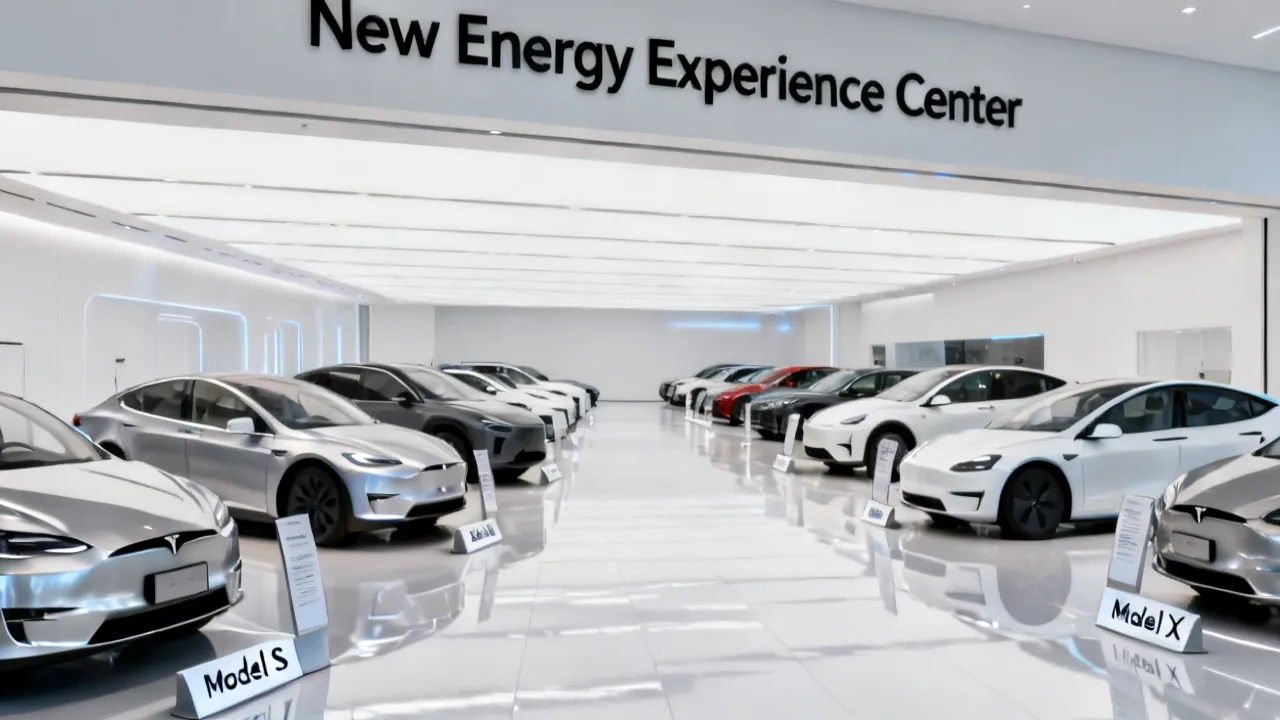
Polestar Southampton Buying Guide and Dealer Options
This guide helps you evaluate Polestar Southampton options, compare reputable car marketplaces, and plan a careful purchase workflow. It provides objective background on the Polestar brand and how local buying channels typically work, including what to check in pricing, specification, charging readiness, and aftersales support before you commit to a vehicle.

Start Here: How to Choose a Polestar Near Southampton Safely
If you’re considering Polestar Southampton, the very reliable approach is to narrow down your exact vehicle requirements first (range needs, charging access, software/trim, and warranty coverage), then validate inventory and aftersales details across reputable sources. Because Polestar vehicles are heavily dependent on software features and charging setup, “the top deal” usually comes from matching your lifestyle to the car’s configuration—not only from headline price.
From an expert buying perspective, you’ll generally make fewer costly mistakes when you treat the process as three checkpoints: (1) confirm the exact spec and condition, (2) verify ownership and warranty continuity, and (3) ensure the dealership or marketplace can support you post-sale (servicing, updates, and parts availability). This is especially important for electric vehicles, where charging compatibility and system health matter as much as aesthetics.
Also remember that “near Southampton” can mean different practical realities depending on where you live and how you charge. Southampton itself has busy routes around the docks and approaches, so if you want a smooth inspection or test drive, you’ll want to plan appointment times carefully. The safest strategy is to reduce uncertainty early: confirm the car’s specification, understand how charging works for that particular setup, and confirm how warranty and service claims are handled.
As you read this guide, treat it like a set of safe decision rules. It’s not just about whether you can find a Polestar listing; it’s about whether you can buy one with confidence, know what you’re paying for, and avoid the most common pitfalls that can arise in used EV shopping—especially when searching via online terms like “Polestar Southampton” or “Polestar on sale near Southampton.”
What “Polestar Southampton” Typically Means for Buyers
In practice, “Polestar Southampton” is a way shoppers describe where they want to buy or service a Polestar vehicle in the Southampton area. Depending on the channel, you may encounter:
- Dealer-linked inventory (vehicles listed or supported through a local retail network)
- Third-party marketplaces that aggregate listings from multiple sellers
- Trade-in pathways where the seller consolidates the buying and selling process
For decision-making, the distinction matters. A dealership-backed listing often offers clearer aftersales responsibilities and a more consistent delivery experience, while a marketplace listing may provide broader choice but requires more diligence on seller credentials, vehicle history, and specification details.
To make the term “Polestar Southampton” useful rather than vague, you should translate it into something concrete for yourself. For example:
- If you mean “I want to test drive and collect in Southampton,” confirm where the car is physically located and whether you can access it easily at your preferred times.
- If you mean “I want service convenience,” confirm which service partners handle EV support locally and whether the seller can guide you through warranty or software update requests.
- If you mean “I want the best deal in my area,” you must compare total ownership costs and not just price—especially for electric vehicles.
In other words, “Southampton” is only a location marker. Your real job is to ensure the vehicle you choose fits your charging routine, your driving profile, and your ownership timeline.
Expert Checklist: Key Questions Before You Commit
Before you even compare offers, verify the fundamentals that affect the total cost of ownership and day-to-day usability:
1) Exact model and trim (not just “Polestar”)
Polestar lineups can differ significantly in features, charging behavior, and software capabilities. Always confirm the model, trim, and factory options—for example, whether your configuration includes the features you will actually use (driver assistance features, comfort packs, wheel/tire setup, and interior options).
It’s easy to accidentally compare different versions of the “same” car when looking at online listings. Two Polestars may share a model name but be miles apart in equipment. For instance, one listing might include a comfort or convenience pack that you rely on daily, while another listing could omit it. The cost difference later may appear small, but the day-to-day impact can be significant.
When you ask for the exact specification, try to request it in a way that prevents ambiguity. For example, ask for:
- The VIN (Vehicle Identification Number) so the seller can provide a verified spec sheet
- A list of included packages and options
- Wheel size and tyre type, because these affect comfort, grip, and efficiency
- Any included accessories (cables, charging adapters, mobile connector equipment, etc.)
If you’re buying a used vehicle, also confirm whether the car is “optioned” the way the listing describes. If the listing is short on detail, it’s not necessarily a scam—but it is a risk. More uncertainty means more work later, and for EVs, some work is expensive (diagnostics, charging troubleshooting, or reconditioning).
2) Charging compatibility and charging plan fit
Electric vehicle ownership hinges on charging access. Ask how the car was charged previously (where possible), and make sure your routine aligns with the charging infrastructure you can access regularly. If you rely on home charging, confirm the compatibility with your electrical setup and review recommended charging practices from the manufacturer or seller-provided documentation.
Charging compatibility isn’t just “will it charge.” It’s “how effectively can I charge the way I live.” Consider these practical questions:
- Do you have off-street parking where you can charge at home reliably?
- If you don’t, are you able to use public chargers frequently enough to meet your commute and personal travel needs?
- How far are you from common charging locations around Southampton and the routes you drive most?
- Do you have a realistic plan for peak-hour or charger congestion scenarios?
Even if a Polestar supports charging standards that match most modern chargers, real-world performance can still vary. The car’s charging experience depends on system health, configuration, battery condition, and—importantly—whether the charging equipment you use is stable and compatible. So you should ask the seller for any relevant charging notes, service records, or documentation that indicates whether the car has previously had charging-related issues.
If the seller cannot provide any information about prior charging behavior, you can still manage risk by planning your own verification. For example, you might confirm that you can test drive and see the car’s general condition, then ask whether there is a way to review battery or charging diagnostics through a documented service check.
3) Warranty, service history, and software update support
For Polestar cars, software features and update support can be part of the ownership experience. Request the service history and confirm whether any coverage remains transferable or continues through the documented ownership chain.
Because modern vehicles are software-driven, a key safety theme for EV shopping is: can you rely on the system to keep working normally after purchase? Software updates can improve features, refine usability, and resolve bugs. If a vehicle has never been updated, or has gaps in service records, you might be waiting for things that should have been handled earlier.
When you speak to a seller, don’t only ask whether the car is under warranty. Ask how warranty claims are typically handled. Also ask whether the seller provides any post-sale support, such as:
- Guidance on logging service requests
- Assistance with software update steps
- Clear documentation handover so warranty and ownership transfer are smooth
Service history should include at least routine maintenance where applicable, and for EVs, it should include any diagnostics performed for battery health checks or charging issues. A seller who can provide a clear record creates ownership confidence.
4) Condition and documentation quality
Scrutinize condition reports (or equivalent descriptions). For used vehicles, evidence matters: maintenance records, mileage verification, inspection results, and any documented repairs. If the listing provides limited detail, treat that as a risk signal and ask follow-up questions.
Condition in an EV isn’t only about scratches. You should pay attention to:
- Tyre wear and whether tyres match the expected specification for that trim
- Brake condition (some EVs still require brake checks; corrosion or uneven wear can indicate neglect)
- Wheel damage, alignment issues, and suspension signs
- Charging port condition and cable wear (if included)
- Interior condition related to tech use (screens, seats, and control buttons)
Also consider how the listing describes condition. If it uses vague phrases like “good condition” without specifics, ask for more. A safe buyer tries to gather enough factual information that they can make a decision without “hoping” the car is fine.
5) Total cost comparison, not just monthly payments
Buyers often focus on monthly costs, but the “low price” offer can change once you factor in deposit, term length, interest rates, insurance implications, and end-of-term conditions. The goal is to compare apples to apples: same model spec, comparable condition, and similar financing structures.
When comparing offers, request the full breakdown in writing. For example, ask for:
- Upfront costs: deposit, registration fees, delivery fees, documentation fees
- Ongoing costs: monthly payments, interest or APR, service plans (if any)
- End-of-term costs if relevant: balloon payments, return conditions, mileage limits
For EVs, also consider insurance and maintenance differences. Even if the Polestar is generally similar in ownership costs to other EVs, your insurance quote can vary significantly based on location and vehicle spec (like wheel size or trim). So it’s smart to get an insurance quote early, before signing.
Where to Find Vehicles on Sale: Official Car Marketplace Websites
To locate Polestar vehicles (including inventory listed as available for sale), many shoppers use large, established platforms that aggregate listings from sellers. Below is a comparison table focused on how these marketplaces are structured—use it to decide where to start your search.
| Platform type | What it’s top for |
|---|---|
| Major consumer vehicle marketplace | Browsing broad inventory and comparing listings across many sellers |
| Retail-focused inventory hub | Reviewing dealer-style stock presentation and standardized listing structure |
| Aggregator for pre-owned offers | Finding deals by filtering for price, location, and vehicle attributes |
Sources of information (official reference pages):
source: [www.cars.com](www.cars.com)
source: [www.carmax.com/cars](www.carmax.com/cars)
source: [www.caronsale.com/en](www.caronsale.com/en)
source: [www.autotrader.com](www.autotrader.com)
(Information reference: official marketplace websites listed above.)
Beyond the platform itself, your safe buying strategy is to treat each listing as its own case. Marketplace websites are useful because they help you compare options quickly, but responsibility for quality and documentation still rests with the seller. That’s why it’s worth using the platform to discover candidates, then verifying details directly with the seller using your checklist.
You can also use multiple platforms in parallel. This reduces the odds of missing a better-spec car or a seller with more transparent documentation. When you find a promising listing, save it and compare it against your shortlist on spec, charging practicality, condition notes, and warranty coverage.
Step-by-Step: How to Buy a Polestar Car on Sale (Near Southampton)
Below is a practical workflow you can follow to find a suitable Polestar listing, reduce risk, and compare offers effectively.
Step 1: Set your “non-negotiables”
- Confirm the model and trim you want
- Define the minimum charging setup you can support at home or nearby
- List must-have features and tolerable compromises
To make this step truly useful, translate it into measurable terms. For example:
- If you require certain driver assistance features, list them by name (or ask the seller to confirm your build includes those features)
- If you need enough range for typical journeys from Southampton, calculate your realistic daily driving distance and planned top-ups
- If your home charging situation is limited, decide what “acceptable” charging frequency looks like
Non-negotiables prevent you from being pulled by a tempting discount that later becomes a nuisance. For EVs, “nuisance” can be real cost: spending time coordinating public charging, making detours, or living with a range anxiety cycle that affects your driving habits.
Step 2: Filter aggressively (spec first, price second)
Use marketplace filters to narrow by year-range (if applicable), mileage, location area, and features. Then refine by condition notes and listing clarity. A slightly higher price for a better-specified vehicle often beats a “cheaper” match that lacks key features.
When filtering, be careful with “too-good-to-be-true” listings. In the Southampton area, availability can vary, and some sellers might list cars with missing details or inconsistent photos. Instead of focusing on absolute lowest price, focus on “the lowest price for the correct spec.”
Practical filtering tips include:
- Include features you need (comfort features, assistance features, interior options)
- Exclude listings that omit core details, unless the seller is willing to provide them quickly
- Prioritize sellers who show clear documentation and consistent listing descriptions
Step 3: Validate the seller and documentation
When you find a candidate offer, confirm:
- Is the seller identifiable and consistent across listings?
- Are service and inspection records included?
- Is there a clear description of vehicle condition, including any known issues?
Seller validation is not about distrust for its own sake—it’s about reducing operational risk. If you buy from a seller who cannot provide consistent information, you may struggle later with warranty claims, missing parts, or unclear ownership transfer processes.
Ask for clarity on:
- Who will handle final handover and paperwork
- Whether there is a return policy or any coverage for early faults
- How the seller handles repair commitments if you find issues during inspection
Step 4: Request pre-purchase checks
For used vehicles, request a thorough inspection if the seller doesn’t provide one. For electric vehicles, also verify that charging-related concerns are addressed (where possible through documentation and responsible seller answers).
Inspections are especially important for EVs because the “feel” of a car can sometimes mask certain issues. For instance, a vehicle might drive normally but have underlying charging faults, battery health concerns, or software-related problems that only show up under certain conditions.
When requesting checks, ask what kind of inspection is offered. You ideally want something that includes a detailed condition report and any relevant diagnostic checks. If the seller offers an inspection, ask for the report itself, not just verbal reassurance.
If possible, arrange the inspection at a time that allows you to return the vehicle promptly if issues are found. A safe buyer treats inspections as an opportunity to confirm your risk is acceptable—not as a formality.
Step 5: Compare purchase pathways (cash vs financing vs part exchange)
Ask for a complete breakdown. The top bargain can change depending on fees, deposit requirements, and how the seller handles trade-ins or financing terms. Aim for comparability rather than chasing one low number.
Financing can look affordable, but you should check:
- What APR you’re getting and whether the quote depends on credit score ranges
- Whether fees are included upfront or hidden in the term
- Whether there are early settlement penalties
- How part exchange values are calculated and whether they are contingent on final inspection
In some cases, sellers may quote a low monthly payment by extending the term. That can be fine if you plan to keep the car long-term, but it can be a trap if you might want to switch vehicles early.
For a used Polestar, you should also think about how your financing plan aligns with your ownership goals. If you plan to keep the car beyond the financing term, it’s about affordability and risk. If you may return or refinance, it’s about flexibility and cost to change later.
Step 6: Confirm delivery and aftersales support
Even when the vehicle is available near Southampton, ensure you know where servicing occurs and how warranty or support requests are handled. Local knowledge—such as which service partners are easiest to access—often reduces friction after purchase.
This step is often overlooked. Many buyers focus on the vehicle and forget about what happens if something goes wrong within the first weeks or months. With EVs, early support can include:
- Charging troubleshooting guidance
- Software update scheduling or assistance
- Handling any warning lights or diagnostic messages
- Tyre or wheel-related replacements if damage is found
Ask the seller explicitly:
- Which service route should you use (and is it local to Southampton)?
- How quickly do you expect a response if you submit a warranty-related issue?
- Do they provide any handover appointment or orientation session for EV systems?
Step 7: Final review before signing
- Match the listing specification to the final contract
- Re-check total costs and any return or coverage terms
- Confirm documentation handover (service history, manuals, and ownership transfer steps)
Before you sign, insist that the written agreement matches what you were promised. This includes model/trim, included options, and any seller-provided commitments like reconditioning work or accessory inclusions.
A safe buyer also reads the small print about returns and coverage. Some agreements offer protection for certain faults only, others have time limits, and others require you to use specific service channels. Understanding those conditions up front can prevent expensive disputes later.
Conditions and Requirements That Commonly Affect “On Sale” Offers
Online listings can look similar, but the underlying “on sale” conditions often differ. Use the comparison below to interpret offers more accurately.
| Condition/requirement | What to watch for when buying |
|---|---|
| Stock availability and reservation | Confirm timelines and what happens if the vehicle is reserved or sold before completion |
| Vehicle history disclosure | Prefer listings that provide clear documentation; unclear histories increase buying risk |
| Warranty coverage and transferability | Clarify what remains covered after sale and how claims are handled |
| Financing or exchange terms | Check the total cost; avoid comparing offers on one single figure alone |
“On sale” can sometimes mean different things operationally:
- A discount on an in-stock vehicle with immediate collection
- A promotional finance offer where the monthly payment is reduced by special rates
- A time-limited deal that depends on credit approval
- A part exchange deal that assumes your trade-in value under certain conditions
If you treat all “on sale” labels as equivalent, you might misjudge the value. The safe approach is to ask for the full deal structure in writing and confirm that it applies exactly to the car you’re buying.
Also note that listing photos and descriptions can be inaccurate—sometimes inadvertently. Before committing, request confirmation of:
- Whether the wheels/tyres shown match the actual vehicle
- Whether any cosmetic issues visible in photos remain unresolved
- Whether accessories are included (charging cables, floor mats, adapters)
- Whether mileage shown is correct and verified
Professional Insights: What “Good Value” Looks Like for Polestar
In the UK market context, value is rarely “only the lowest price.” As an industry-informed lens, a sound decision typically reflects three layers: spec value, ownership certainty, and operational practicality (charging and servicing access).
For electric vehicles, operational practicality can be overlooked. Buyers in and around Southampton often consider commute patterns, access to home or destination charging, and convenience of service routes. If charging access is limited, the top-priced offer can become expensive through the need for alternative charging arrangements or reduced driving confidence.
Also consider the “hidden” costs of mismatched configurations—wrong wheel/tire setups for your typical roads, missing safety/comfort features you’ll feel every day, or a condition profile that leads to additional reconditioning.
Value for a Polestar can also include the quality of the ownership experience. That might sound intangible, but it shows up in real ways:
- Software update readiness and whether the system is likely to behave predictably
- Whether there are clear service records that reduce uncertainty about wear items
- Whether the seller provides transparent communication and a professional handover process
To measure value more objectively, consider using a “risk-adjusted” approach:
- If two vehicles are priced similarly, choose the one with clearer documentation and stronger warranty continuity.
- If one vehicle is cheaper, quantify what you’re giving up (features, condition clarity, charging support, warranty gaps).
- Decide your acceptable risk level and stick to it—don’t let emotion override your checklist.
One reason EV deals can mislead buyers is that a price cut might be related to a problem that is not obvious in photos. The safe response is to request inspection evidence and clarify any warning lights or past issues before you proceed.
Local Buying Context: Navigating Southampton Responsibly
When purchasing in the Southampton area (“nearby”), you’ll often interact with logistics like collection points, delivery scheduling, and servicing access. Southampton is a maritime hub, with distinct traffic patterns around docks and city access routes; in practical terms, ensure you can complete test drives and inspection appointments at suitable times, especially if you’re coordinating around work or travel.
It’s also wise to think about how you’ll integrate the car into your routine immediately after purchase. Even if the vehicle is “available now,” your first month of ownership can reveal practical questions. For example:
- Can you easily route to your typical charging points without excessive detours?
- Will you need a new charging cable or adapter soon?
- Do you know where you’ll go for service or diagnostics?
- Do you have a backup charging plan if a public charger is out of order?
For a smoother experience, it helps to ask the seller how they handle:
- Appointment scheduling for inspections
- Delivery arrangements if you choose collection or transport
- After-purchase support for questions that arise once you take the car home
If you want additional safety, schedule your test drive and inspection so you can verify multiple aspects: driving comfort, road noise, responsiveness, and basic operational functions. For EVs, you may also want to evaluate how the car behaves at different speeds and how smoothly it transitions between driving and regen modes—since these behaviors influence your daily driving comfort.
Finally, if you’re trading in your current car, plan the timeline carefully. A safe timeline prevents situations where you’re waiting for ownership transfer, missing paperwork, or juggling multiple appointments around city traffic.
FAQs About Polestar Southampton and Buying a Car on Sale
1) What does “Polestar Southampton” cover—dealer listings or online marketplaces?
It’s usually shorthand for where buyers can find Polestar vehicles in the Southampton area (“nearby”). That may include dealer-linked inventory or third-party marketplace listings. Always verify the seller type, documentation quality, and aftersales responsibilities for the specific listing you’re considering.
2) How can I tell whether a listing labeled “on sale” is truly good value?
Compare the total cost of ownership factors: exact trim/spec, condition, service history, warranty coverage, and financing terms. A slightly higher-priced vehicle with better documentation and a stronger coverage situation often offers better risk-adjusted value than the lowest price.
To make the comparison practical, try building a simple scorecard for each shortlisted car:
- Spec match (do you truly get what you want?)
- Documentation clarity (is the history and condition easy to verify?)
- Warranty continuity (is coverage likely to remain helpful after purchase?)
- Charging practicality (does it suit your routine?)
- Seller support (is there a real plan for after purchase assistance?)
Then choose the car that wins most categories, not necessarily the one that wins on price.
3) Are electric vehicles like Polestar more sensitive to charging conditions than petrol cars?
Yes. While all cars need practical servicing access, EV usability strongly depends on your charging routine. Before purchase, confirm you can support your expected driving needs and charging availability, ideally aligned with your home or predictable charging destinations.
Also consider “charging reliability” rather than just “charging availability.” Chargers can be busy, out of service, or slow depending on site and time. A safe EV plan includes a primary charging method and at least one alternative method you can rely on if your first option is unavailable.
4) Should I prioritize dealer listings over marketplace listings?
Dealer listings often provide clearer accountability for aftersales processes. Marketplace listings can still be worthwhile, but you should be more rigorous about verifying vehicle history, seller reputation, and what support looks like after purchase.
That said, you can still buy safely via marketplace channels if you do the work. The difference is that you may need to verify more: confirm the vehicle history, request inspection evidence, and ensure warranty continuity and claim procedures are clearly described.
5) What documents should I request before buying a used Polestar?
Request service and maintenance history, inspection/condition notes (or equivalent evidence), and clarity on warranty coverage and how it transfers. Also confirm any relevant ownership transfer steps so there are no surprises at completion.
If the seller can’t provide certain documents, ask why. If the reason is reasonable (for example, missing paper records but available digital history), you can still proceed—but ensure you get alternative proof. A safe buyer never relies entirely on verbal reassurance when buying a high-value electric vehicle.
Conclusion: Build a Shortlist, Then Validate the Details
For buyers using search terms like Polestar Southampton, the smartest strategy is not to chase listings indiscriminately, but to build a shortlist based on model/trim and charging practicality—then validate condition, warranty continuity, and seller accountability. When you apply this disciplined approach, “on sale” offers become easier to compare, and the top choice tends to emerge from evidence rather than impulse.
One final safety principle: if you feel rushed, slow down. The safest deals are the ones you can verify. If a seller cannot provide the information you need to make a confident decision, treat that as a legitimate signal. With EVs, small uncertainties can become expensive disruptions—so your best protection is a clear spec match, transparent documentation, and a realistic plan for charging and service support after you take delivery.
Disclaimer
1) The above information comes from online resources, and the data is as of October 2023.
2) For more information, please refer to the official website.
Reference Links (from the article)
- source: www.cars.com
- source: www.carmax.com/cars
- source: www.caronsale.com/en
- source: www.autotrader.com