
Comparing Justworks and Indeed for Hiring Teams
This guide explains how Justworks and Indeed support hiring and HR workflows, from sourcing candidates to onboarding and compliance. Justworks focuses on employer-operations software for teams that want streamlined HR administration, while Indeed is a widely used recruiting platform for job distribution and applicant discovery. The comparison is objective, practical, and built for real hiring constraints.
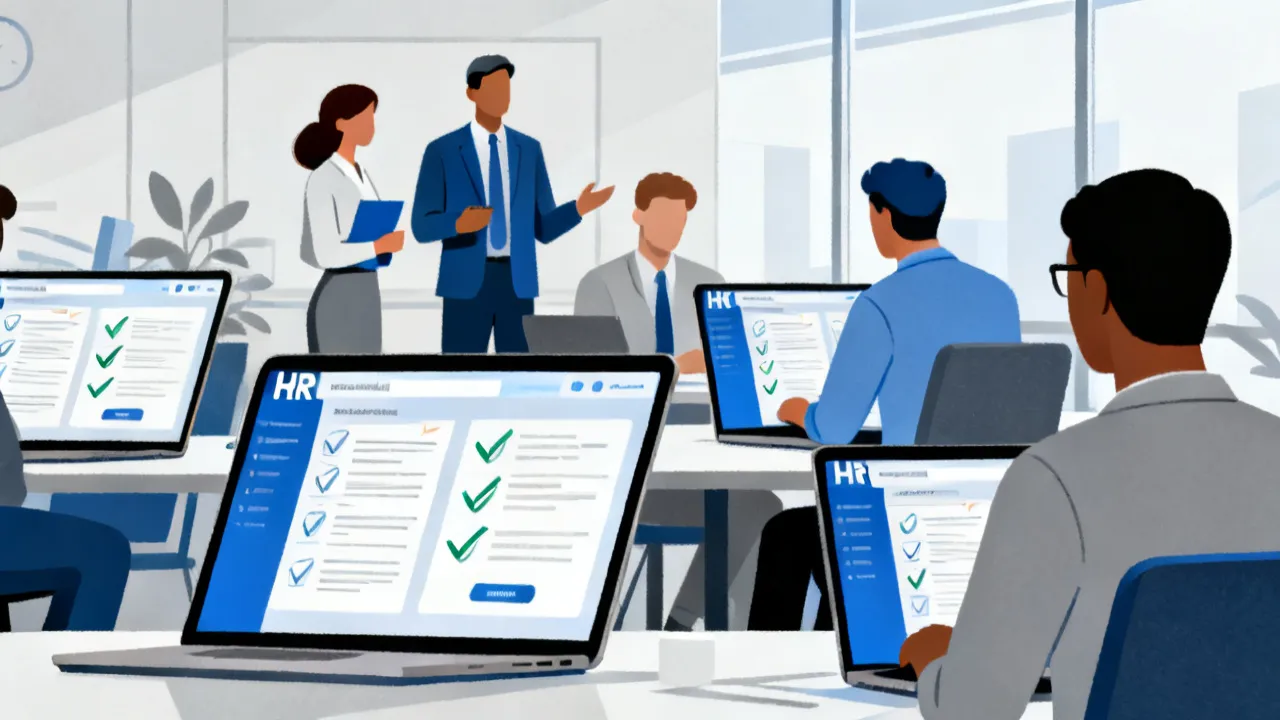
Key Takeaways: Choosing Between Justworks and Indeed
If your goal is to streamline employee management and onboarding, Justworks typically fits top as an HR and employer-operations solution; if your goal is to expand candidate pipelines through job distribution and discovery, Indeed is often the more direct recruiting channel. Many hiring teams combine both approaches—using recruiting reach to source applicants and HR tooling to support structured follow-through—because what matters most is not simply “which tool is better,” but how well each tool supports the stage of the hiring funnel where you’re currently experiencing friction.
To decide confidently, prioritize what you need very right now: workflows after the candidate is hired (HR administration, onboarding steps, and ongoing employee management) versus workflows before hiring (job postings, visibility, and candidate search). An expert approach is to map your hiring funnel—sourcing → screening → offer → onboarding → ongoing employment—then align each tool to the funnel stage where it reduces cost, risk, and time-to-fill. When organizations do this, they tend to avoid the common failure mode of buying software for the wrong bottleneck (for example, increasing applicant volume while onboarding processes remain manual and error-prone).
1) Why the Justworks vs. Indeed question matters for hiring teams
Hiring teams often discover that “recruiting” is only half the work. The other half is administrative and operational: ensuring onboarding is consistent, records are maintained, and the employee lifecycle runs smoothly. Even when recruitment efforts are successful—meaning the team quickly finds good candidates—the operational side can create delays and compliance risk if onboarding tasks aren’t structured or if employee information is scattered across multiple systems.
That is why a structured comparison between Justworks and Indeed is valuable. Although both names are commonly discussed in the context of hiring, their core functions differ: Justworks emphasizes employer operations and HR-related administration, while Indeed emphasizes job distribution and candidate discovery. Treating them as interchangeable categories is a frequent mistake; treating them as complementary stages of a single lifecycle is usually where organizations see measurable improvement.
To understand why the question matters, it helps to view hiring as an operational chain. If any link in the chain is weak—poor job descriptions, inconsistent screening, unstructured offer handling, incomplete onboarding, or missing documentation—then the “time-to-productive” metric suffers. Software can reduce friction, but only if it addresses the friction you truly have. A hiring funnel mapping exercise typically reveals that some organizations have a “top-of-funnel” issue (not enough candidates), while others have a “bottom-of-funnel” issue (candidates accept but then onboarding breaks). A good decision between Justworks and Indeed depends on diagnosing which link is most constrained.
2) What Justworks is designed to do
Justworks is generally positioned as an HR and employer-operations platform intended to help employers manage key tasks that appear after hiring—often including HR administration workflows, employee documentation processes, and onboarding-related administrative structure. For organizations that want less manual coordination, this kind of tooling can reduce the “spreadsheet effect,” where data lives in many places and handoffs become error-prone.
From an industry-expert lens, the very important question is not whether a platform can “do HR,” but whether it supports repeatable processes. Good HR tooling helps standardize steps such as offer-to-onboarding transitions, employee record maintenance, and consistent internal communication. These operational capabilities typically reduce time spent chasing forms and clarifying responsibilities during early employment.
In practical terms, employer operations often includes tasks like collecting employee information, ensuring correct benefits and employment documentation workflows, maintaining compliance-related records, and creating consistent onboarding checklists. When those tasks are managed manually, teams often rely on institutional memory—meaning the process works for one recruiter or one HR coordinator, but fails when staffing changes. HR platforms are most valuable when they convert those informal processes into standardized workflows, because they help ensure that “the right thing happens every time,” not just “the right thing happened this one time.”
Another reason HR and employer-operations tools matter is that they reduce operational risk. Recruitment teams focus on candidate evaluation, but once someone accepts, employers take on new obligations. If onboarding requires collecting the right documents, establishing the right records, and aligning internal stakeholders, then a system that supports those tasks can prevent downstream problems like payroll delays, missing signatures, incomplete benefit elections, or onboarding checklists that are silently skipped.
Price information note: You may see different pricing models depending on company size, jurisdiction, and included services. Because publicly available pricing can vary, you should confirm plan details directly with the provider or through official documentation. For a procurement-ready decision, request the latest pricing sheet and confirm what is included in each tier before comparing total cost of ownership. Also ask how pricing changes when you add employees, change employment types, or need additional administrative support—because the true total cost is often driven by headcount and workflow complexity rather than by the headline monthly cost.
3) What Indeed is designed to do
Indeed is widely known as a recruiting destination that supports job posting and candidate discovery. The platform’s practical value comes from reach: it can help employers attract applicants by placing roles where job seekers already search, then enabling recruiters to review candidate information for alignment with job requirements.
In hiring operations, Indeed is very often evaluated on how effectively it supports the early stages of the funnel: posting quality, visibility, applicant volume, and screening efficiency. Many teams care about how quickly applicants appear after launching a role, how well job titles and descriptions map to candidate expectations, and how easily recruiters can triage applicants. If your pipeline is thin, you typically need more visibility; if your pipeline is overwhelmed, you need better screening rubrics and better job-description targeting, sometimes supported by improved job-post strategy.
Because Indeed’s function is strongly tied to job distribution and discovery, it’s essential to treat the platform as a component of sourcing workflows, not as a substitute for HR administration. The candidate experience and pipeline quality that result from recruiting tools have real consequences downstream. For example, if job posts attract the wrong audience, recruiters spend time screening irrelevant applicants and may still fail to produce qualified candidates quickly. Conversely, if job posts and screening processes are well designed, then recruiting tools can increase conversion rates as well as applicant throughput.
Indeed is also often part of a wider recruiting stack. Many organizations combine job distribution from Indeed with scheduling tools, applicant tracking systems (ATS), screening guides, and structured interview processes. Even if an organization does not run a full ATS, the principles remain the same: track candidates, standardize evaluation, and reduce manual effort during sorting and outreach. Indeed can support the sourcing flow, but the employer still needs a disciplined process for screening and moving candidates forward.
Price information note: Indeed recruiting costs can vary by approach (for example, pay-per-click or subscription-like advertising structures depending on employer setup). As with HR tooling, the very reliable method is to obtain the very current pricing terms for your hiring plan and confirm any performance or usage conditions before committing. When comparing costs, also consider the cost per qualified lead, not just the cost per click or cost per posting. A lower-visibility post may still be cheaper if it produces higher conversion to interview and offer acceptance.
4) How hiring teams should evaluate both tools together (not in isolation)
The very effective comparison method treats Justworks and Indeed as complementary parts of one system. Consider the “handoff points” where candidate status transitions from recruiting to employment administration. A tool-by-tool comparison is helpful for understanding functionality, but funnel-level evaluation is what reveals operational impact.
For example:
- From Indeed to onboarding: How will you capture candidate details, track offer status, and coordinate documentation once a candidate accepts? If the recruiting process produces incomplete or unstructured data, onboarding may become slower because HR must re-collect information.
- From offer to HR workflow: Does your HR administration solution create consistent onboarding steps and minimize duplicate entry? If recruiting systems and HR systems store overlapping fields inconsistently, teams can create manual steps to reconcile differences.
- From ongoing employment to reporting: Can the HR side support the documentation needs that recruiting tools often don’t address? HR needs structured records and sometimes audit trails that recruiting tools do not provide.
Where teams run into problems is when recruiting and HR operations use separate data sources without clear process rules. An expert approach includes mapping which fields you store, who updates them, and when. Even a well-designed workflow can fail if your team lacks a clear operational rhythm—for example, if offer paperwork begins before HR readiness checks are complete, or if onboarding tasks are not initiated until after a candidate’s start date is confirmed.
Another reason to evaluate tools together is that the best “systems” are designed around behavior changes. If a tool makes it easier to do the right thing but your team still follows old practices, benefits can be limited. Conversely, if your team is willing to adjust how it communicates and transfers responsibility across the funnel, the combined effect can be significant. In many organizations, the decision to add or revise HR/admin workflows changes recruiter behavior as well—because recruiters become confident that onboarding steps will happen reliably.
Finally, evaluate compatibility and integration patterns, even if they are light. You don’t necessarily need deep integrations to achieve operational alignment, but you do need clear rules. For example: who initiates onboarding in the HR platform, what “trigger” event starts the process (candidate acceptance, start date confirmation, or background-check completion), and what data is required for HR to begin without rework?
5) Industry perspective: trade-offs you should expect
Justworks strengths (typical top-fit)
- Process standardization for employer administration tasks. Teams can convert onboarding and HR steps into repeatable checklists rather than relying on memory.
- Reduced manual coordination during onboarding and early employment stages. This often reduces the “shadow work” HR coordinators do to fill gaps between systems.
- Operational consistency across new hires, especially for teams that hire steadily. Consistency matters because onboarding is where many compliance and operational errors appear.
Justworks constraints (typical considerations)
- It is generally not positioned as a primary job board or recruiting discovery marketplace. If your problem is that you can’t find enough candidates, HR tooling alone will not solve the sourcing gap.
- Your sourcing strategy may still need a separate recruiting channel if you require strong inbound applicant discovery. In that case, Indeed often acts as a high-reach entry point to generate candidate volume.
Indeed strengths (typical top-fit)
- Broad candidate visibility through job distribution. This can be crucial when competitors are already active in the same talent market.
- Candidate discovery to support screening and outreach. Recruiters can find and engage candidates aligned to job requirements.
- Faster sourcing cycles when a role needs applicants quickly. Visibility and discovery help shorten time-to-first-strong-candidate.
Indeed constraints (typical considerations)
- It focuses primarily on recruiting distribution and discovery rather than employee administration workflows. It cannot replace the operational needs of onboarding, HR records, and ongoing employment administration.
- Once offers are accepted, teams still need a reliable process for onboarding, records, and ongoing HR tasks. That operational phase is where HR and employer-operations tooling typically adds the most value.
6) Comparison Table: supplementing the decision (no links)
| Evaluation Area | Justworks (HR/Employer Ops) | Indeed (Recruiting/Discovery) |
|---|---|---|
| Primary role | Supports employer operations and HR administration workflows | Supports job distribution and candidate discovery |
| Top stage in the hiring funnel | Offer → onboarding → ongoing employment administration | Sourcing → screening → outreach prior to offer |
| Typical operational value | Process consistency, reduced administrative handoffs | Visibility, applicant volume, faster candidate flow |
| Price factors to confirm | Plan scope and which services are included; confirm latest pricing terms | Posting/ad setup model; confirm current cost structure for employers |
| Data handoff | Employee records and onboarding-related documentation workflows | Applicant data and recruiting status inputs to your HR process |
| Implementation requirement | Adopt consistent onboarding and record processes | Design job postings and screening workflows to reduce noise |
7) Step-by-step guide: how to run a practical comparison
Below is a field-tested approach that HR and recruiting operations leaders often use when they need a defensible selection rather than a guess based on marketing claims. The goal is to connect tool selection to measurable bottlenecks and to ensure the HR and recruiting sides are aligned on who owns each stage.
-
Map your hiring funnel stages
Write down your current workflow from sourcing to onboarding. Identify where you lose time: posting setup, screening, offer paperwork, onboarding coordination, or ongoing HR admin. Also note where errors occur (missing information, missed approvals, unclear responsibilities) because errors create hidden cost that doesn’t appear in basic time-to-fill metrics. -
Assign “tool ownership” by stage
Decide which system owns each stage. For instance, use Indeed to support job distribution and applicant discovery, and use Justworks to structure onboarding and employer operations tasks. Ownership should also include operational triggers: what event in recruiting starts the HR workflow, and what status transitions are required for handoff. -
Standardize the data you must transfer
Create a checklist of the candidate fields you need at handoff (e.g., identity details, role match notes, interview outcomes, and offer status). Ensure both workflows align to avoid duplicate entry. If you currently capture information in free-form notes, define a minimum structured set that HR needs for onboarding and compliance. -
Define success metrics for each stage
Examples: time-to-first-applicant, time-to-shortlist, screening-to-interview conversion, onboarding completion time, and reduction in manual admin steps. Consider adding quality metrics: percentage of applicants who meet baseline qualifications, recruiter rework rate, and onboarding “day-one readiness” rate. -
Confirm pricing and total cost of ownership
Obtain the latest pricing and service scope. Include internal time costs: recruiter time for triage, HR admin time for onboarding tasks, and the cost of workflow mistakes. A common oversight is ignoring the time required to maintain job postings, respond to applicants, and handle edge cases like document corrections. -
Run a pilot for a single role first
Test one job with the recruiting workflow and validate the onboarding handoff. If you cannot measure outcomes, the pilot will not tell you whether the setup truly helps. Pilot design matters: include roles similar to your real hiring needs, and set a timeline long enough to observe onboarding completion, not just candidate acquisition. -
Evaluate compliance and operational controls
Confirm that onboarding and record-handling meet your organization’s internal requirements. For HR tooling, check documentation workflows and approval steps. Also confirm what happens when a candidate withdraws after accepting, fails background checks, or has delayed start dates—because HR processes must handle those exceptions.
8) Conditions and requirements to consider before committing
Even a strong platform can fail if operational conditions are not prepared. Consider these requirements, because software benefits often depend on how well a team is ready to operate with the new system.
- Role clarity: Job postings require accurate titles, responsibilities, and qualification filters; otherwise applicant volume can become unmanageable. If roles are vague, Indeed will bring more noise rather than more quality.
- Screening discipline: Define which criteria you enforce early to reduce “resume noise.” A consistent screening rubric is especially important when job-distribution channels increase applicant volume.
- Onboarding readiness: Decide what happens immediately after acceptance—documentation collection, internal approvals, and scheduled onboarding steps. If onboarding triggers are unclear, HR work can begin too late, causing candidate start-date delays.
- Ownership and accountability: Name who updates recruiting statuses and who initiates onboarding tasks. Ownership prevents “handoff gaps,” where a candidate is approved but onboarding doesn’t start until someone notices.
- Data quality checks: Ensure candidate and employee records are complete enough to prevent downstream errors. Data quality problems are expensive: they often lead to rework, missed payroll milestones, or compliance risks.
It’s also helpful to consider workforce lifecycle complexity. For example, some organizations hire contractors, part-time employees, interns, or employees in multiple jurisdictions. If your hiring plan includes these complexities, you should ensure your HR and onboarding workflows can handle them. If your recruitment funnel is already complex, then improving sourcing alone may not be sufficient—you might need stronger HR administration workflows to keep onboarding consistent and compliant.
Additionally, evaluate your internal capacity. Even if you choose the right tools, if your HR team is under-resourced, onboarding may still stall. In those cases, tools can help automate or standardize workflows, but you should still validate that internal stakeholders (HR coordinator, recruiter, hiring manager, IT, payroll) can participate in the new process. A “tool-only” rollout can fail if process adoption doesn’t include operational buy-in from those stakeholders.
9) Expert recommendations by hiring scenario
If you’re scaling headcount
When hiring volume increases, HR operations often becomes the bottleneck. In such cases, Justworks-style employer operations can provide structure for consistent onboarding, while Indeed helps maintain a steady stream of applicants. The key is to reduce handoff friction so recruiters are not forced to perform HR-adjacent administration.
When scaling, also watch for “process drift.” In early hiring cycles, teams may accept a semi-manual workflow. As headcount grows, that semi-manual workflow tends to drift—different recruiters may use different templates, hiring managers may approve offer paperwork inconsistently, and HR may collect documents with varying levels of completeness. Employer-operations tooling typically helps curb drift by enforcing standardized workflows.
For scaling teams, a strong recommendation is to define a consistent onboarding checklist that triggers based on recruiting events. For example, start onboarding documentation after candidate acceptance and only finalize certain steps after background checks are complete. This prevents HR from doing work prematurely while still enabling fast and predictable onboarding progression. Pair that with job-post optimization on Indeed to maintain pipeline volume as hiring targets rise.
If you have specialized roles with smaller applicant pools
For niche roles, candidate discovery may require more targeted job descriptions, careful screening rubrics, and clear outreach criteria. Indeed can help with reach, but the real differentiator becomes how well your posting and screening process aligns with the role’s requirements.
In niche hiring, applicant volume can be low, meaning quality matters more than raw numbers. Here, the job description is often the primary “screening tool.” You’ll want to ensure the job title, responsibilities, and qualification language are aligned to how candidates self-identify. Misalignment can cause high-quality candidates to overlook the role or apply without being a real match, which creates time cost for recruiters.
Once a candidate is chosen, onboarding workflows become decisive—where a structured HR solution supports speed and compliance. Even when hiring is not high-volume, mistakes in onboarding for specialized roles can be costly because delays may impact business-critical projects. Thus, employer operations becomes a risk-control lever: ensuring paperwork, records, and onboarding steps occur on time and consistently.
If you’re optimizing for compliance-minded onboarding
Teams that have a strong internal control environment may want HR administration tooling earlier in the process, not just at the end. In this scenario, evaluate whether Justworks can standardize onboarding steps and documentation handling. Meanwhile, Indeed supports the sourcing stage; it should be integrated so candidate decisions and onboarding initiation remain tightly connected.
Compliance-minded teams often need clarity on documentation lifecycle: what documents must be collected before employment begins, what needs to be retained for recordkeeping, what approvals are required, and how exceptions are handled. Recruitment tools typically do not provide a complete recordkeeping workflow. Therefore, HR administration tooling can become essential for ensuring that onboarding is not only fast but also auditable and consistent.
To operationalize this, define compliance checkpoints in your workflow mapping. For example, before a start date, ensure that identity verification documents and payroll onboarding steps are completed. For time-sensitive hires, you might define an “HR readiness status” that must be satisfied before the recruiter offers. This turns HR operations from a reactive process into a proactive control.
10) Relevant context: broader recruiting and HR technology trends
Modern HR and recruiting systems increasingly focus on reducing manual work and improving workflow traceability. Industry research consistently emphasizes that applicant experience and process speed affect hiring outcomes, while HR administration improvements reduce operational risk and inconsistency.
To ground expectations, consider widely cited sources from the HR and recruiting ecosystem. For example, the Society for Human Resource Management (SHRM) publishes research on hiring practices and HR operational considerations, and Gartner frequently examines HR technology trends and operational maturity. You should review the very current editions of these sources for updated insights relevant to your region and industry.
Beyond general industry reports, there are a few recurring themes that help teams reason about platform choice. One theme is that hiring performance improves when organizations treat the funnel as a single workflow system rather than a set of disconnected tasks. Another theme is that onboarding is not a “nice-to-have” step; it is a performance driver because it affects retention, productivity ramp, and compliance posture. When HR operations are well supported, recruiters can focus on evaluation and closing rather than chasing paperwork.
Another trend is increasing emphasis on structured workflows: standardized steps, standardized data fields, and standardized decision criteria. Justworks-style employer operations tends to align well with this trend because onboarding involves repeated administrative tasks that benefit from standardization. Indeed-style recruiting channels can also align with structured workflows when teams standardize job descriptions and screening rubrics so that increased applicant volume becomes actionable rather than chaotic.
Finally, technology adoption increasingly includes internal change management. Hiring teams often underestimate adoption. They assume training is minimal and that the tools will “just work.” In practice, teams must define new roles, new triggers, and new success metrics. A decision between Justworks and Indeed should therefore include a rollout plan that accounts for process adoption, not just tool configuration.
FAQs
Is Justworks primarily a recruiting platform?
Justworks is generally oriented toward employer operations and HR administration workflows. If you need applicant discovery and job distribution, you typically pair it with a recruiting tool such as Indeed or another sourcing channel. Think of Justworks as the system that helps you run employment administration reliably after the candidate has been selected.
What is Indeed top used for?
Indeed is commonly used for job postings and candidate discovery. It helps teams reach job seekers and manage early-stage recruiting workflows such as reviewing applicants and moving qualified candidates forward. Its main value typically shows up in sourcing speed, applicant volume, and the discoverability of your roles.
Can teams use Justworks and Indeed together?
Yes. Many organizations treat Indeed as the sourcing and discovery layer and Justworks as the employer-operations and onboarding layer. The effectiveness depends on how clearly you define handoffs and data ownership between recruiting and HR processes, including the exact trigger that initiates onboarding tasks and the minimum data HR requires.
How should I compare pricing fairly?
Request current pricing and confirm what each plan includes. Compare total cost of ownership by accounting for recruiter/HR time, onboarding cycle time, and the internal cost of workflow errors (for example, delays due to missing documentation). In recruiting, also consider the cost per qualified interview, not just the cost per click. In HR administration, consider how pricing scales with headcount and whether the solution reduces expensive operational mistakes.
What conditions might prevent a smooth rollout?
Common rollout challenges include unclear ownership for candidate-to-onboarding transitions, incomplete onboarding checklists, and job postings that lack role clarity. Address these operational requirements before evaluating performance. Also ensure your team can adopt new processes: stakeholders must know what to do differently and when.
Do these platforms provide measurable outcomes?
They often support reporting relevant to their domain. For recruiting, measure pipeline metrics tied to job postings and screening throughput. For HR administration, measure onboarding completion time and consistency of documentation workflows. The very useful measurements connect outcomes to your own funnel—linking recruiting activity to onboarding success and ultimately to time-to-productive employment.
Conclusion: A decision framework you can defend
The very objective way to choose between Justworks and Indeed is to align them to your hiring funnel. Use Indeed to strengthen sourcing and candidate discovery, and use Justworks to structure the administrative and onboarding phase after a hire is selected. When you combine those strengths with clear handoff rules, you reduce friction across the full lifecycle—leading to faster hiring outcomes and more consistent employee onboarding.
Ultimately, the best decision is not a “versus” choice in the everyday sense. It’s a workflow decision: which stage of your hiring funnel needs the most operational support right now, and which tool is best positioned to remove that specific constraint. When you approach the choice that way—diagnose the bottleneck, map the workflow, define data ownership, and measure results—you can defend your selection to stakeholders and ensure the software investments translate into real hiring and onboarding performance.