Peoplesoft HHC: Implementation and Governance Insights
This guide explains how PeopleSoft HHC supports healthcare HR, staffing workflows, and operational governance for organizations that manage high-volume human services. Objectively, PeopleSoft HHC relates to applying PeopleSoft technology patterns to healthcare-oriented human capital processes. The article reviews key architectural considerations, role-based controls, integration planning, and practical governance steps to reduce operational risk and improve audit readiness.
Why PeopleSoft HHC Matters for Healthcare Human Capital Operations
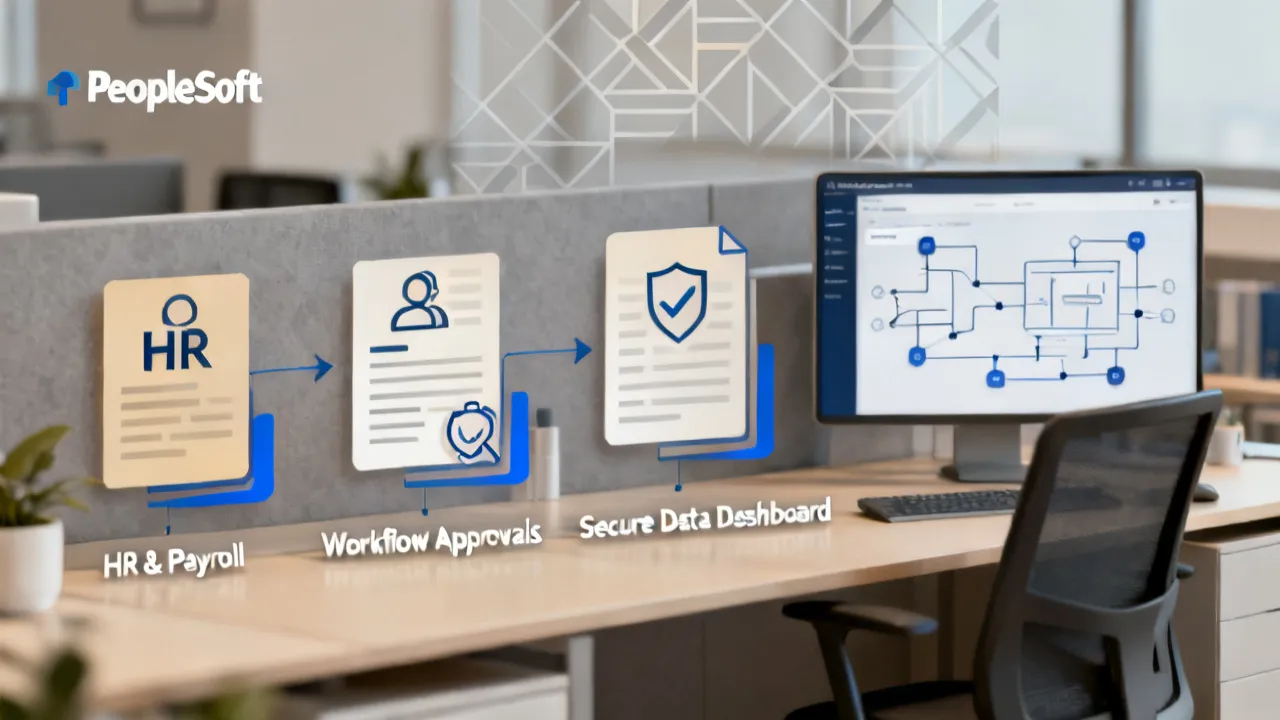
PeopleSoft HHC is often considered when healthcare organizations need a structured, auditable approach to managing healthcare human capital—especially in environments where staffing, payroll-aligned processes, workforce compliance, and operational reporting must move with consistency. In practice, PeopleSoft HHC frameworks can help consolidate data definitions, standardize workflow approvals, and support governance across HR, benefits administration, and related service activities.
From an industry-expert perspective, the critical value of implementing PeopleSoft HHC is not simply “running payroll” or “tracking employees.” It is the ability to enforce controlled business processes so that workforce actions remain traceable, decisions are reproducible during audits, and reporting aligns to agreed definitions across departments. In healthcare—where workforce actions directly impact patient access, continuity of care, regulatory posture, and risk exposure—those characteristics are not optional. They are operational necessities.
Because healthcare environments are sensitive to both operational continuity and compliance expectations, PeopleSoft HHC implementation design typically focuses on three themes: process integrity, data governance, and integration reliability. Each theme affects downstream reporting, staffing decisions, and the credibility of internal and external attestations. A workforce management process that “mostly works” may still create the conditions for incorrect reporting, payroll issues, or audit gaps. A PeopleSoft HHC approach aims to reduce “mostly works” to “controlled, evidenced, and repeatable.”
When done well, PeopleSoft HHC becomes more than an HR information system. It becomes a governance backbone: a place where workforce actions are initiated properly, approved correctly, stored with the right context, and made available for reporting and compliance needs. It also becomes a shared operational language across HR operations, compliance teams, security governance, and finance/payroll stakeholders.
Background: What “PeopleSoft HHC” Usually Refers To in Practice
“PeopleSoft” is a well-known enterprise suite used for HR and related back-office functions, and the term “PeopleSoft HHC” is commonly used by organizations to describe a healthcare-oriented configuration or service model built on PeopleSoft capabilities. While naming conventions vary by vendor partner, internal program, or contracting language, PeopleSoft HHC generally points to structured HR service operations for healthcare providers, health systems, and organizations supporting healthcare delivery.
In objective terms, the keyword reflects a domain alignment (healthcare operations) applied to an enterprise platform (PeopleSoft). That alignment can affect configuration choices such as role design, approval workflows, HR event handling, compensation structures, and how the organization integrates HR data with downstream systems (for example, operational scheduling, credentialing repositories, workforce analytics platforms, learning management systems, identity management tools, and payroll/benefits platforms).
In many healthcare enterprises, “HHC” is also a shorthand for a broader operating model: not just technology, but the way work is performed. The PeopleSoft configuration and associated operational procedures are often designed to support:
- consistent onboarding and role change handling across multiple facilities;
- auditable approvals for changes that have regulatory or financial impact;
- healthcare-specific workforce event processing cycles (including urgent staffing needs);
- security controls aligned to segregation of duties; and
- reporting outputs that map to internal governance definitions.
Because workforce events in healthcare often have time-sensitive consequences, PeopleSoft HHC deployments typically emphasize speed without sacrificing control. That balance—fast execution with evidence—is one of the core reasons healthcare organizations pursue structured HR program implementations rather than purely technical deployments.
Critical Considerations at the Top of the Planning Stack
Successful PeopleSoft HHC programs typically fail or succeed early—before major configuration begins. The very important decisions are usually the ones that define what the organization will standardize, how it will govern exceptions, and how it will manage change over time. If those decisions are delayed until after configuration, the program may later face expensive rework, delayed approvals, and inconsistent workflows across business units.
Early-stage planning ensures that PeopleSoft HHC becomes an integrated operating system for human capital operations rather than a set of disconnected features. In practical terms, early decisions include establishing shared definitions, mapping policy to workflow, and determining how the organization will capture evidence for compliance.
1) Business process definition before configuration. PeopleSoft HHC should start from documented workforce workflows: what triggers a HR event, who approves it, which roles can view or edit data, and how reversals are handled when errors occur. In healthcare, “workflow” is rarely one-size-fits-all, because employment type differences, union rules, credentialing requirements, or facility-level staffing practices can complicate standardization. However, even when variations exist, the process definition must still be explicit so approvals and data updates remain traceable.
2) Data governance and naming consistency. PeopleSoft HHC efforts frequently require harmonized data definitions for job codes, departments, business units, employment types, and eligibility rules. When definitions drift, reporting becomes unreliable and audit effort increases. For example, if “department” is used differently across facilities or if a job code is assigned inconsistently during migration, payroll outcomes and workforce analytics can diverge—sometimes in ways that are discovered only after go-live.
3) Security and segregation of duties. Healthcare HR data is sensitive. PeopleSoft HHC initiatives need role-based access control aligned to policy, plus monitoring mechanisms that can demonstrate compliance through audit trails. Security is not merely technical; it’s an operational policy decision. The program should clearly document who can create, approve, edit, and reverse workforce events—and how those actions are logged. Segregation of duties helps reduce risks like unauthorized changes, fraudulent behavior, and unintentional errors.
4) Integration strategy with clear ownership. PeopleSoft HHC often relies on data exchange with other systems. A sound plan clarifies which system is the source of truth for each data element and how interfaces handle retries, reconciliation, and latency. Without clear ownership, teams may debate responsibility when data mismatches occur, leading to prolonged incident cycles or repeated manual correction.
5) Testing approach designed for operational reality. Test scenarios for PeopleSoft HHC should include edge cases common in healthcare staffing: urgent staffing changes, backdated corrections, leave events, reconciliations triggered by payroll cycles, mid-month employment status changes, and role changes that affect eligibility or scheduling permissions. Testing must also validate not just “system correctness,” but operational correctness—does the workflow produce the right evidence, in the right order, with the right approvals?
6) Governance for change management and release upgrades. Even the best PeopleSoft configuration will evolve. Healthcare rules, staffing compliance expectations, benefits eligibility rules, and audit requirements can change. PeopleSoft HHC programs benefit from establishing a change governance framework early: how requirements are submitted, assessed for impact, approved, and tracked. This becomes especially important when multiple business units or facilities adopt in phases.
7) Evidence strategy and audit readiness from day one. Healthcare organizations frequently need to demonstrate not just that “data exists,” but that actions were performed appropriately. A PeopleSoft HHC initiative should define which actions require evidence capture (for example, approvals, reversals, privileged access changes, data migration corrections, and report validations). Teams should also plan for evidence retention and retrieval so audits can be managed efficiently.
Implementation Architecture: How PeopleSoft HHC Is Typically Structured
An industry-standard PeopleSoft HHC implementation blueprint tends to include layered governance and functional segmentation. Though exact scope varies, the typical architecture patterns include:
- Core HR data model: Establish consistent master data for worker identity, job assignments, organizational structure, and employment status logic. This includes decisions about how to handle legacy identifiers, duplicates, and missing data discovered during migration.
- Workflow and approvals: Configure approvals for HR events and workforce actions so that changes are traceable and consistent across business units. This layer often includes approval hierarchies, conditional logic, and exception handling paths.
- Reporting and compliance outputs: Map reporting requirements to defined data extracts and permissions. Focus on repeatability by aligning report logic to governance definitions and ensuring controlled data access.
- Integration interfaces: Build stable pipelines for data exchange with ancillary healthcare operations systems. Integration architecture includes message mapping, endpoint management, scheduling, error handling, and reconciliation procedures.
- Auditability and evidence management: Ensure audit logs and operational records meet internal expectations for review and retention. This includes defining audit log granularity and documenting how evidence is collected during testing and go-live operations.
From a governance perspective, the strongest implementations treat PeopleSoft HHC as a controlled system of record for defined entities, rather than as a loosely governed repository. That distinction influences good data quality and reduces operational friction during audits or workforce planning cycles. When PeopleSoft is treated as an authoritative source, integrations must be designed to respect that authority rather than create competing versions of truth.
In many healthcare enterprises, the PeopleSoft HHC architecture also includes operational tooling beyond pure configuration. For example, teams often define:
- role-based access matrices and privileged access review calendars;
- runbooks and escalation paths for interface failures and workflow exceptions;
- data reconciliation procedures between HR and payroll (or between HR and scheduling/credentialing systems);
- report validation routines for key compliance reports; and
- training and competency expectations for HR caseworkers and approvers.
These elements convert a configuration into an operating model that can be sustained over time.
Expert Guidance on Cost, Value, and Practical Scope Setting
PeopleSoft HHC initiatives usually involve a mix of software licensing, implementation services, integration work, and ongoing operational costs. Exact pricing depends on environment size, module scope, interface complexity, customization level, and how many business units or facilities are involved. Because pricing is highly context-dependent, it’s top to treat any quoted numbers as proposal-specific rather than universally applicable.
Instead of focusing only on initial cost, leading organizations evaluate value through measurable outcomes such as improved process cycle times for HR events, reduced rework from inconsistent data, clearer audit trails, and stronger reporting consistency. In healthcare HR operations, these benefits can be substantial because human capital decisions affect continuity of care and workforce compliance.
Value measurement in PeopleSoft HHC programs often includes both quantitative and qualitative indicators.
- Quantitative indicators: reduced number of manual corrections; reduction in HR case backlog; reduction in interface incident frequency; improved payroll reconciliation success rate; time to approve standard workforce events; number of audit findings related to HR process or data governance.
- Qualitative indicators: increased trust in reporting definitions; improved coordination between HR operations, compliance, and IT; increased clarity of responsibilities; reduced frustration during audits due to easier evidence retrieval.
One useful approach is to model total cost of ownership (TCO) not as a generic formula but as a set of cost drivers. For PeopleSoft HHC, common cost drivers include:
- data stewardship effort (ongoing maintenance of master data definitions);
- integration monitoring and interface maintenance;
- security governance (role reviews, audit log retention management);
- training and process refresh cycles as policies change;
Another dimension is “time-to-value.” Some organizations benefit from an incremental rollout where foundational governance components (security, workflow, and data definitions) are established early, even if not all integrations and reports go live immediately. This can deliver early operational stability while longer-term capabilities mature.
For reliable reference points on enterprise software lifecycle considerations, many organizations anchor planning assumptions to guidance from industry analysts and public technology research. A common approach is to use baseline total cost of ownership (TCO) frameworks: direct licensing and implementation costs plus indirect operational costs like training, data stewardship, and support.
Supplier and Delivery Model Considerations (What to Ask)
Whether the supplier is an internal IT team, a PeopleSoft implementation partner, or a managed services provider, the PeopleSoft HHC delivery model should be scrutinized for role clarity and operational responsibility. In healthcare, unclear delivery ownership is a frequent source of operational delay after go-live.
At minimum, stakeholders should ask suppliers (and align internally) on:
- Scope boundaries: Which HR functions are included, and which are explicitly excluded? For instance, the program may cover HR events but not benefit enrollment processing—or it may cover both with distinct implementation milestones.
- Customization approach: What will be configured out-of-the-box versus customized? How will modifications be maintained through future releases? A disciplined customization strategy is important because excessive custom logic can reduce upgrade compatibility and increase audit explanation needs.
- Integration ownership: Who maintains interface mappings, reconciliation logic, and error-handling procedures? If integrations fail, who is accountable for root cause analysis and corrective action?
- Security controls: How will privileged access be managed and audited? Who performs privileged access reviews, and at what frequency?
- Testing responsibility: Who writes and executes test scripts, and how are sign-offs documented? Healthcare auditing often demands evidence that testing occurred and that outcomes were agreed by the right stakeholders.
- Change management: How are requirements changes logged, reviewed, and approved? This should include decisions about priority, scope impacts, and retesting needs.
- Training and enablement: What does end-user training include (especially for HR case handling and approvals)? Training should not only teach buttons—it should teach policy-driven workflow usage.
This supplier-aligned approach strengthens PeopleSoft HHC governance and reduces the risk that operational teams inherit processes that were designed without their daily reality in mind. It also reduces “handover gaps,” where technical deliverables are completed but operational responsibilities are undefined.
In mature delivery models, suppliers and internal teams establish a joint set of responsibilities and acceptance criteria. For example, acceptance criteria may include:
- HR approvers can complete key event workflows end-to-end without bypassing steps;
- audit trail evidence is captured and retrievable;
- interface failures trigger defined alerts and follow runbooks;
- reports validate against sample cases; and
- security roles match least-privilege expectations.
Quality and Risk Management for PeopleSoft HHC
In healthcare HR programs, risk management is more than a project management formality; it’s part of operational safety. A PeopleSoft HHC program should include a structured quality strategy that ensures correctness, completeness, and controllability. Quality is not just “defect count.” It is the ability to demonstrate that processes function according to policy and that outcomes are consistent and evidenced.
Key risk areas commonly include:
- Data migration errors: Incorrect job codes, employment statuses, or organizational mappings can cascade into payroll-aligned processes and reporting. Migration errors can also undermine workforce analytics and compliance reporting, sometimes for months until reconciliations highlight anomalies.
- Workflow misalignment: When approvals are configured without matching real policy, staff either bypass steps or get stuck in loops. Both outcomes have operational and compliance impacts.
- Insufficient integration testing: Interface failures can produce inconsistent data across systems, particularly around HR events that occur in payroll windows. A small mismatch in a single interface can cause significant downstream payroll and scheduling implications.
- Over-customization: Extensive custom code can increase good maintenance and complicate audits. It can also create “tribal knowledge” dependencies that make troubleshooting harder.
- Role design gaps: Incomplete security design may either expose sensitive data or block legitimate work. Both conditions can lead to compliance risks: exposure risk on one side, operational workarounds on the other.
- Backdated and reversal complexity: Healthcare workforce changes often require backdating (e.g., corrections to effective dates). If reversals and backdating logic are not carefully designed and tested, the system may show inconsistent histories that are difficult to explain during audits.
- Payroll-cycle timing issues: Some workforce events impact payroll in ways that require alignment with payroll cutoffs. If PeopleSoft HHC workflows are not synchronized with those cycles, HR and payroll teams may experience disputes and recurring rework.
An expert approach mitigates these risks through robust test coverage, staged rollouts, and clear sign-offs. Importantly, PeopleSoft HHC programs should ensure audit readiness by preserving evidence of decisions—requirements, approval outcomes, and test results.
To operationalize quality and risk management, many teams implement a quality framework that includes:
- traceability from requirements to configuration decisions and test cases;
- environment management (development, test, staging, production) with controlled promotion pipelines;
- defect triage and root cause analysis routines;
- go-live readiness checklists; and
- post go-live monitoring and hypercare plans.
In healthcare, the “quality” deliverable often extends beyond software functionality. It includes operational readiness: runbooks, escalation contacts, and the ability to respond quickly when workforce event workflows encounter real-world exceptions.
Step-by-Step Supplement: Comparison Table, Source, and Conditions
The following supplement is intended to help readers plan a PeopleSoft HHC program with realistic constraints and clear decision points. It is structured as a comparison table, followed by a step-by-step guide, and then conditions/requirements.
| Area | Configuration Emphasis (PeopleSoft HHC Typical) | Supplier/Delivery Impact | Recommended “Go/No-Go” Condition |
|---|---|---|---|
| Process definition | Document HR event triggers, approvals, and reversals | Suppliers should map workflows to documented policy | Approved process documents and sign-off by HR + compliance stakeholders |
| Data model governance | Standardize master data definitions | Suppliers should specify mapping rules and stewardship roles | Data dictionary accepted; migration mappings verified in test cycles |
| Security and roles | Segregation of duties and least-privilege access | Suppliers must propose role matrices and audit logging | Role testing completed; audit evidence captured for privileged actions |
| Integrations | Define source-of-truth per data element | Suppliers should own interface monitoring and retry logic design | End-to-end reconciliation passes in test, including failure scenarios |
| Reporting | Map reporting needs to controlled extracts | Suppliers should provide extract logic and validation steps | Reports validated against agreed sample cases and expected outputs |
| Change management | Control scope creep and approval workflows | Suppliers should maintain a traceability matrix | Change requests logged, impact assessed, and approved before execution |
Source (contextual basis): Implementation practices are commonly guided by enterprise risk management principles and established software lifecycle frameworks. For general governance and auditability principles, many organizations rely on guidance from bodies such as NIST (risk management and security control concepts) and ISO/IEC standards related to information security management systems. For healthcare-specific compliance obligations, organizations typically follow applicable healthcare regulations and internal policy requirements.
Step-by-step guide for PeopleSoft HHC planning:
- Define scope boundaries. Identify the HR/related functions included in PeopleSoft HHC and the systems interfacing with it. Include clarity on what is in scope for each release wave (for example: foundational security and workflows in Wave 1; advanced integrations in later waves).
- Document workforce workflows. Capture triggers, required approvals, and reversal policies for HR events. Ensure workflows cover normal and exceptional paths (backdated corrections, urgent staffing changes, and cancellations).
- Create a data governance plan. Define master data entities (job, department, employment status) and specify stewardship responsibilities. Establish a process for handling new job codes or organizational changes during the implementation period.
- Design security roles and audit evidence. Map job functions to roles; plan monitoring and audit trail retention. Define the evidence artifacts needed for audit (screenshots, audit logs, test case results, sign-off records).
- Develop integration specifications. Define endpoints, message formats, mapping rules, reconciliation steps, and error-handling behavior. Specify alerting and retry strategies, including how teams handle partial failures.
- Plan migration and validation. Choose migration waves, run data quality checks, and validate against reference records. Include reconciliation steps that compare pre-migration snapshots to post-migration outcomes.
- Execute layered testing. Use unit, integration, workflow, security, and regression tests aligned to healthcare operational scenarios. Include edge case testing around payroll cutoffs and effective date handling.
- Prepare operational readiness. Train end users, confirm runbooks, and establish support escalation paths. Make sure training includes how to handle workflow exceptions and how evidence should be captured.
- Launch with monitoring and controls. Use staged rollout where feasible, track issues, and ensure audit evidence is preserved. Hypercare should include interface monitoring, workflow review, and rapid incident triage.
- Conduct post go-live governance reviews. Validate reporting consistency, workflow compliance, and integration health. Confirm that operational teams can retrieve audit evidence efficiently.
Conditions/requirements to consider: PeopleSoft HHC programs generally require (1) executive sponsorship, (2) HR policy alignment and stakeholder sign-off, (3) secure access governance, (4) a defined testing and evidence strategy, and (5) an integration ownership model that assigns responsibilities for monitoring and corrective actions.
Additionally, many organizations benefit from explicitly defining “process ownership” at the operational level—who owns the workflow configuration, who owns master data definitions, and who owns the reconciliation process when systems disagree.
Operational Scenarios Where PeopleSoft HHC Design Shows Its Value
Healthcare organizations face recurring HR moments that can strain systems: hiring surges, credentialing-driven role changes, seasonal staffing shifts, and urgent adjustments near payroll cutoffs. PeopleSoft HHC approaches are particularly valuable when designed to handle these scenarios with clear workflow controls and data consistency.
PeopleSoft HHC becomes most evident when the workforce events are not “clean” and predictable. Real operations include incomplete information, delayed approvals, last-minute effective date changes, and cross-team coordination. A well-designed PeopleSoft HHC implementation anticipates those realities and provides structured pathways to handle them.
For example:
- Staffing changes: Job assignment updates should propagate consistently to downstream reporting without manual re-entry. If a new role starts mid-cycle, the system should still capture the correct effective dates and organizational assignments used for reporting.
- Leave and event processing: Event-based workflows should preserve audit trails and support accurate reporting for workforce planning. Leave events often affect staffing models, time tracking, and eligibility rules, so the workflow must ensure consistent data propagation.
- Approvals and exception handling: Exception pathways should be controlled, with clear authority and logging. For instance, an expedited approval route might be needed for urgent staffing, but it must still produce evidence of who approved, what policy allowed the exception, and what changed.
- Audit readiness: Evidence should be retrievable for key HR actions and security access. During audits, teams often need to show both the outcome and the rationale path—approvals, timestamps, and user identity context.
Other scenarios where PeopleSoft HHC design frequently shows strong value include:
- Mergers, acquisitions, and organizational restructuring: When business units reorganize, PeopleSoft HHC workflows must support controlled mapping updates, effective date alignment, and reporting consistency during transition periods.
- Compliance-driven workforce action cycles: Some healthcare roles require credentialing and periodic revalidation. PeopleSoft HHC often integrates with credentialing and role authorization processes so workforce changes are recorded and validated with the right governance.
- Union and contract constraints: If the organization has labor agreements that influence workforce actions, PeopleSoft HHC must embed those constraints into approvals and validations to reduce compliance risk.
- Multi-facility reporting: Standard definitions allow workforce analytics to compare across facilities. Without standardized data governance, reports become facility-by-facility narratives rather than consistent measurement.
Localization and Stakeholder Alignment (Working with Local Healthcare Cultures)
Where healthcare operations are distributed—across facilities, regions, and departments—PeopleSoft HHC programs benefit from localization in training and process communication. Even if the underlying configuration is standardized, the “how” of adoption matters: supervisors and HR caseworkers often rely on local terminology, local scheduling realities, and familiar ways of interpreting policy.
Localization does not mean weakening governance. Instead, it means translating governance into practical job aids that match how teams operate. When local stakeholders can see how the standardized workflow applies to their daily decisions, adoption improves and workarounds decrease.
In many healthcare settings, teams prefer documentation that mirrors how work is performed day-to-day—such as using realistic staffing event examples and approval narratives. This reduces training friction and improves policy compliance because the system’s workflow matches real decision sequences.
Additionally, alignment meetings often work best when they include representatives from HR operations, compliance roles, and IT security. This supports a common understanding of why controls exist and how to use the system correctly when exceptions occur.
Some practical localization strategies used in strong PeopleSoft HHC programs include:
- Role-based training decks: different content for HR caseworkers, managers/approvers, and security administrators;
- Facility-specific runbook examples: including the order of actions during common incidents (like interface delays around effective dates);
- Local job aid cards: short references for how to handle reversals, backdated corrections, and required documentation;
- “Policy-to-workflow” mapping sessions: to ensure the same policy is interpreted consistently across facilities.
When localization is done thoughtfully, stakeholders treat PeopleSoft HHC as a supportive operational tool rather than as an imposed technology. That mindset shift is crucial for sustaining governance after go-live.
FAQs: PeopleSoft HHC
1) What does PeopleSoft HHC typically include?
PeopleSoft HHC typically describes a healthcare-focused PeopleSoft configuration or service model that emphasizes HR and workforce-related workflows, governance, and auditability. The exact included modules vary by organization, but the theme is aligning HR processes to healthcare operational needs and compliance expectations. Common inclusions are workforce administration capabilities, HR event workflows, benefits and eligibility governance (depending on scope), and reporting/controls that support audit readiness.
2) How do organizations ensure data accuracy in PeopleSoft HHC?
Organizations generally use data governance practices such as standardized master data definitions, validated migration mappings, reconciliation checks, and controlled stewardship roles. Layered testing and report validation against sample cases are also common methods to detect mismatches early. Mature programs additionally establish procedures for ongoing data quality monitoring after go-live, such as periodic validation of organizational mappings and job code assignment consistency.
3) What security considerations are very important?
Role-based access control with least-privilege design, segregation of duties, and audit logging are key. PeopleSoft HHC programs should also define how privileged access is granted, reviewed, and monitored over time. Security is often supported by operational routines such as quarterly role reviews, immediate revocation processes for terminated staff, and documented approval records for access changes.
4) Is heavy customization required for PeopleSoft HHC?
Not necessarily. Many teams aim to configure where possible and limit customization to cases where out-of-the-box behavior cannot meet defined policy. Over-customization can increase maintenance effort and complicate release upgrades, so a disciplined customization strategy is usually recommended. In addition, teams often evaluate whether customizations reduce audit clarity; sometimes a slightly different workflow configuration is preferred over a custom function that is harder to explain or test.
5) How do integrations affect PeopleSoft HHC reliability?
Integrations determine how workforce actions and HR data propagate to other operational systems. Reliability depends on clear source-of-truth definitions, robust interface monitoring, reconciliation logic, and testing that includes failure scenarios—not just successful end-to-end runs. Organizations often benefit from establishing interface ownership SLAs, defined response procedures for interface delays, and reconciliation schedules aligned with payroll cycles.
6) What should be covered in user training for PeopleSoft HHC?
Effective training typically covers workflow usage (approvals, exceptions, reversals), how to handle common HR case types, and how to interpret system outputs. It also emphasizes operational compliance—what actions require approvals and what evidence must be retained. Many programs extend training with scenario-based exercises that mimic healthcare staffing events near cutoff windows, including how to resolve backdated corrections.
7) Where can readers find reliable guidance for governance planning?
While PeopleSoft-specific guidance comes from vendor or implementation partner materials, broader governance and security planning often aligns with frameworks from recognized standards organizations (for example, NIST risk management concepts and ISO/IEC security management standards) and with applicable healthcare compliance requirements. Organizations should also reference internal policies, audit committee expectations, and any regulatory guidance relevant to their jurisdiction and operational domain.
8) What makes a PeopleSoft HHC program “audit ready”?
Audit readiness is created when the organization can demonstrate traceability end-to-end: who initiated and approved workforce actions; how effective dates and reversals are applied; what evidence was produced during testing and go-live; what security controls were in place; and how exceptions were managed. Practically, audit-ready programs establish evidence capture patterns and document how to retrieve relevant logs and approvals quickly.
9) How should organizations handle backdated workforce changes?
Backdated changes require careful workflow and evidence handling. PeopleSoft HHC programs typically define explicit rules for how backdating is allowed, which approvals are required when effective dates change, and how reversals should be represented in system history. Testing should include scenarios where backdating impacts payroll or benefits cycles to ensure outcomes remain consistent and explainable.
10) What is the role of operational monitoring after go-live?
Operational monitoring ensures that the system continues to perform correctly and that interfaces and workflows remain stable. In PeopleSoft HHC implementations, monitoring often includes interface health dashboards, workflow exception queues, audit log checks, and periodic reconciliations between HR and payroll/scheduling systems. This monitoring reduces the risk that issues remain unnoticed until an audit or end-of-cycle reconciliation.
Conclusion: Building Durable Governance with PeopleSoft HHC
PeopleSoft HHC is best understood as a governance-oriented approach to applying enterprise HR technology to healthcare workforce operations. When designed with process integrity, data stewardship, secure role governance, and resilient integration testing, PeopleSoft HHC can become a dependable backbone for audit readiness and consistent workforce decision-making.
For organizations planning a PeopleSoft HHC initiative, the practical path is to prioritize documented workflows, controlled data definitions, role design aligned to real policy, and a supplier delivery model that treats evidence and operational handover as first-class requirements. In healthcare environments, where operational continuity and traceability matter, that discipline is what turns an ERP implementation into a durable operating system for human capital.
Ultimately, PeopleSoft HHC matters because healthcare organizations cannot afford uncertainty in workforce governance. Staff actions must be correct, approvals must be defensible, and reporting must be consistent. When PeopleSoft HHC is implemented as a controlled system of record—backed by strong operational processes—it supports both day-to-day execution and long-term compliance credibility.