PeopleSoft HHC: Implementation, Governance, and Top Practices
This guide explains how PeopleSoft HHC supports healthcare administration, from HR and finance to compliance-oriented workflows. PeopleSoft HHC is commonly associated with enterprise systems used to manage hospital and health organization operations. The discussion focuses on governance, integration readiness, and role-based controls, with expert considerations and practical requirements for successful rollout.
PeopleSoft HHC in Context: Why Governance Matters First
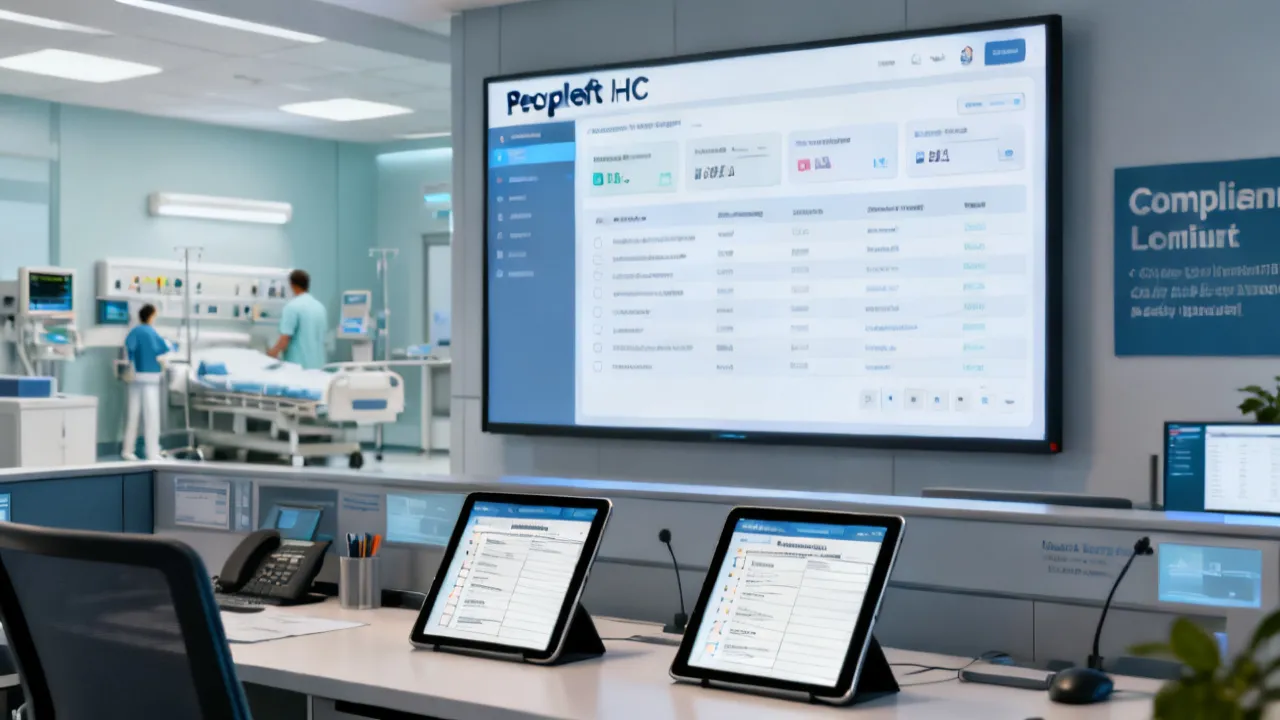
When organizations evaluate Peoplesoft Hhc for healthcare administration, the priority is not simply configuration—it’s governance. In practice, the safest path is to clarify decision rights, define audit expectations, and establish how HR, finance, scheduling, and operational reporting connect. Doing this early reduces downstream risks such as inconsistent master data, uneven access controls, and costly rework during testing.
Because Peoplesoft Hhc typically sits at the center of enterprise workflows, implementation success depends on how reliably teams can: (1) maintain accurate organizational structures, (2) enforce role-based permissions, (3) standardize healthcare-related transactions, and (4) prove compliance through traceable approvals and logs. For healthcare organizations, these capabilities are especially valuable when multiple departments contribute to HR updates, billing-related processes, and operational metrics.
Governance-first thinking is not a “nice to have” for healthcare—it is operationally necessary. Healthcare organizations manage data about people, jobs, credentials, and time, often under strict privacy expectations and labor rules. If the governance model is unclear at the start, the system will behave in unexpected ways: approvals may occur without proper oversight, reporting may reflect inconsistent structures, and security may drift as teams scramble to meet deadlines. The result is often a late-project feeling of instability where every test cycle uncovers differences between what leaders expect and what the system actually enforces.
In other words, Peoplesoft Hhc should be treated like a “control system” for healthcare administration, not just an application platform. Governance shapes configuration, and configuration shapes user behavior. When governance is explicit, configuration becomes easier to justify, security becomes easier to validate, and audit evidence becomes easier to produce.
What “PeopleSoft HHC” Usually Means in Healthcare IT
The term Peoplesoft Hhc is often used to describe an implementation pattern of Oracle PeopleSoft modules tailored for healthcare environments—commonly involving HR administration, benefits administration, payroll-related workflows, financial management, procurement, and reporting. The “HHC” element typically signals an emphasis on healthcare workflows and governance expectations rather than a single standalone feature.
From an industry expert’s viewpoint, the “HHC” framing matters because healthcare operations introduce complexity: frequent role changes, union or labor rules, varied approval chains, data privacy requirements, and operational reporting needs that differ from purely commercial enterprises. As a result, implementation teams usually emphasize controls, documentation, and auditability alongside user experience.
In many healthcare organizations, the “HHC” shorthand is also used to communicate that the project is not only about implementing HR or financial systems, but about harmonizing them. That harmonization includes consistent organizational hierarchies (for workforce and cost allocation), consistent job/position definitions (for compliance and eligibility), and consistent workflow routing (for approvals and traceability). This is why governance tends to be the early differentiator between projects that stabilize quickly and projects that remain in a perpetual state of “almost there.”
Immediate Business Value: Where PeopleSoft HHC Impacts Daily Operations
In very healthcare organizations, Peoplesoft Hhc deployments are expected to improve consistency across core administrative functions. The highest-impact areas generally include:
- HR data integrity: standardized employee and organizational records reduce downstream reconciliation issues.
- Approval workflows: consistent request-and-approval processes help maintain governance for personnel and finance-related transactions.
- Operational reporting: more reliable reporting dimensions support workforce planning and leadership visibility.
- Audit readiness: traceable changes and controlled access reduce compliance friction.
- Cross-functional coordination: shared master data supports coordination among HR, finance, and procurement teams.
However, the real daily value often emerges in less obvious places—where operational teams spend time reconciling inconsistencies, correcting errors, or chasing information. For example, if departments have historically maintained their own spreadsheets for workforce planning, the PeopleSoft environment becomes the “system of record” for employee attributes and organizational alignment. That reduces manual effort and improves confidence in reporting. If approvals are consistently enforced—rather than depending on “who happens to check”—the organization reduces the risk of unauthorized changes and late reversals.
In healthcare operations, time is also a major factor. Payroll and workforce planning can be time-sensitive. When a governance model is clear, the system can support predictable, repeatable cycles—such as period-end processing, benefits enrollment windows, or credentialing-related HR events—without requiring ad hoc intervention. Even when exceptions occur (for example, urgent hires or emergency credential updates), a controlled exception pathway can preserve auditability and keep downstream processes from breaking.
Expert Implementation Lens: Critical Decisions Before Configuration
If your team is planning a PeopleSoft-based healthcare administration program, an expert approach typically starts with decisions that reduce ambiguity later. In particular, you’ll want clarity on:
- Scope boundaries: define which modules and processes are in scope (and which are deferred).
- Role model: determine who approves what, and which roles can view or edit data.
- Data standards: establish canonical definitions for organizational hierarchy, job classifications, and key financial dimensions.
- Integration boundaries: map upstream and downstream systems (e.g., identity management, payroll source data, financial interfaces, data warehouse feeds).
- Audit requirements: agree on what needs to be logged and retained, and how evidence will be reviewed.
Many teams underestimate the effort required to align governance with system behavior. In healthcare, “configured correctly” often means “configured so it behaves correctly under real operational pressure”—including exceptions, urgent changes, and period-end processing constraints.
To expand this point, consider how governance choices ripple through configuration. If you decide that a particular department manager must approve a transfer, you also must ensure the system identifies the correct approver based on department hierarchy and effective dates. If you decide that only a data steward can correct certain master data attributes, you must configure permissions and workflow routing so that standard HR request users cannot override protected fields. If you decide that access should be restricted for privacy reasons, you must configure role-based security, auditing, and user provisioning processes—then test those features thoroughly.
An expert lens also emphasizes that governance should be validated against real scenarios. Instead of discussing roles and workflows in abstract, teams should walk through examples: a nursing staff transfer between departments, a mid-quarter job code change for a contracted role, an urgent correction due to an eligibility error, or a late submission that occurs during payroll processing. Each scenario reveals gaps in what governance documents say versus what the system actually enforces.
Inverted Pyramid Comparison Table: Supplementary Guidance and Preconditions
The following table summarizes common conditions and requirements organizations prepare for when adopting Peoplesoft Hhc. (No external URLs are included.)
| Category | What to Prepare | Typical Condition/Requirement | Why It Matters |
|---|---|---|---|
| Governance | Approval matrices, role definitions, audit evidence expectations | Named owners for each workflow | Prevents uncontrolled changes and supports traceability |
| Data Readiness | Employee/organizational structures, controlled code sets, master data rules | Data validation and reconciliation before cutover | Improves accuracy for reporting and downstream transactions |
| Security & Access | Role-based permissions, separation of duties, least-privilege standards | Regular access reviews and logging | Reduces risk of inappropriate access |
| Integration | Interface specifications, identity mapping, error handling standards | Tested end-to-end scenarios | Avoids operational failures during go-live |
| Testing | Test plans, scenario coverage, performance baselines | Sign-off by process owners and IT stakeholders | Improves confidence in real-world processing |
| Training | Role-based training materials, job aids, escalation paths | Completion tracking for critical roles | Reduces procedural errors after go-live |
To make this table more operational, consider how each category should be “proven,” not just “planned.” For example, governance isn’t only documentation; it’s also evidence that the system enforces it. Data readiness isn’t only data cleansing; it’s also reconciliation rules and ownership agreements. Security isn’t only a list of permissions; it’s also a repeatable access review process and a controlled approach for emergency access requests.
Similarly, integration preparation should include explicit error handling expectations, such as what happens when a feed arrives with missing keys, when a record arrives out of order, or when an identity mapping fails. Many healthcare organizations also need operational runbooks for integration failures, because in a real environment those failures can coincide with critical processing cycles.
Step-by-Step Guide: A Pragmatic Rollout Path for PeopleSoft HHC
Below is a structured approach that teams often use to minimize disruption. Adjust the depth and timing to match your organizational maturity and healthcare operating constraints.
- Discovery and process mapping
- Document current-state workflows for HR and finance operations.
- Identify pain points related to approvals, reporting inconsistencies, and data corrections.
- Map “handoffs” across teams (HR operations, department managers, finance approvers, data stewards) and capture how exceptions are handled today.
- Target operating model (TOM) and controls
- Define decision rights for workforce and financial transactions.
- Specify separation-of-duties rules aligned with audit expectations.
- Determine control thresholds (e.g., which changes require approvals vs. which can be self-service within constrained parameters).
- Define escalation paths for urgent requests and emergency fixes, including who is authorized to approve those exceptions.
- Solution design and configuration planning
- Design configuration for roles, security permissions, and workflow rules.
- Document how exception handling will work when normal processing cannot.
- Plan how effective dating should be handled for time-sensitive healthcare operations (e.g., changes that must take effect at the start of a pay period).
- Align reporting requirements to the governance decisions (dimensions, hierarchies, and required sign-offs).
- Data strategy and migration approach
- Establish data ownership and data quality standards.
- Plan reconciliation: totals, sample checks, and ownership validations.
- Decide which datasets require full historical migration and which can be handled with a “starting point” approach for compliance and reporting.
- Create data stewardship procedures for corrections after cutover (who can correct what, and how approvals are captured).
- Integration design and rehearsal
- Confirm interface requirements and identity mapping.
- Define failure modes: what happens if data arrives late or is malformed.
- Establish operational monitoring expectations: who gets alerted, how issues are triaged, and what the turnaround targets are.
- Rehearse end-to-end data flows in environments that mimic timing and payloads as closely as possible.
- Testing cycles with evidence capture
- Use scenario-based tests tied to business processes.
- Require sign-off from process owners, not only IT.
- Include negative tests (e.g., missing required fields, incorrect codes, or unauthorized attempts) to validate security and audit controls.
- Capture evidence artifacts (screenshots, logs, test results, and approval records) in a structured way so audit readiness is built from the start.
- Training and cutover readiness
- Train by role: admins, approvers, data stewards, and auditors.
- Prepare contingency procedures and escalation paths for go-live week.
- Conduct “day-in-the-life” training sessions so that approvers understand how they will encounter requests and where approvals will appear.
- Validate that users can access the right tools and data—then confirm that the access is appropriately restricted.
- Go-live, stabilization, and continuous governance
- Monitor issues, fix with controlled change management.
- Perform access review and data quality checks post-cutover.
- Run a short “stabilization sprint” that prioritizes high-impact workflows and closes known gaps quickly.
- Establish a governance cadence for updates—monthly or after major processing cycles—so permissions and workflow logic stay aligned as the organization evolves.
In healthcare, it’s also helpful to plan cutover timing around operational realities. For example, go-live near major payroll or benefits windows can magnify risk if training and rehearsal are incomplete. A pragmatic approach involves setting cutover readiness criteria such as data quality thresholds, integration success rates, access review completion, and evidence capture for key workflows.
Another common best practice is to define a “hypercare” model that includes both technical and governance support. Technical support addresses system defects and integration failures, while governance support addresses workflow exceptions, access requests, and process questions. Without governance support, teams often end up bypassing controls informally (for example, making manual corrections outside controlled processes), which undermines audit readiness.
Industry Expert Considerations: What Typically Breaks Late Projects
From a delivery perspective, Peoplesoft Hhc programs often encounter predictable problems. Addressing them early tends to be more cost-effective than troubleshooting during stabilization.
- Security drift: roles multiply during testing and never fully converge to the production control model.
- Ambiguous organizational hierarchy: changes in reporting lines or department structures cause rework in reporting and permissions.
- Insufficient integration test depth: teams validate “happy path” only, then face unexpected timing and data-format issues.
- Uneven process adoption: some departments follow new workflows strictly, while others continue old steps, creating inconsistent records.
- Weak evidence strategy: audit readiness is treated as an afterthought rather than built into workflows and logging.
To make these failure modes more concrete, consider a few scenarios that commonly cause late surprises:
- Approvals routed to the wrong approver: If the organizational hierarchy rules weren’t agreed early, workflow routing logic may point to an outdated manager chain. This leads to delayed approvals and urgent manual corrections.
- Data corrections create compliance risk: When data stewardship roles and approval workflows aren’t explicit, users may attempt to correct records ad hoc. Even if the correction is “right,” the audit trail may not meet expectations.
- Payroll-related effective dates misalign: Effective dating is often complex in healthcare due to pay periods, contract terms, and eligibility windows. If effective dating logic is only partially tested, errors can surface when changes cross pay period boundaries.
- Reporting discrepancies: Reporting dimensions may differ between HR and finance if master data alignment wasn’t enforced. Leadership then sees mismatched headcount and cost allocation, creating credibility concerns.
- Performance issues during peak demand: Healthcare cycles may have concentrated processing windows (e.g., end-of-month HR actions). If performance baselines weren’t validated, users experience slow processing and begin using workarounds.
Late-project failures are rarely due to a single technical issue; they typically arise from misalignment between governance decisions and system enforcement. When governance is documented but not translated into configuration logic, the system cannot reliably enforce the intended controls.
Compliance and Data Privacy: Practical Governance for Healthcare
Healthcare organizations operate under strict privacy and governance expectations. While specific legal requirements vary by region, the core operational principle remains: access should be limited to those who need it, and system activity should be reviewable. For a Peoplesoft Hhc implementation, governance typically includes:
- Least-privilege access: permissions granted based on job responsibilities.
- Separation of duties: prevent a single user from both initiating and approving sensitive transactions where required.
- Audit logs: ensure changes and approvals are recorded in a reviewable manner.
- Data stewardship: define who corrects master data and how corrections are approved.
For sources on healthcare data privacy concepts, many organizations refer to their applicable national regulations and guidance from recognized authorities. For security management approaches, widely used frameworks include NIST guidance (for information security management and risk practices). When designing controls for your program, align documentation with your internal compliance office and external regulatory counsel.
Beyond the basic list, practical governance for privacy often includes additional operational patterns:
- Controlled user provisioning: define how user accounts are created, modified, and removed when employees change roles. The PeopleSoft environment should not rely on informal access extensions.
- Regular access reviews: schedule periodic reviews with evidence capture. Access reviews should check both application permissions and functional roles.
- Segregation of sensitive attributes: restrict access to sensitive fields, not only transactions. Even if users can view employee records, they may not need full visibility into specific sensitive attributes.
- Immutable audit evidence: ensure the system’s logs and approval records are preserved and accessible for review. If logs are hard to extract, teams may be forced to recreate evidence manually during audits.
In healthcare environments, privacy concerns also influence operational reporting design. Leadership dashboards may require aggregated data, while detailed audit logs may require restricted access. Governance should specify what level of detail different roles can access and how reports are built. A common risk is over-broad reporting access, where analysts can access raw data that should be restricted. Another risk is the absence of documented rationale for why certain roles have elevated access.
To support compliance, it also helps to build a “control map” that links each governance requirement to a system feature. For instance, a requirement like “approvals must be traceable” should be mapped to workflow configuration, change logs, and reporting evidence. That mapping becomes useful later when internal audits ask not only whether controls exist, but whether they operate as intended.
Procurement and Supplier Coordination: How to Avoid Integration Surprises
Even when the central system is Peoplesoft Hhc, delivery relies on coordinated work between internal teams and suppliers (e.g., implementation partners, integration specialists, data quality resources, and testing service providers). The risk often isn’t technical feasibility—it’s misalignment between teams on definitions, timelines, and responsibility boundaries.
An expert approach for supplier coordination generally includes:
- Clear RACI: define Responsible, Accountable, Consulted, Informed roles for each workstream.
- Interface contracts: specify data schemas, mapping rules, and validation expectations.
- Acceptance criteria: ensure deliverables include evidence-based sign-off, not only technical outputs.
- Change control: manage scope changes with documented impact assessment.
Where “price information” is part of your procurement process, the more objective strategy is to compare proposals using consistent criteria: total implementation effort, testing coverage, cutover support model, and the ownership of ongoing enhancements. Avoid relying solely on initial cost figures when evaluating good operational risk.
Procurement coordination also includes aligning expectations around “who fixes what.” If an integration failure occurs during stabilization, the organization must know whether the integration specialist, internal IT, or data stewardship team owns the corrective action. Ambiguity here leads to delays and often results in manual workarounds. A governance-first approach reduces ambiguity because ownership and decision rights were established earlier during TOM definition.
It’s also useful to specify how suppliers will handle evidence capture. For instance, if a testing provider runs test scripts, the project still needs structured evidence artifacts for audit readiness. Without this, the supplier may complete the work technically, while the internal team later struggles to produce documentation. Contract terms can clarify evidence requirements, acceptance criteria, and responsibility for documentation.
Operations After Go-Live: Stabilization, Monitoring, and Continuous Improvement
Stabilization is where healthcare organizations either realize benefits or incur lingering uncertainty. For Peoplesoft Hhc, the key post-go-live tasks often include:
- Issue triage: categorize problems by severity and impacted departments.
- Data quality monitoring: run reconciliation checks and validate code set usage.
- Access reviews: confirm roles remain aligned to job responsibilities.
- Performance observation: verify that peak processing windows behave as expected.
- Process refinement: improve exception handling and reduce manual corrections.
Successful programs also keep an eye on change management. In healthcare, workforce and organizational structures shift often; your PeopleSoft environment should have a stable governance rhythm for updates.
To extend this further, stabilization should not be treated as purely technical firefighting. Instead, it should include a governance review loop:
- Workflow effectiveness: Are approval queues functioning correctly? Are approvals timely? Are there bottlenecks caused by routing logic?
- Control adherence: Are users following the intended processes, or are they using workarounds? If workarounds are appearing, governance decisions may need adjustment.
- Data stewardship workload: Are data stewards experiencing an unexpected volume of corrections? That can indicate upstream data issues, code set misunderstandings, or training gaps.
- Monitoring maturity: Are operational dashboards and alerts effective? Are teams reacting appropriately, or are alerts generating noise?
Healthcare operations often involve multiple periodic cycles. For example, benefits changes may occur at predictable times; budget or workforce planning cycles may trigger structured updates. Post-go-live governance should align to these cycles to ensure the system does not become out of date. A well-run program establishes a continuous improvement backlog, where improvements are prioritized based on operational impact, compliance risk, and process efficiency.
Continuous improvement also includes refreshing training as new issues arise. If a specific role frequently encounters errors, training should be updated with targeted job aids. If a workflow decision is unclear, governance documentation should be updated and configuration refined so the system enforces the corrected understanding.
Another practical consideration is the approach to emergency fixes. During stabilization, leadership may request urgent changes to support critical operations. Governance should define whether emergency changes are allowed, who can approve them, how they are logged, and how they are incorporated into official change control afterward. This prevents emergency work from becoming a pattern that erodes audit readiness.
FAQs
1) What is PeopleSoft HHC used for in healthcare organizations?
Peoplesoft Hhc is typically used as a shorthand for PeopleSoft implementations focused on healthcare administration—commonly supporting HR administration, finance operations, and governance-oriented reporting workflows. The exact capabilities depend on the modules and configuration selected for your organization.
In practical terms, these implementations may cover activities such as employee lifecycle events (hires, transfers, promotions, terminations), benefits eligibility workflows, payroll-related processing that relies on HR attributes, and finance activities that depend on organizational and cost allocation structures. Many deployments also support reporting for labor management, budgeting, and executive workforce visibility.
2) How important are governance and security controls for a PeopleSoft HHC rollout?
They are central. A healthcare environment requires dependable separation of duties, auditability, and least-privilege access. While configuration is important, governance ensures the system supports operational and compliance expectations consistently.
Without governance and security controls, a PeopleSoft environment can become difficult to audit and risky to operate. Even if the system is configured correctly at the start, permission drift and inconsistent workflows can undermine compliance. Governance provides a framework for managing access, approvals, and evidence from go-live onward.
3) What is the biggest risk during integration for PeopleSoft HHC?
A frequent risk is insufficient end-to-end testing of interfaces—especially timing, data-format validation, and error handling. Teams may validate only the “happy path,” then discover issues when real-world data arrives late or contains edge-case values.
Integration risk is amplified in healthcare due to the complexity of identifiers and effective dating. An interface that works for a subset of records may fail for others if key fields are missing or if mapping rules differ slightly from business expectations. Robust testing must therefore include negative and edge-case scenarios, as well as operational runbooks for handling failures.
4) Do we need to migrate all historical data at once?
Not always. Many organizations choose a pragmatic migration strategy—balancing operational needs (e.g., reporting and compliance) against the cost and risk of migrating large volumes of historical records. The decision should be supported by requirements from HR, finance, and compliance stakeholders.
In some cases, organizations migrate only the data required to support current payroll cycles, current reporting periods, and compliance obligations. For historical reporting, they may retain legacy systems or use partial histories. A governance-first approach ensures the migration decision is traceable and aligned with what audits and leadership actually require.
5) How should supplier and implementation partner responsibilities be defined?
Use a clear RACI and interface acceptance criteria. Define who owns configuration decisions, interface specifications, test evidence, cutover rehearsal, and post-go-live stabilization. This reduces disagreements and prevents uncovered gaps.
Responsibilities should also specify how suppliers handle documentation and evidence capture, as well as how change requests are handled. Where suppliers contribute to security configuration or workflow logic, contracts should clarify whether the organization retains final accountability for control enforcement and audit readiness.
6) Can we align PeopleSoft HHC with audit requirements from day one?
Yes. Expert teams design workflows and logging expectations early, so audit evidence is captured as part of standard processing rather than collected manually afterward.
Aligning with audit requirements from day one typically involves building a control map, defining what evidence is required for each workflow, and ensuring the system logs are structured and retrievable. It also means aligning testing and sign-off with compliance expectations so that evidence is consistent.
7) How do we evaluate “price information” without compromising delivery quality?
Compare proposals on total scope coverage and risk mitigation: testing approach, cutover support, training depth, governance documentation, and integration acceptance criteria. A lower initial figure can mask higher operational risk if acceptance evidence and controls are not fully included.
A practical approach is to score proposals on how they address governance and control enforcement—not only technical feasibility. For example, proposals that include evidence capture, access review processes, and governance support during stabilization often reduce the hidden costs of audit remediation and operational rework.
8) Are there location-specific considerations for healthcare deployment?
While legal and operational specifics differ by jurisdiction, the healthcare program fundamentals—privacy governance, access controls, and evidence readiness—remain broadly consistent. If your deployment area includes local operational nuances, incorporate them into workflow mapping and testing scenarios.
Location-specific considerations can include local labor practices, union rules, benefits requirements, and reporting conventions. Even when the PeopleSoft configuration is largely standard, governance decisions must reflect local operational realities. This is another reason to validate workflows with real scenarios from the start.
Conclusion: A Governance-First Approach to PeopleSoft HHC
Adopting Peoplesoft Hhc is top approached as a healthcare governance initiative as much as an IT delivery project. By prioritizing decision rights, role-based controls, data readiness, and evidence-based testing, organizations can reduce operational disruption and strengthen audit readiness. Done well, the system becomes a reliable backbone for healthcare administration—supporting consistent workforce and finance operations while enabling leadership to rely on trustworthy reporting.
When governance is treated as foundational, PeopleSoft HHC implementations typically move through delivery phases with less confusion and fewer late surprises. Teams can configure with confidence because they understand the “why” behind approvals, access controls, and data definitions. Users can adopt the system more effectively because workflows and responsibilities are clear. Auditors and compliance stakeholders can trust the environment because evidence is built into routine processing rather than assembled under pressure.
Ultimately, governance-first implementation is not about adding bureaucracy—it’s about creating operational clarity. In healthcare, operational clarity protects patient-adjacent administrative workflows, reduces compliance risk, and improves workforce and financial decision-making. This is why organizations that treat governance as the first pillar often experience smoother stabilization, stronger adoption, and more resilient operations long after go-live.