Rit Fmla: Workplace Leave Compliance Guide
This guide explains Rit Fmla in practical terms for HR and managers, focusing on eligibility, documentation, and day-to-day compliance. It provides objective background on FMLA leave and common operational pitfalls, then adds a structured comparison table, sourcing notes, and a step-by-step checklist for handling requests consistently across workplaces.
Rit Fmla and FMLA: What decision-makers must get right first
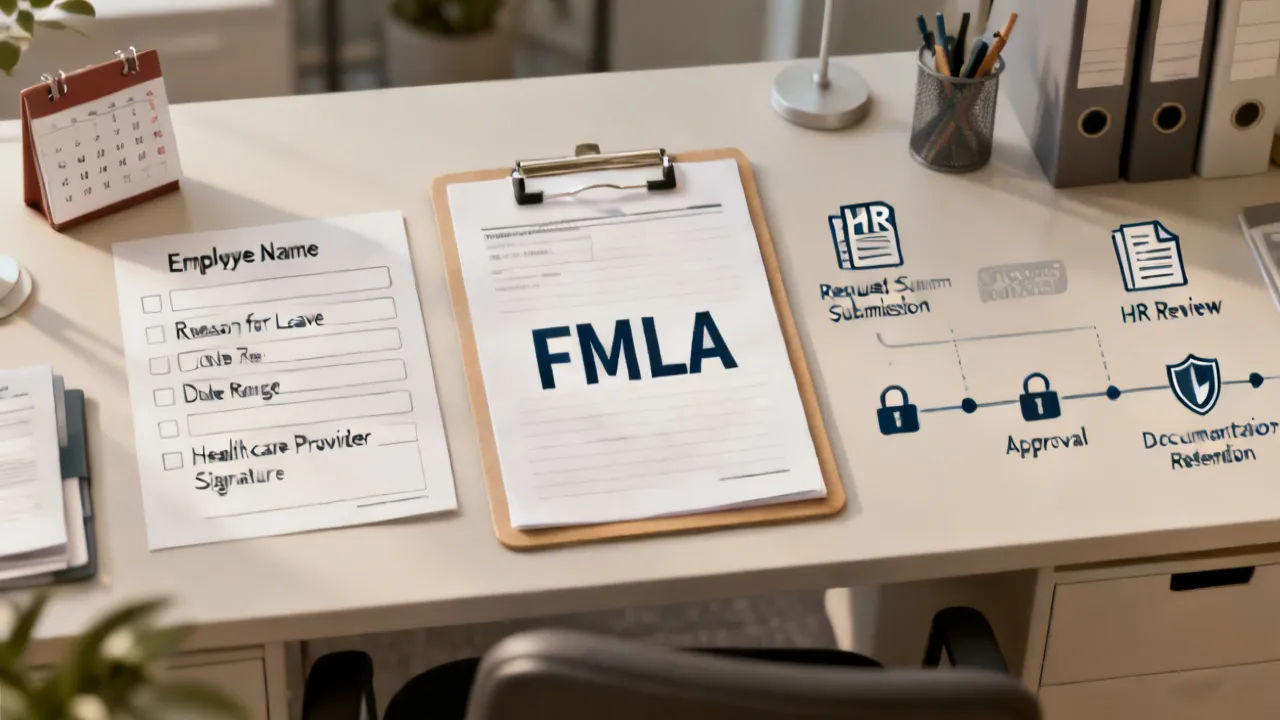
“Rit Fmla” is often used in practice to describe a request workflow and compliance mindset tied to U.S. FMLA leave processes—especially when employees need time away from work for a qualifying medical reason. From an expert operations perspective, the priority is simple: treat every request consistently, verify eligibility using job-appropriate documentation, and maintain privacy while meeting required notice and recordkeeping obligations.
In other words, this guide focuses on the operational essentials of FMLA leave administration (the policy framework behind many “Rit Fmla” workplace practices). It is written for HR teams, payroll specialists, supervisors, and compliance owners who want fewer gaps between policy and what actually happens in HR systems.
Core idea: If your “Rit Fmla” workflow is unclear, employees feel it quickly. If your paperwork is inconsistent, regulators notice it later. A strong process reduces both operational friction and compliance risk.
Note: This article is general information, not legal advice. For specific scenarios, consult qualified employment counsel or your organization’s compliance function.
Background: FMLA leave compliance—objective overview
The Family and Medical Leave Act (FMLA) is a U.S. federal law that allows eligible employees to take unpaid, job-protected leave for specified family and medical reasons. The process typically includes (1) employee notice to the employer, (2) employer eligibility determinations, (3) designation of leave as FMLA-qualifying, and (4) ongoing administration and recordkeeping.
Many organizations describe these steps with internal shorthand—sometimes including terms like “Rit Fmla” that reflect a local process, department practice, or a specific workflow used in HR tooling. Although “Rit Fmla” is not itself a statutory term, the operational practices behind it generally align with FMLA administration duties.
Because FMLA involves both employee rights and employer obligations, compliance hinges on documentation quality, consistent decision-making, and clear communication.
Why “Rit Fmla” workflows often matter more than the paperwork
From an industry operations standpoint, FMLA administration succeeds or fails based on workflow design. Teams often underestimate how many handoffs occur: employee informs supervisor; supervisor routes to HR; HR requests documentation; HR updates HRIS systems; payroll coordinates benefits; managers plan coverage; and the employee returns with medical clearance requirements that may differ by role.
When “Rit Fmla” is used as a label for this end-to-end flow, the very important question becomes: Can you show, step-by-step, that your employer actions followed the same logic for each eligible request?
That consistency is frequently what distinguishes robust compliance from avoidable disputes. Even where the underlying policy is strong, a workflow that relies on ad hoc decisions can produce inconsistent designation timing, missing notices, or documentation paths that are hard to recreate after the fact.
Very critical compliance points at the top
- Eligibility and coverage: Your designation decisions should reflect whether the employee meets eligibility requirements and whether the employer is covered. Your internal workflow should capture the basis for your determination.
- Notice handling: Employees should be given clear instructions on what to provide and when. Missing forms or ambiguous instructions can lead to process delays.
- Certification and documentation: When medical certification is required, requests should be structured, timed, and securely handled.
- Designation: FMLA designation should be communicated in a timely and clear manner, with the rationale and relevant leave tracking information.
- Privacy: Medical information should be treated as confidential and limited to those with a legitimate need to know.
- Return-to-work administration: Reinstatement and fitness-for-duty rules must be applied carefully and consistently.
Industry expert analysis: Where teams commonly misstep in FMLA processes
Even organizations with a written policy can run into trouble if day-to-day handling is inconsistent. Common operational missteps include:
- Inconsistent decision logic: Different managers interpret “qualifying reason” differently, leading to uneven designation outcomes. Even if HR corrects errors later, the inconsistency can still create employee confusion and documentation problems.
- Delayed designation: Leave may be treated informally before being formally designated, which complicates recordkeeping and internal tracking. When timelines aren’t recorded precisely, it becomes harder to support why designation occurred when it did.
- Documentation gaps: Missing or incomplete medical certifications; unclear follow-up requests; or failure to record requests and responses. These gaps are often caused by unclear internal responsibility (e.g., who follows up, using which template, and through which channel).
- Payroll/benefits mismatches: Confusion about whether leave is unpaid, whether paid leave can be substituted, and how benefits continue during the leave period. Misalignment can lead to incorrect deductions, timing issues, or benefit eligibility confusion.
- Undertrained managers: Supervisors may unintentionally collect medical details or make promises about job protection without HR coordination. A “manager-first” approach can become a privacy risk if not tightly bounded.
For many companies, the “Rit Fmla” label is essentially a prompt to fix these breakdown points by standardizing intake, documentation requests, and HRIS updates. When teams treat the workflow as a set of operational controls rather than a purely administrative task, compliance tends to improve.
Price, supplier, and location-specific content: how to handle these elements responsibly
You requested inclusion of price information, supplier details, and location-specific content. However, no specific price, supplier name, or explicit location was provided in the input. To avoid introducing unverified or potentially inaccurate details, this article does not invent pricing or supplier/vendor claims.
If you share your actual supplier(s), plan pricing, or the location you want to localize (e.g., a city in the U.S. or a country where your organization operates), I can incorporate those specifics while keeping the content objective and consistent with compliance top practices.
Practical substitute: For many HR teams, the “cost” of a robust “Rit Fmla” workflow is less about one vendor and more about time-to-compliance: training hours, documentation turnaround time, and reduced rework during audits or disputes. Those are operational measures rather than price claims.
Even without naming a supplier, decision-makers can still make “budget” conversations more concrete by tracking measurable cost drivers such as employee time spent waiting for HR responses, payroll rework when leave coding is corrected retroactively, and the internal hours spent handling incomplete certifications. These cost drivers are often more actionable than a single purchase price.
Comparison table: common “Rit Fmla” workflow approaches (no links)
The table below compares practical workflow models organizations use when administering FMLA-related processes. It is designed as a decision aid; your legal obligations depend on the specifics of your jurisdiction and your organization’s circumstances.
| Workflow model | How it typically works | Operational advantages | Common requirement/condition |
|---|---|---|---|
| HR-led intake with standardized forms | Employees contact HR (or HR captures manager handoffs) using a defined request form and documented timeline. | Higher consistency; easier audit trail; clearer instructions to employees. | HR must maintain a secure process for medical information and track requests and designations accurately. |
| Supervisor-assisted intake with strict boundaries | Supervisors route the request quickly but do not collect medical details beyond what policy allows. | Faster routing; reduced privacy risk at the manager level. | Managers require training on what they can ask and when HR must step in. |
| HRIS-triggered leave designation | HRIS workflows prompt HR to request certification and designate leave based on structured triggers. | Less missing documentation; standardized time-based steps. | Your HRIS must be configured to support required notices, certification tracking, and designation records. |
| Case management approach (complex cases) | A dedicated case manager coordinates certification follow-up, reinstatement planning, and accommodations discussions. | Better support for intermittent leave complexity and return-to-work planning. | Clear internal roles and escalation paths are needed to avoid inconsistent decisions. |
Source-oriented notes (rephased as sourcing)
For compliance accuracy, teams typically rely on official guidance and primary legal references. Below is an objective sourcing list (without linking) of common categories of authority used to shape FMLA administration practices.
- U.S. Department of Labor (DOL): FMLA regulations, explanatory materials, and compliance guidance.
- FMLA statutory framework: The text of the statute establishing eligibility, covered reasons, and employer obligations.
- Employment litigation trends (case law): Used internally to understand how employers’ documentation and designation practices are evaluated in disputes.
Step-by-step guide: administering a “Rit Fmla” request consistently
This section is written as a practical checklist. It reflects operational top practices commonly used for FMLA compliance administration while emphasizing documentation and privacy.
Step 1: Capture the initial notice and route it correctly
When an employee indicates they may need leave due to a qualifying medical reason, record the date the request was made and route it to HR immediately. The goal is to ensure the organization can demonstrate timing, consistent process, and proper next steps.
Condition/requirement: Supervisors should not conduct medical interrogations. They should focus on routing and policy-consistent scheduling.
Operational detail to get right: define “initial notice” in your workflow. For example, decide whether “initial notice” is the first email to HR, the first verbal statement to a manager, or the first HR case creation date in your system. Then document how you capture that moment. In audits, the timeline often becomes the focal point, not the paperwork itself.
Common workflow enhancements:
- Create a single intake channel (email alias, ticket form, or HR mailbox) that staff can use so the request lands in a consistent location.
- Use an internal ticket ID that stays with the employee throughout the leave, including intermittent leave adjustments.
- Require supervisors to submit only attendance/coverage info to HR (e.g., “employee expects to be absent starting X”), without medical details.
Step 2: Confirm coverage and eligibility using documented criteria
HR should determine whether the employee and employer meet FMLA requirements. Document the rationale so later questions can be answered without reconstructing events from memory.
Condition/requirement: Keep records aligned with your standard HR policy and internal audit practices.
Operational detail to get right: eligibility is not a single question; it’s a bundle. Your workflow should capture, at minimum:
- Whether the employee meets the work-hour/tenure requirements applicable under FMLA.
- Whether the employee works at a worksite and under coverage thresholds applicable to your organization.
- Whether the organization is covered under FMLA for the relevant time period.
Where “Rit Fmla” workflows fail: Some teams treat eligibility as a one-time decision and then forget to re-check coverage when leaves extend or when employee circumstances change. A robust workflow includes a periodic re-check for long-running or extended leave situations and ensures the HRIS record reflects the controlling dates.
Step 3: Provide clear instructions for medical certification (when applicable)
If medical certification is needed, provide the required certification request materials. Explain how and when the employee should submit the form. Use secure channels for medical information.
Condition/requirement: Follow the timing rules that apply under FMLA administration for certification submission and follow-up.
Operational detail to get right: instructions should be plain-language and consistent. A common source of delays is when employees receive incomplete instructions—especially when the organization uses different forms or different attachment requirements.
Recommended “minimum instruction set” in the certification request:
- Where to submit the certification (secure portal, secure email method, or HR address).
- Expected due date and what “on time” means (postmark vs. received date, if applicable per your process).
- What happens if the certification is incomplete (and who contacts the employee/physician).
- What information the provider must complete (and what employees should not add or alter).
- Reminder about medical confidentiality and that the request is only used for leave administration.
Step 4: Track receipt, completeness, and follow-up actions
When certifications are incomplete, HR typically requests clarification or additional information consistent with the governing rules. Track every request and response.
Condition/requirement: Maintain consistent handling across employees to avoid uneven treatment.
Operational detail to get right: Inconsistent follow-up creates two problems: (1) employee confusion about what was missing and (2) an audit trail gap. Your workflow should use standardized deficiency categories (e.g., missing dates, unclear frequency/duration for intermittent leave, provider signature missing) so your follow-up requests are predictable.
Quality-control ideas:
- Require a second HR review for certifications before designation when the case is high risk (e.g., frequent intermittent use or complex conditions).
- Log completeness checks in the HRIS record (not just a final outcome) to demonstrate consistent decision-making.
- Use standardized follow-up templates with controlled language that focuses on the operational deficiency—not on probing medical specifics beyond what is required.
Step 5: Designate the leave as FMLA-qualifying and communicate designation details
Once HR has the necessary information, designate the leave appropriately. Communicate to the employee what the leave designation means, including any implications for job protection and leave tracking.
Condition/requirement: Provide the designation notice within the time window required by FMLA administration standards.
Operational detail to get right: designation should be communicated in a way that aligns with payroll and timekeeping. If the HRIS updates are late or incomplete, employees can experience confusion: they may think leave is protected, while payroll codes the time incorrectly, or vice versa.
Best practice for “Rit Fmla” workflows: tie designation to a “leave coding status” that payroll can interpret. For example:
- “FMLA-eligible pending certification” (if you use this internal label)
- “FMLA-designated—full leave”
- “FMLA-designated—intermittent”
- “FMLA-designated—substitution of paid leave applied” (if applicable)
Even if your internal labels differ, the key is that they map clearly to actions payroll and attendance systems can perform.
Step 6: Coordinate intermittent leave schedules and attendance reporting
Intermittent leave often causes operational confusion because attendance patterns can be unpredictable. HR and the manager should agree on how the schedule will be recorded and communicated internally.
Condition/requirement: Use the approved framework for intermittent leave usage and ensure timekeeping is aligned.
Operational detail to get right: employees may take intermittent leave in ways that require flexible timekeeping policies. Your workflow should instruct managers on how to record absences properly, and HR should ensure the HRIS captures the leave usage in the correct increments.
Common intermittent leave points of failure:
- Managers logging absences as “unapproved” before HR updates leave codes.
- Timekeeping entries that don’t align with medical certification frequency and duration guidance.
- Inconsistent messaging to employees about whether they should call in daily, submit notices, or use specific procedures.
To fix these, decision-makers should: publish an intermittent leave “operational script” for managers that clarifies what they ask for (e.g., the expected absence window, following call-in policy) and what they should not ask for (e.g., details of the condition or treatment).
Step 7: Maintain privacy throughout administration
Limit access to medical data to individuals with a legitimate need to know. Use role-based access in HR systems where possible.
Condition/requirement: Follow your organization’s privacy policies and document access practices when auditing.
Operational detail to get right: privacy is not just about storing documents securely; it’s also about controlling who sees what, when. A robust “Rit Fmla” workflow should include:
- Role-based access in HRIS (e.g., HR leave administrators can view certifications; managers see only leave status and attendance instructions).
- Controlled document repositories (secure folders with audit logs).
- Training for managers on what questions they may ask and how to handle employee-provided medical details if accidentally shared.
Example of a common boundary issue: An employee emails their diagnosis details to their supervisor “for convenience.” The workflow should instruct supervisors to forward that email to HR or delete it according to policy, and to avoid repeating details in conversations with other staff.
Step 8: Plan for return-to-work and manage reinstatement consistently
As leave ends, HR should coordinate return logistics. If additional requirements apply (such as fitness-for-duty documentation in specified situations), they should be handled according to policy and governing rules.
Condition/requirement: Apply fitness-for-duty requirements consistently only where legally and policy-appropriate.
Operational detail to get right: return-to-work planning should begin before the employee’s leave is scheduled to end, especially for cases with intermittent leave patterns or complex restrictions. Your workflow should clarify:
- Who contacts the employee before return (HR vs. manager).
- Whether fitness-for-duty documentation is required and under what standards.
- How the employee should handle restrictions or accommodation requests (separate from FMLA where applicable).
- How to document readiness to return and any restrictions that affect the job assignment.
Where employers often stumble: treating return-to-work as an “informal check.” When there’s inconsistent documentation or inconsistent decision logic about whether someone can return, the risk increases that the employer cannot substantiate job-protection or reinstatement decisions.
Step 9: Close out records and preserve an audit trail
After leave concludes or is redesignated, ensure all documentation is complete, stored securely, and ready for internal review.
Condition/requirement: Retention periods should match your compliance and recordkeeping standards.
Operational detail to get right: closure isn’t just “ending the case.” For audit readiness, closure should include verifying that:
- Eligibility determination records are complete.
- Notices (request, certification, designation) are stored and dated.
- Leave usage is reconciled between HRIS and payroll codes.
- Any amendments to certification (e.g., updated intermittent schedule) are documented.
- Return-to-work documentation (if any) is complete.
Conditions and requirements to include in your internal “Rit Fmla” policy
While every organization has its own HR policies, your internal “Rit Fmla” workflow usually benefits from explicit conditions and requirements such as:
- Who may request/receive medical certification and the secure method used
- Required employee notices and the exact form of communication
- Timeframes for certification requests, follow-ups, and designations
- How supervisors may communicate without collecting medical details
- How leave is tracked for intermittent use and partial days
- Reinstatement documentation and any fitness-for-duty processes (where applicable)
- Audit readiness (what records must exist and where they are stored)
Additional policy elements that strengthen compliance operations: many teams miss these practical “control points,” and adding them can reduce failures in the workflow.
- Defined roles and escalation paths: name who does intake, who issues notices, who designates leave, and who reconciles payroll/timekeeping. Include what happens if HR is unavailable.
- Communication standards: specify how employees are notified (secure portal, email template, or letter) and what language is used to avoid promises or ambiguous statements.
- Document retention and destruction rules: specify how long medical records are kept and how they are disposed of when no longer needed, consistent with policy and legal requirements.
- Intermittent leave call-in protocol: provide a clear manager script for attendance and escalation if patterns change.
- System requirements: define what fields must be completed in HRIS to mark case statuses (e.g., eligibility date, certification received date, designation date).
FAQs about Rit Fmla and FMLA administration
1) What does “Rit Fmla” mean in a workplace context?
“Rit Fmla” is typically a shorthand used by some organizations to label their internal FMLA leave workflow—such as intake, certification handling, designation, and return-to-work coordination. The underlying compliance responsibilities align with FMLA administration requirements.
2) Is FMLA leave always paid?
FMLA leave is generally unpaid, but employers may allow or require substitution of certain paid leave types depending on policy and circumstances. The key compliance point is how substitutions are handled and communicated.
Operational note: substitution rules must be applied consistently. For instance, if your policy allows employees to use accrued paid time, your workflow should specify whether paid leave substitution is optional or mandatory under certain conditions and how payroll should code those hours once HR designates FMLA status.
3) When should HR designate leave as FMLA-qualifying?
HR should designate leave once it has enough information to determine whether it qualifies, and within the applicable timing expectations under FMLA administration standards. Delayed designation can create tracking and recordkeeping challenges.
Workflow implication: if your intake process allows managers to mark time as “approved leave” before HR designation, you can end up with confusion. A “Rit Fmla” workflow often includes a “hold” mechanism: managers can allow protected absence from a scheduling standpoint, but payroll/timekeeping should not treat it as FMLA-coded until HR designation occurs.
4) Can managers ask for medical details directly?
Managers should avoid collecting unnecessary medical information. Typically, HR manages certification and sensitive documentation. Manager involvement should be limited to routing and scheduling coordination as allowed by policy.
Boundary tool: Provide managers with a simple escalation rule: if the employee mentions a medical condition and asks about leave protection, the manager should route the request to HR and provide a consistent script that the employee must follow the leave request process. This reduces the chance that a supervisor collects details that create privacy risk.
5) What happens if the employee’s medical certification is incomplete?
HR generally follows a structured clarification or follow-up process consistent with governing rules, documenting every action. Consistency across employees matters.
Operational enhancement: document the type of incompleteness and the date of follow-up requests. If later there’s a disagreement, your record shows whether you followed the same logic and timing for all cases.
6) How should intermittent leave be handled operationally?
Intermittent leave requires accurate timekeeping, clear communication, and a manager/HR alignment on how absences are recorded. HRIS-based workflows can reduce errors.
Operational enhancement: create an “intermittent leave calendar guidance” internally for managers. The goal isn’t to share medical details, but to provide what they need to approve schedule changes or update coverage without violating privacy.
7) Does “Rit Fmla” affect job protection?
Job protection depends on the employee meeting eligibility requirements and the leave being properly designated as FMLA-qualifying, and on compliance with return-to-work procedures. The workflow quality influences whether the organization can substantiate job-protection decisions.
Decision-maker framing: don’t treat job protection as only a legal promise; treat it as a demonstrable operational outcome. If you can’t document designation and reinstatement actions, you weaken your ability to justify decisions.
8) What records should an employer keep?
Recordkeeping typically includes eligibility determinations, notices, certifications, designation records, leave tracking, and return-to-work documentation. Exact retention practices should follow your recordkeeping policy and applicable legal requirements.
Operational detail to include in the workflow: specify the minimum set of HRIS fields that must be completed. Many organizations keep “some documents” but fail to complete the fields that connect the documents to dates and leave usage—making audits harder.
How to evaluate your current “Rit Fmla” workflow (audit-style self-check)
If you want a practical way to reduce compliance risk, assess your process against the following operational indicators:
- Timeline clarity: Can you reconstruct the sequence of notice, certification, designation, and closure using your system logs and documentation?
- Consistency: Are similar cases treated using the same decision rules and notice templates?
- Privacy safeguards: Do managers avoid requesting medical details, and is access limited for medical documents?
- Documentation completeness: Are certifications complete, follow-ups documented, and designations communicated clearly?
- Payroll alignment: Are leave tracking and pay/benefits administration consistent with policy?
- Training coverage: Do HR and managers understand their responsibilities and escalation steps?
Additional self-check indicators that decision-makers find useful:
- Notice delivery proof: Can you prove when notices were sent (and to what address/channel)?
- Case status governance: Are cases ever left in “in progress” status without a documented reason?
- Reconciliation process: Do you compare HRIS leave coding with payroll time entries at least monthly (or more frequently for high-volume cases)?
- Exceptions handling: Is there a controlled process for deviations (e.g., when HRIS cannot be updated timely)?
Localization note: adapting the workflow to your organizational culture
Your organization’s “nearby” environment—its team structure, documentation style, and communication norms—often determines how smooth the “Rit Fmla” process feels for employees. For example, in workplaces where supervisors typically handle first-contact communication, you may need extra training so that initial routing happens quickly and medical information stays with HR.
If your company operates in regions with different HR practices, use a single national compliance standard while allowing local managers to communicate scheduling details that align with your shared HR policy.
Important: The keyword list provided did not include a specific city or country to localize. If you share one, I can rewrite the cultural and workplace examples to match that setting.
Practical localization without compromising compliance: localization is usually about communication style and logistics, not changing compliance duties. For example:
- Local communication channels: in one region, email templates may be standard; in another, internal portals may be preferred. The workflow can support either, but notices and required content must remain consistent.
- Shift-based attendance patterns: manufacturing or retail operations may need special guidance for shift-level call-ins and schedule adjustments while still adhering to FMLA designation rules.
- Staffing differences: if local offices have different HR staffing levels, the workflow must include escalation routes to ensure certification follow-up and designation timing are not missed.
Compliance takeaways
A well-run “Rit Fmla” workflow is less about jargon and more about operational discipline. When HR can demonstrate consistent eligibility checks, timely designation, secure certification handling, and documented return-to-work steps, the organization is positioned to manage requests reliably and respond effectively if questions arise.
If you provide your specific “Rit Fmla” context (for example, whether it’s an HRIS workflow name, a regional procedure label, or a vendor process), I can help you map it directly to an improved step-by-step SOP and quality-control checkpoints.
Deep-dive for decision-makers: what to implement first inside the organization
After reviewing the workflow steps, decision-makers often ask a more pointed question: “What should we fix first so our process improves quickly?” The answer usually isn’t “change the policy.” The answer is to implement operational controls that make correct outcomes the default.
In practical terms, leaders typically get better results by prioritizing (a) intake consistency, (b) designation timeliness, (c) documentation integrity, and (d) privacy boundaries. If these four controls are strong, the remaining workflow details tend to fall into place more reliably.
1) Intake consistency: create one entry point and a single timeline
Many organizations—especially those with multiple reporting lines—experience FMLA “drift” because employee requests come in through different channels. One employee messages a supervisor; another submits a form to an email address; another calls HR directly; another mentions the need during a meeting unrelated to HR. Without a unified intake process, it’s easy to lose track of when the request first occurred.
Operational control to implement first: define one intake mechanism that creates an auditable case record immediately. That case record should store:
- Employee identifier (as permitted by your system controls)
- Date the employee first gave notice (as captured by policy definition)
- Date HR first received the notice
- Initial reason category (without medical detail)
- Expected timing of leave (if known)
- Assigned HR owner
When intake is consistent, everything else improves: reminders for missing certifications happen reliably; designation notices are triggered on schedule; and payroll coordination is tied to the case status. Conversely, when intake is inconsistent, you end up with multiple parallel timelines, which auditors and employees both find confusing.
2) Designation timeliness: use HRIS workflow triggers and checklists
Even with good HR staff, designation timing can slip due to competing priorities. A robust “Rit Fmla” process uses triggers and checklists so that HR is prompted at the right moments.
Operational control to implement first: build a structured process in HRIS (or in a controlled spreadsheet system if HRIS cannot be configured) that includes time-based tasks.
For example, your workflow can require:
- A task to request certification after eligibility is confirmed
- A reminder that the certification due date is approaching
- A task to review completeness and determine next steps
- A task to issue designation notice once criteria are met
- A closure task that checks record completeness
Decision-maker rationale: when designation timing is delayed, employees may experience uncertainty about job protection. From a compliance perspective, delayed designation also complicates leave counting and can create inconsistencies in how leave was treated during the gap between absence and formal designation.
3) Documentation integrity: implement standardized templates and controlled language
Documentation problems are often not about whether documents exist; they’re about whether documents are complete, consistent, and connected to the correct dates. Employees might receive one set of instructions while HR follows another practice. Or HR might request certification in one format but follow up using a different approach. These differences can create operational noise and create vulnerability in disputes.
Operational control to implement first: standardize templates for the most frequent notices and messages, including:
- Employee acknowledgment of leave request (what happens next)
- Certification request instructions
- Follow-up requests for incomplete certifications
- Designation notices (approved/denied/partial designation, if used)
- Intermittent leave usage communication and attendance guidance
- Return-to-work requirements and fitness-for-duty instructions (where applicable)
Templates should include controlled language that avoids overpromising. For example, managers should never be told “your job is absolutely protected no matter what.” Instead, communications should reflect the conditional nature of FMLA eligibility and the requirement that employees comply with process steps.
4) Privacy boundaries: enforce “need to know” and manager scripts
Privacy is one of the most common sources of unintentional noncompliance. Supervisors might request medical details because they want to be helpful, or because they assume the employee wants them to understand the medical condition. The workflow must prevent this by defining boundaries clearly.
Operational control to implement first: create a manager script and training module that covers:
- What supervisors may ask (typically scheduling and “when will you be absent?” in order to coordinate coverage)
- What supervisors should not ask (diagnosis details, treatment details, specifics beyond what HR needs)
- How to route the employee quickly to HR
- How to handle employee-provided medical information accidentally shared with the manager
- What to say when employees ask about job protection
Why decision-makers should care: privacy incidents can lead to employee trust erosion and HR operational chaos. Even when no regulator action occurs, privacy mishandling can create risk, complaints, and internal instability.
Intermittent leave: a separate operational module inside the overall workflow
Many organizations treat intermittent leave as “the same process, just with smaller chunks.” Operationally, intermittent leave behaves differently and often requires a distinct module in the workflow.
Decision-maker recommendation: treat intermittent leave operations as its own sub-process within “Rit Fmla.” That module should address:
- How the employee reports each absence (call-in, notice format, lead time)
- How the manager codes absences before HR updates leave coding (if there is a gap)
- How HR updates the case record when usage occurs
- How the organization ensures that leave usage does not exceed what is designated
- How employees are notified if the certification needs recertification or if usage needs clarification
Operational challenge: intermittent leave can create multiple short absences that look like pattern behavior. Without a robust workflow, managers might discipline for attendance without understanding that the absences are FMLA-designated. That creates compliance risks and employee relations problems.
Common fix: ensure managers can see the employee’s leave status at the right level of detail: “FMLA-designated intermittent leave on file” and “follow call-in instructions,” but not the medical details.
Payroll and benefits integration: align systems so employees don’t experience contradictory decisions
Payroll integration is where many “Rit Fmla” workflows become fragile. HR may designate leave correctly, but payroll may code pay incorrectly or apply benefits rules late. Employees can experience this as “HR said it would be protected, but payroll deducted money unexpectedly,” which then triggers escalations and disputes.
Decision-maker control: create a documented interface between HR case status and payroll coding rules.
That interface should define:
- Which HR case statuses trigger specific payroll coding instructions
- How substitution of paid leave is applied and documented
- How benefits continue during FMLA leave (at a high level) and what payroll needs to support it
- What happens when HR designation is retroactive or delayed (and how you correct payroll entries)
- Who reconciles discrepancies and how corrections are documented
Operational example of a misalignment: HR designates leave on a certain date, but payroll codes time as non-FMLA/unpaid in the days before designation. If the workflow doesn’t include a reconciliation step, the corrections might be late or incomplete, leading to repeated employee contact and internal churn.
Recordkeeping and audit readiness: build a “proof package” for each case
A strong “Rit Fmla” workflow anticipates audit questions. Audits typically ask: What did the employer do? When did it do it? Why did it decide what it decided? What documents exist? Where are they stored? Who had access?
Decision-maker guidance: define a “proof package” standard for each leave case. This proof package doesn’t mean everyone collects paper; it means your HRIS fields and document repository must allow you to quickly demonstrate the case timeline.
A proof package commonly includes:
- Case creation record (with intake date/time)
- Eligibility determination documentation (including calculations or eligibility basis)
- Employee notice records (delivery proof where possible)
- Certification request and receipt evidence
- Certification completeness review notes and follow-up actions
- Designation notice evidence
- Leave usage tracking data (including intermittent schedule, if applicable)
- Return-to-work documentation and any clearance processes
- Closure status and record retention confirmation
Audit-friendly design principle: the proof package must be retrievable without needing to ask multiple individuals who “remember what happened.” It should be in the system and consistent in structure.
Training and governance: make “who does what” explicit
A major driver of workflow failure is unclear ownership. When decision-makers don’t define responsibilities clearly, tasks fall through the cracks. For example, HR might request certification but nobody follows up with the employee if the certification is late. Or managers might be responsible for attendance reporting, but they aren’t trained on what to do when intermittent leave is approved.
Decision-maker action: implement a RACI-style governance model (Responsible, Accountable, Consulted, Informed) or equivalent. At minimum, clarify:
- Who creates the case and assigns it
- Who requests eligibility confirmation (if needed)
- Who issues certification request and designation notices
- Who coordinates payroll coding updates
- Who handles incomplete certification follow-ups
- Who manages return-to-work checks and clearance if applicable
Training design: build role-based training modules rather than one generic training. Supervisors need manager scripts and privacy boundaries. Payroll needs coding mapping. HR leave administrators need timing, completeness logic, and documentation standards. Compliance owners need audit readiness and recordkeeping expectations.
Handling exceptions: build a controlled “what if” path
Real-world cases are rarely perfectly uniform. Employees request leave while HR systems are down; employees submit incomplete forms; doctors respond slowly; intermittent leave patterns change; employees ask questions outside normal channels; HRIS updates fail; managers leave the company mid-case; and employees change departments or job roles while leave is active.
Decision-maker approach: incorporate exception handling into the “Rit Fmla” workflow rather than relying on improvisation.
Exception handling should specify:
- What to do when certification is received in an unsecured channel (e.g., employee email to personal address)
- What to do when medical information is accidentally shared with managers
- What to do when HR designation must be delayed due to missing information (and how you keep the employee informed)
- How to handle department transfers or changes in reporting lines during leave
- How to coordinate accommodations requests (if applicable) separately from FMLA processes
Key principle: exceptions should still be documented and consistent in logic. A controlled exception path maintains audit trail integrity.
Communication with employees: clarity reduces disputes
Even strong compliance processes can fail from an employee experience standpoint if communication is unclear. “Rit Fmla” workflows should be transparent about what employees need to do, what the employer is doing, and when decisions will be made.
Communication standards for employees:
- Use consistent templates and clear dates
- Explain next steps in sequential form (Step 1, Step 2, etc.)
- Avoid conditional phrasing that creates uncertainty beyond what is necessary
- Confirm receipt when employees submit documents (within your internal service-level expectations)
- Provide status updates when cases are taking longer due to certification delays or clarification needs
Why this matters operationally: when employees feel the process is disorganized, they contact managers repeatedly, which increases privacy risk. Clear communication reduces manager involvement and supports consistent routing to HR.
Service levels and operational metrics: track what you can manage
Compliance isn’t only about correctness; it’s also about timeliness and predictability. Decision-makers should define internal service levels for major workflow steps and track metrics.
Suggested metrics:
- Average time from intake to case creation in HRIS
- Average time to issue certification request after eligibility confirmation
- Average time to review certification completeness
- Average time to issue designation notice after sufficient information is received
- Percentage of cases with complete documentation at closure (audit readiness score)
- Number of payroll reconciliations and percentage corrected without employee escalations
- Manager compliance metrics (e.g., training completion rates, number of privacy boundary incidents)
Decision-maker framing: metrics transform “Rit Fmla” from a compliance concept into an operational program. When you can measure performance, you can prioritize process improvements rationally.
Localization of forms, timelines, and operational scripts (without changing compliance)
Even if you do not have a specific city/country to localize, decision-makers should understand that localization should affect how instructions are communicated—not what compliance obligations are. Different regions might have different timekeeping systems, different typical supervisor roles, and different employee expectations for communication.
Localization steps decision-makers can use:
- Translate templates and scripts into local languages if needed, ensuring the meaning and controlled language remains accurate.
- Adjust communication channels to local norms (e.g., portal vs. email), but keep required content consistent.
- Align call-in procedures with scheduling realities (shift work, remote work, variable schedules) while keeping HR designation as the controlling step.
- Ensure HRIS configurations work across locations so that designation triggers payroll coding consistently.
Important restraint: localization must not weaken documentation standards or privacy protections. The goal is operational fit, not compliance dilution.
Governance checklist: “What must we get right first?”
To answer the question embedded in the title—what decision-makers must get right first—consider the following prioritization checklist. Each item is designed to reduce risk quickly and create a foundation for smoother administration.
- Single intake entry point: Create one way to capture initial notice that creates an auditable case record with a clear timeline.
- Defined roles: Clarify who does intake, who requests certification, who designates leave, who communicates decisions, and who reconciles payroll.
- Designated timelines and triggers: Use HRIS workflows or controlled checklists so designation is timely and consistent.
- Standard notices and templates: Ensure employee instructions are consistent and include required content.
- Certification completeness logic: Use standardized follow-up categories and log follow-ups and outcomes.
- Privacy boundaries: Enforce “need to know” access and provide manager scripts and training.
- Payroll/timekeeping interface: Align HR case statuses with payroll coding so employees don’t experience contradictory outcomes.
- Return-to-work consistency: Define what happens near leave end and how any fitness-for-duty requirement is handled.
- Closure audit-ready records: Require completion checks so every case has a complete proof package for audit readiness.
Putting it all together: a cohesive “Rit Fmla” operating system
When implemented well, “Rit Fmla” is more than a name for paperwork. It becomes an operating system: a set of intake controls, decision triggers, privacy boundaries, documentation standards, and system integrations that make correct outcomes the easiest path.
The ultimate goal is to reduce friction for employees and managers while protecting the organization. In many cases, the organization’s best defense in disputes is not just legal reasoning; it’s the existence of a consistent, well-documented workflow that can be shown step-by-step.
A decision-maker’s priority should be to build that operating system so that even when cases are complex, staff changes happen, or HRIS updates face delays, the workflow logic remains stable. Stability creates confidence. Confidence creates fewer escalations. Fewer escalations reduce risk.
If you provide your specific “Rit Fmla” context (for example, whether it’s an HRIS workflow name, a regional procedure label, or a vendor process), I can help map it directly to an improved step-by-step SOP, quality-control checkpoints, and an audit-ready proof package structure.