
Understanding PMEC Zambia: Procurement and Market Insights
This guide explains PMEC Zambia with a focus on how procurement systems support reliable sourcing and compliant service delivery. Objectively, “PMEC Zambia” is commonly used to refer to procurement and market-related activities within Zambia’s health and public service ecosystem. The article outlines supplier selection, governance considerations, and practical conditions for working with procurement stakeholders near.
Key Takeaways on PMEC Zambia Procurement and Market Dynamics
PMEC Zambia is top understood as a framework-oriented approach to procurement and market coordination, where buyers, suppliers, and regulators align around documentation, quality expectations, and delivery performance. For organizations operating in Zambia’s public and health-linked sectors, the practical value of PMEC Zambia lies in reducing sourcing uncertainty—especially when demand must be met consistently and accountability is required.
Because procurement outcomes affect patient access, service continuity, and operational stability, readers should view PMEC Zambia not merely as a single vendor or product category, but as a governance-and-market interface: a way to structure who can supply, what standards apply, and how contracts move from request to delivery. When procurement is treated as a system rather than a one-time transaction, the market becomes easier to manage: requirements are clearer, supplier eligibility is more predictable, and performance monitoring becomes more credible.
In practical terms, this means that procurement decisions should be traceable and defensible. If questions arise after award—about why a particular supplier was selected, why a particular quantity was purchased, whether the goods met the stated standard, or whether delivery occurred on time—PMEC Zambia-style procurement seeks to ensure there are records and evidence to support each step. That expectation, while sometimes demanding for supplier teams, ultimately creates a more level playing field and reduces disputes.
Finally, procurement in Zambia’s operating environment often involves real-world constraints: logistics variability, supply chain lead times, and documentation requirements that must be adhered to precisely. PMEC Zambia-oriented thinking therefore also includes readiness and responsiveness—helping suppliers prepare early, align their internal planning with tender timelines, and engage constructively during clarifications.
Background: What “PMEC Zambia” Generally Signals
The expression PMEC Zambia is frequently used in discussion to describe procurement mechanisms and market activities related to how goods and services are sourced, assessed, and managed in Zambia. In many contexts, stakeholders use shorthand to refer to the processes that sit between:
- Demand generation (what is needed, when, and why)
- Supplier assessment (who is eligible and capable)
- Compliance and accountability (how documentation and approvals are handled)
- Delivery and reporting (how performance is monitored and verified)
Objectively, when organizations talk about PMEC Zambia, they are often pointing to the need for predictable procurement workflows: structured selection, traceable decision-making, and clearly defined requirements that prevent mismatches between what buyers request and what suppliers deliver.
Procurement governance frameworks—whether they are named explicitly or implied by local practice—tend to share common characteristics. These include setting requirements in writing, using defined evaluation criteria, requiring submission of supporting evidence, and ensuring that goods and services are inspected and verified upon receiving. In that sense, “PMEC Zambia” acts as a mental model: it helps stakeholders remember that procurement is not only the moment of purchase but the entire discipline of managing risk from planning through delivery.
Another way to understand the signal behind “PMEC Zambia” is to interpret it as a coordination expectation. Markets function better when all parties know what the rules are. Buyers need structured procurement processes to avoid favoritism, reduce inefficiencies, and protect public resources. Suppliers need clear specifications and consistent evaluation standards so they can compete fairly and plan realistically. Regulators or oversight bodies need documentation and evidence to verify that procurement decisions were handled according to accepted rules.
When that coordination works, the procurement system becomes more predictable for everyone, and procurement performance improves over time. When it does not, the result is typically a cycle of ambiguity—unclear requirements, frequent clarification delays, mismatched quotations, rejection at receiving, and disputes that slow service delivery.
Why PMEC Zambia Matters for Suppliers, Buyers, and Service Providers
Whether you are a supplier trying to understand procurement expectations or a buyer seeking dependable delivery, the underlying theme of PMEC Zambia is risk management through process. Procurement is not only about price; it is about ensuring that the right items or services reach the right place at the right time, with the right documentation and compliance posture.
For buyers and implementing institutions, procurement has an impact on operational continuity. Even if procurement is “successful” in the narrow sense that an award is made, it is only truly successful if delivery happens as planned, quality standards are met, and the purchased goods or services integrate properly into service workflows.
For suppliers and service providers, procurement governance affects competitiveness and profitability. Suppliers that understand the documentation requirements and align their operational capacity with stated lead times can reduce the probability of disqualification, late delivery, contractual penalties, and disputes. Suppliers that do not align their internal processes often lose time to resubmissions, clarification delays, or contract amendments. Those delays have cost implications—even when the supplier ultimately wins.
For service providers dependent on procurement inputs—such as health facilities, logistics units, and program managers—procurement systems also shape planning. If procurement timelines are inconsistent or goods arrive without the required documentation, service providers may be forced to improvise. That improvisation can disrupt patient care, reduce stock visibility, and create additional costs.
1) Reducing supply risk and improving continuity
In sectors such as health-adjacent operations, delays and quality failures can have real operational consequences. Procurement coordination helps align lead times, delivery schedules, and accountability for adherence to specifications.
Continuity is especially important for items that are required at regular intervals, for services with time-sensitive requirements, and for consumables where stockouts can trigger service interruption. Procurement governance reduces supply risk by requiring that suppliers demonstrate capability and readiness during selection rather than hoping that performance will improve later.
In a PMEC Zambia-style approach, readiness is treated as a deliverable. For example, suppliers may be expected to show that they can access the required products, maintain appropriate storage and packaging standards, and dispatch items with traceable documentation. Buyers can then plan their operational schedules with greater confidence.
Additionally, procurement systems may require that contracts include clear delivery milestones and defined responsibilities for documentation. This helps avoid ambiguity at the point of delivery—when disputes are most damaging because operational timelines are tight.
2) Enhancing compliance and audit readiness
Procurement frameworks commonly emphasize transparent documentation—procurement files, approvals, evaluation records, and receiving/inspection evidence. When buyers use an organized approach aligned with PMEC Zambia principles, it becomes easier to demonstrate that decisions were made according to defined rules.
Audit readiness is not only a responsibility for oversight bodies; it is also a discipline that benefits procurement teams by reducing internal risk. When decisions are documented properly, the institution can respond to queries quickly, correct errors early, and improve procurement performance for future cycles.
For suppliers, audit readiness can also be beneficial because it clarifies expectations. If the procurement process includes clear evaluation criteria and transparent award reasoning, suppliers can understand why they were selected or not selected. That clarity encourages accountability and reduces the risk of unproductive disputes.
In many procurement environments, incomplete documentation is a frequent cause of delays. PMEC Zambia-style procurement encourages controlled documentation practices: checklists, file organization rules, and evidence-based evaluation. These habits reduce the likelihood that procurement files are incomplete or that contractual requirements were misunderstood at the time of submission.
3) Standardizing expectations across multiple stakeholders
For both local and regional suppliers, a consistent expectation set—technical specifications, packaging requirements, warranties, and service-level commitments—reduces ambiguity and supports better performance over time.
Standardization is particularly important in multi-stakeholder procurement contexts. Procurement often involves a sourcing unit, technical reviewers, finance or budget holders, and receiving/inspection teams. When expectations are standardized, technical review and commercial evaluation align more smoothly. Likewise, receiving teams can confirm compliance based on clear criteria.
For suppliers, standardized expectations create a predictable “offer-to-delivery” chain. A supplier that prepares an offer in alignment with standardized specifications is more likely to succeed at receiving. That reduces the probability of rejection due to avoidable issues such as packaging noncompliance, incorrect labeling, missing certificates, or mismatched units of measure.
In addition, standardization supports market maturation. When the market understands how procurement evaluates and verifies performance, suppliers may invest in better quality systems, more reliable logistics planning, and improved documentation practices.
Industry Expert View: How Procurement Should Be Evaluated Under PMEC Zambia Principles
From an industry perspective, evaluating PMEC Zambia-aligned procurement should focus on measurable elements that influence outcomes. While processes can differ by institution, sound procurement practice generally follows widely recognized principles: integrity, fairness, competitiveness (where applicable), and value-for-money.
Rather than assuming that procurement is “about the low price offer,” an expert approach is to assess the full purchasing lifecycle:
- Requirement clarity: Are specifications defined clearly enough for suppliers to respond accurately?
- Supplier eligibility: Are eligibility criteria published and consistently applied?
- Evaluation method: Are scoring and evaluation steps described in advance?
- Contract management: Are delivery schedules and penalties/controls clearly stated?
- Receiving and verification: Is there a robust inspection process for quality and quantity?
Under a PMEC Zambia-type mindset, these elements are linked. Poor requirement clarity can lead to supplier confusion and inaccurate quotations; that in turn causes evaluation disputes and delivery noncompliance. Weak contract management can lead to late delivery even after award. Weak receiving verification can cause quality issues to pass silently, later undermining operational outcomes and damaging trust.
Expert evaluation also takes into account process efficiency. For example, an institution may have excellent technical specifications but still struggle if approvals are slow, communication during clarifications is unclear, or timelines are unrealistic. PMEC Zambia-style coordination therefore includes internal workflow discipline: ensuring that decisions are made on time, that technical review is complete, and that award processes follow documented steps.
In addition, expert evaluation acknowledges market conditions. If procurement needs are urgent, the institution may need to design procurement modalities that reflect time constraints while still respecting compliance requirements. If procurement is complex—such as for regulated goods or technical services—institutions may need stronger technical assessment and more detailed delivery verification.
Price, Value for Money, and Supplier Positioning (Without Unverified Claims)
Procurement discussions sometimes drift toward “price” as the headline metric. However, in responsible procurement, the decision should reflect value for money—a combination of price and the cost implications of quality, delivery timeliness, warranty coverage, logistics performance, and total lifecycle suitability.
When teams evaluate suppliers under a PMEC Zambia-style workflow, they typically weigh factors such as:
- Whether quotations match technical specifications
- Quality documentation and traceability
- Delivery lead times and historical delivery performance
- After-sales support, spares availability, or service capability (as relevant)
If any institution provides an official quotation template, tender document, or evaluation rubric, suppliers should base their pricing strategy on that documented method rather than informal assumptions. In other words, there should be no guesswork about how price is scored. The procurement document is the authority for the method.
Value for money can also be understood as the minimization of “total procurement risk.” A slightly higher-priced supplier that meets delivery timelines, provides correct documentation, and delivers conforming quality reduces downstream costs. Those downstream costs may include emergency re-procurement, expedited shipping, replacements, contract disputes, and operational disruption costs.
Supplier positioning under such evaluation is therefore not only about being the cheapest. It is about aligning your product or service value proposition with procurement requirements. That alignment includes:
- Submitting a complete and compliant technical offer alongside commercial pricing.
- Presenting evidence that supports your technical claims (where required).
- Demonstrating realistic dispatch and delivery planning that fits the procurement timeline.
- Ensuring unit measures, packaging formats, and labeling match tender expectations.
When suppliers understand that procurement is a lifecycle management activity, they can plan more effectively and reduce avoidable cost pressures that come from last-minute changes or missing documents.
Local Context: Operating Responsibly in Zambia’s Supply Environment
In nearby Zambia-linked operations, procurement actors must navigate real-world constraints: logistics variability, supply chain lead times, and the importance of accurate documentation. In practical terms, many procurement teams prioritize suppliers who can demonstrate readiness—preparedness in inventory planning, packaging standards, and documentation completeness.
Stakeholders often align operational communication with locally recognized business norms: clear written confirmations, prompt responsiveness to clarification questions, and careful attention to compliance checklists. In many settings, a supplier’s reputation for follow-through can matter alongside formal evaluation criteria.
In addition, procurement in Zambia’s environment often requires coordination across multiple parties—internal departments, technical reviewers, finance units, and receiving teams. This can make responsiveness and communication discipline particularly important. Even when a supplier offers the best value, delays in communication—such as slow responses to clarification requests or late provision of documents—can reduce the confidence of the procurement team.
Procurement stakeholders may also value predictability in logistics. For example, suppliers who dispatch with appropriate lead time buffers, provide dispatch notifications, and package items correctly for transit may reduce losses and receiving delays. Receiving readiness is part of value for money: if goods arrive in a condition that passes inspection quickly, the operational timeline is preserved.
Furthermore, suppliers operating in Zambia’s environment often need to understand local documentation expectations. This can include proper certification documentation, correct labeling, and careful alignment of delivery documentation with the contract requirements. When those details are handled consistently, disputes decrease.
Common Challenges When Engaging With PMEC Zambia Procurement Processes
Below are the practical friction points that tend to appear when suppliers and buyers interact through a procurement governance model like the one implied by PMEC Zambia discussions.
1) Incomplete documentation
Even capable suppliers may experience delays if submissions lack required certificates, signatures, or specification compliance evidence. The very effective approach is to treat procurement documentation as a controlled process—not an afterthought.
Incomplete documentation can occur in multiple ways:
- Missing forms or annexes that the tender checklist explicitly requires.
- Certificates that are expired at the time of submission.
- Signatures omitted on critical sections.
- Technical evidence that does not match the item description or model number.
- Failure to provide traceability documents where expected.
In PMEC Zambia-style procurement, documentation completeness is not merely administrative. It is part of risk control. Buyers need assurance that suppliers can deliver legally compliant and quality-conforming goods or services. Suppliers therefore benefit from establishing internal submission controls: version control for documents, a master checklist, and final submission review before sending.
2) Misalignment between specifications and quotations
When item descriptions are misunderstood or when units of measure are not consistent, evaluation outcomes can become unfavorable due to noncompliance. Suppliers should cross-check each line item against the tender requirements.
Misalignment commonly shows up as:
- Quoting different specifications than requested (e.g., different capacity, size, grade, or compliance standard).
- Using incorrect units (e.g., quoting per pack instead of per unit, or per meter instead of per roll).
- Including optional items as mandatory line items, or omitting required components.
- Providing product substitutes without an approved equivalency process.
To reduce this risk, suppliers can adopt a “line-item compliance mapping” approach: for each tender line, document what the tender requires and where the quotation evidence confirms compliance. This reduces last-minute errors and increases confidence that the technical offer aligns with the commercial offer.
3) Unclear lead times and delivery readiness
Procurement can move quickly once approvals are made. If a supplier cannot realistically deliver within stated windows, the buyer’s operational plan may be disrupted. Transparent lead-time communication is therefore essential.
Lead time issues can be caused by:
- Upstream supply constraints (materials not secured or production not scheduled).
- Regulatory or import delays that were not factored in.
- Limited storage capacity or dispatch readiness.
- Inaccurate estimates based on optimistic assumptions rather than actual logistics history.
In well-managed procurement cycles, buyers may ask for lead time confirmation or for documentation demonstrating readiness. PMEC Zambia-oriented procurement emphasizes that suppliers should treat delivery feasibility as a requirement, not a promise that will be negotiated later.
Suppliers can improve credibility by providing a realistic delivery schedule that matches procurement timelines and by communicating any constraints early. Early communication allows buyers to plan mitigation—such as partial delivery arrangements, rescheduling decisions, or adjusting operational planning—where permitted.
4) Quality assurance gaps
For goods and services that must meet technical standards, insufficient quality assurance evidence can lead to rejection at receiving or contract disputes. A robust quality plan helps avoid downstream problems.
Quality assurance gaps may include:
- Lack of traceability documentation (serial numbers, batch numbers, or production references).
- Packaging that does not protect goods adequately during transit.
- Failure to align with required inspection criteria.
- Absence of test/inspection records where required.
- For services: inadequate methodology documentation or lack of proof that personnel are qualified.
When quality is verified at receiving, issues are often identified at the worst possible time—when goods are already physically present and operational schedules depend on them. By implementing internal quality checks before dispatch, suppliers can reduce the risk of rejection and the associated delays.
For certain regulated goods, quality documentation may be especially important. Suppliers should ensure that quality evidence is not only available but also presented in a format that receiving teams can use easily to verify compliance.
Comparison Table: Practical Options, Sources of Information, and Conditions
The following table compares typical ways organizations prepare for PMEC Zambia-related procurement engagement, including where guidance often comes from and what conditions should be met. (No external links are provided in this table.)
| Preparation Approach | Typical Source of Guidance | What to Verify | Conditions/Requirements |
|---|---|---|---|
| Review procurement documents and evaluation criteria | Published tender notices, institutional requirement documents, procurement circulars | Specification details, eligibility requirements, submission instructions | Must follow deadlines, format rules, and required disclosures exactly as stated |
| Supplier compliance readiness check | Internal supplier compliance checklist; documented capability evidence | Registration documents, tax/compliance posture, quality evidence, capacity proof | Submission must be complete, current, and consistent across all forms |
| Clarification and technical Q&A cycle | Buyer/sourcing team correspondence and clarification schedules | Unit measures, technical performance expectations, delivery terms | Questions must be submitted within the allowed clarification window |
| Commercial and logistics alignment | Contract terms, delivery schedules, logistics plans | Lead times, warehousing/dispatch readiness, route constraints | Supplier must demonstrate realistic delivery capacity for the stated timeline |
| Quality assurance and receiving readiness | QA procedures and inspection requirements defined by the buyer | Traceability, packaging compliance, test/inspection records (where required) | Goods/services must pass receiving checks and meet the stated standard |
Step-by-Step Guide: How to Work Effectively With PMEC Zambia-Style Procurement
To make PMEC Zambia practical for real-world execution, use the following structured approach. The goal is to increase clarity, reduce avoidable noncompliance, and improve delivery reliability.
- Map the requirement: Extract every specification requirement, delivery timeline, and documentation item from the procurement notice.
- Run an internal eligibility review: Confirm that your registration status and compliance documentation are valid and aligned with submission requirements.
- Build a compliance dossier: Compile evidence supporting technical claims (quality certificates, specifications, service capability documentation—where applicable).
- Cross-check commercial terms: Ensure your pricing model aligns with requested quantities, units of measure, delivery terms, and payment conditions.
- Validate lead times: Assess sourcing timelines and logistics routes to ensure delivery is feasible within the procurement schedule.
- Prepare a submission checklist: Use a checklist to confirm every required form, signature, and annex is included in the correct format.
- Engage during clarifications: If questions are allowed, clarify ambiguous items early to avoid noncompliance later.
- Plan delivery and receiving: Align dispatch dates, packaging standards, documentation for receiving, and inspection steps.
- Close the loop after delivery: Provide delivery confirmation, assist with inspections, and document any deviations according to contract governance.
To further strengthen execution, institutions and suppliers can develop “pre-award to post-award continuity” practices. That means the same team that responds to the tender should also understand delivery requirements after award. When handovers are weak, buyers receive goods that do not match the offer because the delivery team did not fully understand the technical commitments in the bid. PMEC Zambia-style process thinking encourages continuity of knowledge across tender, award, and delivery stages.
In addition, consider establishing internal performance tracking during delivery. When you deliver against contract milestones, document what happened: dispatch dates, delivery confirmation times, inspection outcomes, and any deviations. Over time, these records help improve future lead-time estimates and reduce repeat errors.
Sources of Reliable Information (Objective References)
Because procurement practices and governance are matters of policy, readers should use official or widely accepted references when verifying procedural requirements. For general procurement governance principles and value-for-money considerations, organizations commonly consult:
- World Bank procurement guidance on integrity, transparency, and competitive procurement principles.
- OECD integrity and procurement-related guidance on reducing fraud and improving accountability in public purchasing.
- National public procurement frameworks and institutional tender documentation issued in Zambia.
These sources are appropriate for understanding procurement fundamentals without relying on anecdotal or unverifiable claims about specific institutional pricing.
When reading such references, it can be useful to map them to procurement lifecycle stages. For example, integrity and transparency guidance may inform how bids are handled; value-for-money guidance may inform evaluation; accountability guidance may inform contract management and audit readiness. That mapping supports consistent decision-making across procurement cycles.
FAQs: PMEC Zambia Procurement Questions Answered
1) What does “PMEC Zambia” typically refer to?
In many discussions, PMEC Zambia is used as a shorthand for procurement and market-related coordination in Zambia—focusing on how sourcing, eligibility, compliance, and delivery verification are managed within relevant public or health-linked supply systems.
In practical stakeholder communication, “PMEC Zambia” may also be interpreted as a reminder that procurement should be structured and documented, not improvised. The concept can therefore appear in supplier meetings, procurement planning conversations, and compliance discussions even when the procurement instrument is not explicitly labeled the same way.
2) Is PMEC Zambia only about price?
No. A responsible procurement approach emphasizes value for money, which accounts for quality, delivery reliability, compliance documentation, and lifecycle suitability—alongside commercial pricing.
In many procurement decisions, price is only one component. Evaluation may include technical scores, delivery performance considerations, and compliance evidence. When the procurement document defines weighting or evaluation methods, those methods become the basis of the decision. Suppliers should treat that evaluation rubric as authoritative and align their offer accordingly.
3) What should suppliers prepare before responding to procurement activity linked to PMEC Zambia principles?
Suppliers should prepare: complete eligibility documentation, technical evidence supporting specifications, a realistic lead-time plan, and a submission checklist that ensures every required form and annex is included exactly as requested.
Beyond that baseline, suppliers can also prepare “post-award readiness” materials: internal delivery schedules, packaging standards, dispatch procedures, and document templates for receiving teams. That preparation reduces the gap between what the supplier promised in the bid and what actually arrives at the receiving point.
4) How can suppliers reduce the risk of noncompliance?
The very effective steps are to cross-check each line item against the technical requirements, validate units of measure, align commercial terms to delivery and contract conditions, and engage in clarification cycles when these are offered.
Additional noncompliance risk reducers include maintaining a single source of truth for specifications, using version-controlled bid documents, and performing a final compliance review two or more days before submission to allow time for corrections. Where tenders are complex, suppliers can benefit from having a dedicated tender compliance reviewer who checks for formatting and completeness, not just technical content.
5) What happens if delivery timelines cannot be met?
In well-governed procurement systems, delivery nonconformance can trigger contract remedies such as rescheduling, replacement processes, or documented corrective actions—depending on the contract terms. Suppliers should communicate issues early and provide mitigation proposals where allowed.
Early communication is usually more useful than late apology. If the supplier forecasts a delay, the buyer can assess options such as partial delivery, substitution only if permitted, or contract amendment decisions if the governance process allows. If substitution is not allowed, the supplier should still propose mitigation, such as split shipments or accelerated sourcing for remaining quantities—provided these actions comply with the contract and procurement instrument.
6) Are there standard quality assurance expectations?
Quality expectations depend on the specific procurement document. However, suppliers are generally expected to provide traceability evidence where relevant, ensure packaging and handling align with receiving checks, and be ready for inspection or verification processes.
For services, quality assurance may include methodology, staffing qualifications, supervision plans, and evidence that the service approach can deliver the required outcomes. For goods, quality assurance may include certificates, test reports (where required), and assurance that packaging and labeling meet receiving standards.
Conclusion: Making PMEC Zambia Actionable for Better Procurement Outcomes
Understanding PMEC Zambia as a procurement-and-market coordination concept helps organizations approach sourcing with the right mindset: clarity of requirements, compliance readiness, realistic delivery planning, and accountable quality verification. When buyers and suppliers align through structured steps, procurement becomes more predictable—and the outcome is stronger operational continuity for the services that depend on it.
To make the concept actionable, procurement actors should focus on building consistent disciplines into daily work: controlled documentation, clear technical-to-commercial alignment, transparent evaluation readiness, and disciplined post-award delivery verification. Suppliers, on their side, should invest in compliance controls and delivery planning rather than treating tender responses as standalone events.
Ultimately, PMEC Zambia-style procurement improves trust among stakeholders because decisions become evidence-based and processes become traceable. That trust supports longer-term market stability: suppliers are more willing to invest when rules are clear, buyers can plan operations with greater confidence, and service providers experience fewer disruptions. In Zambia’s operational context—where supply continuity is tightly linked to service delivery—those benefits are not theoretical; they can directly influence whether programs meet their intended outcomes.
Cover-Ready Image Caption (Optional)
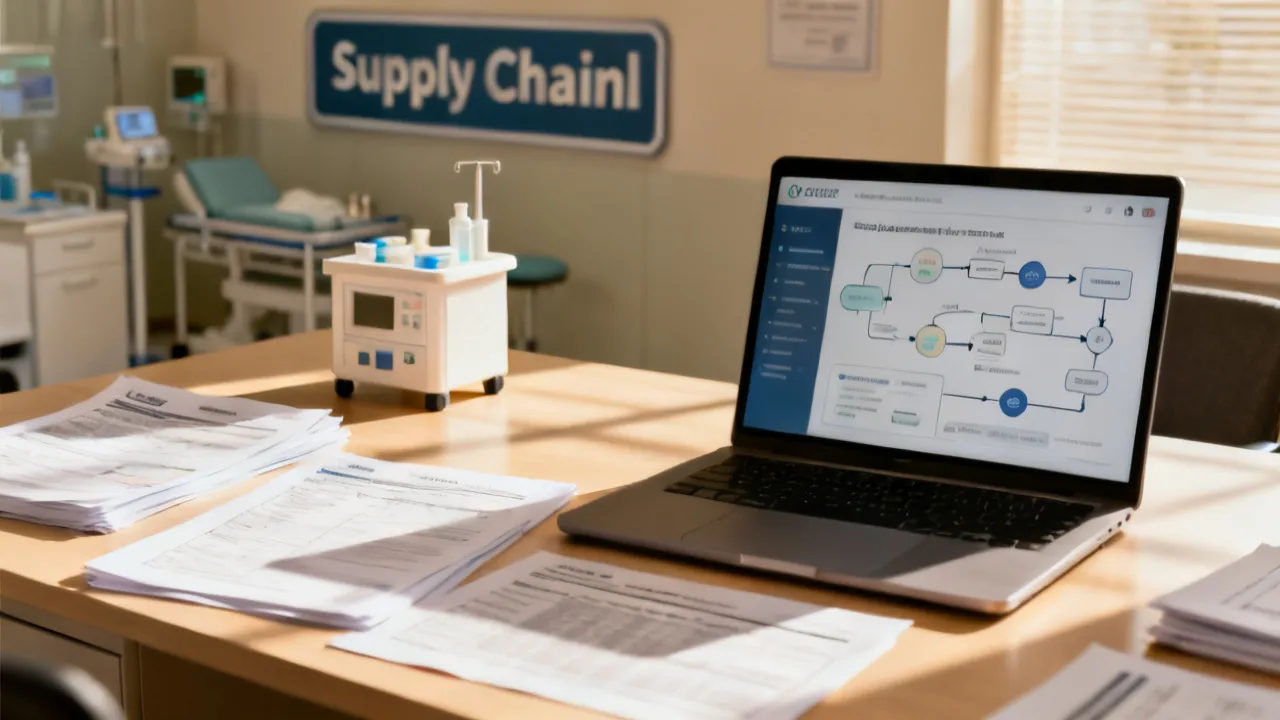
A Zambia-based procurement office setting showing documentation and a logistics workflow, illustrating structured sourcing aligned with PMEC Zambia principles.